A Porcelain Cup Durability Guide for Daily Service
A porcelain cup earns its place at the table through repetition: the morning espresso, the second cappuccino during a long lunch, the final coffee presented after dinner. A thoughtful porcelain cup durability guide begins there. The best pieces should feel considered in the hand and composed on the table, while standing up to the very real demands of daily service.
Durability is not about choosing the heaviest cup in the room. It is about material quality, a well-resolved silhouette, and the small care decisions that protect a refined finish over time. For a design-minded home or a busy café, those details determine whether a coffee service still looks polished after hundreds of pours.
What Durable Porcelain Actually Means
Porcelain is a high-fired ceramic made from fine clay materials. During firing, its body becomes dense and vitrified, meaning it absorbs very little water. That density gives porcelain its signature combination of delicacy and performance: a smooth surface, a clean ring, and a strength that is well suited to hot beverages.
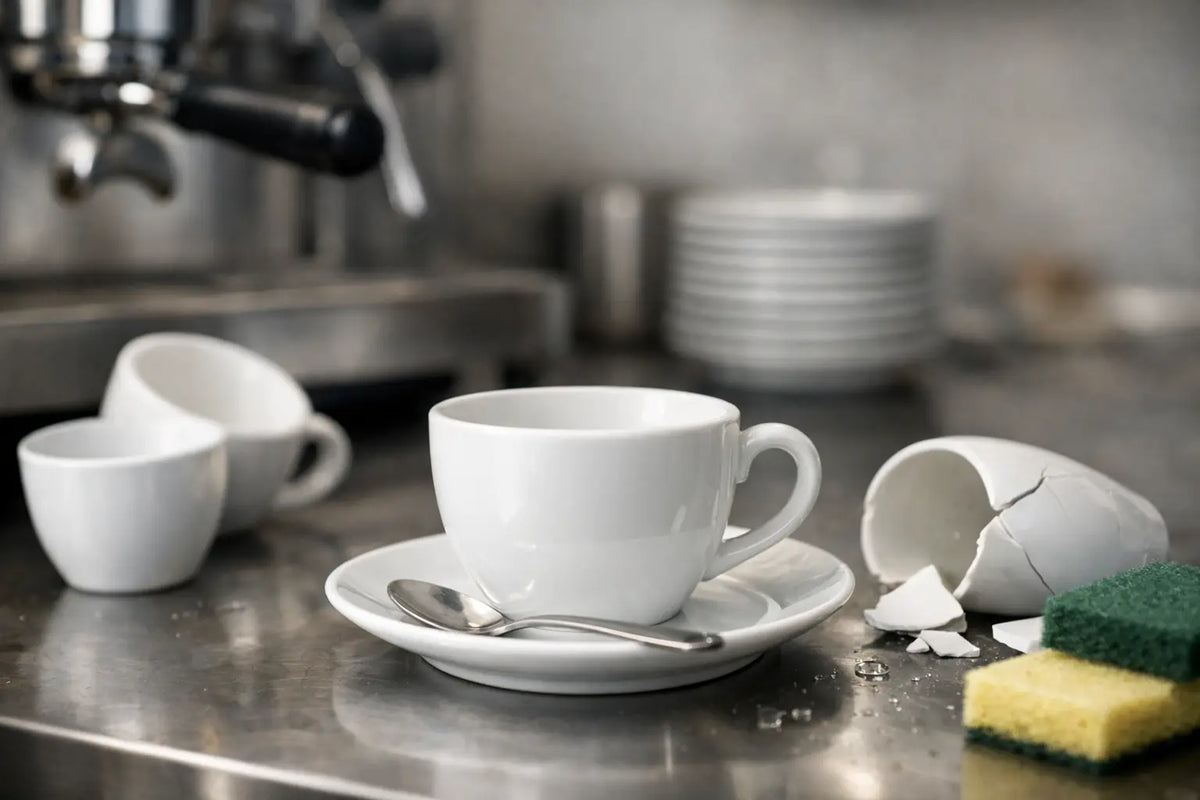
Still, porcelain is not indestructible. A cup can be structurally sound yet chip at the rim after striking a metal spoon, or develop a hairline crack after an abrupt shift in temperature. A durable porcelain cup is one engineered and cared for to reduce those everyday risks, not one promised to ignore physics.
There is also a meaningful distinction between surface wear and structural damage. Fine utensil marks may appear as faint gray lines on a pale glaze. These are often metal transfer marks rather than cracks in the porcelain itself, and they can usually be addressed with gentle cleaning. Chips, crazing, and cracks deserve closer attention because they affect both appearance and long-term use.
Porcelain Cup Durability Guide: The Details That Matter
A cup's durability begins before it reaches a coffee bar or kitchen shelf. The quality of the porcelain body and glaze matters, but the geometry matters too. Good design is functional design.
A dense body and even glaze
Look for porcelain that feels smooth, substantial, and evenly finished rather than chalky or uneven beneath the glaze. A well-fired, nonporous body is less likely to retain coffee oils and odors, which helps preserve a fresh, luminous presentation over time.
The glaze should be consistent across the rim, interior, handle joins, and foot ring. Thin or imperfectly applied glaze can make a piece more vulnerable to staining and visible wear. A glossy finish is not the only mark of quality, but it should look intentional and feel clean to the touch.
A rim built for real service
The rim is where porcelain meets the most contact. It touches lips, teaspoons, dish racks, neighboring cups, and sometimes an overzealous knock against an espresso machine tray. An extremely thin rim can feel elegant, especially for a formal coffee moment, but it may demand more careful handling.
For daily coffee service, a gently rounded, proportionate rim offers an appealing balance. It can retain a refined drinking experience without making the cup feel overly precious. This is one of the central trade-offs in porcelain: visual lightness is beautiful, but a slightly more substantial profile often performs better in a high-turnover setting.
A stable foot and a purposeful handle
Turn a cup over and inspect its foot ring. It should sit flat and stable, without a pronounced wobble. A well-finished foot also reduces the chance of scratching saucers or tabletops when cups are placed down and lifted repeatedly.
Handles deserve the same scrutiny. They should be comfortably scaled to the cup, smoothly joined to the body, and easy to grip without placing stress on one small point. A sculptural handle can elevate a coffee setting, but it should still support natural movement from saucer to hand to table.
Protecting Porcelain in Everyday Use
Most porcelain damage is cumulative or accidental, not mysterious. A few service habits make an outsized difference, particularly when a collection is used every day.
Avoid thermal shock first. Do not move a chilled cup directly into a very hot wash cycle, and do not pour boiling water into a cup that has been sitting in a cold garage or near a frosty window. Porcelain handles heat beautifully when changes are gradual. Sudden extremes are the issue.
When washing by hand, use a soft sponge and avoid abrasive scouring pads. They can dull a polished glaze over time and leave a finish looking less pristine. If cups go through the dishwasher, arrange them so they do not knock together during the cycle. Spacing is especially valuable for handles and rims, where collisions are most likely to leave a chip.
At the coffee station, choose stirring tools with care. A small spoon used gently is perfectly practical, but repeated forceful tapping against the rim is a fast route to damage. Train staff to rest a spoon on the saucer rather than leaving it inside the cup, where it can shift during clearing and service.
Storage has its own quiet rules. Cups should not be stacked unless they are specifically designed for stacking. Nesting unsupported porcelain can create pressure at the rim and produce small abrasions that become visible over time. Store saucers in tidy stacks and cups side by side, or use protective separators when space requires closer organization.
The Café Test: Beauty Under Repetition
For hospitality teams, durability is as much about workflow as material. A cup may look exceptional under soft dining-room light, but it also needs to move confidently through prep, service, bussing, washing, and restocking. The ideal coffee service supports the pace of the room while strengthening the guest's impression of it.
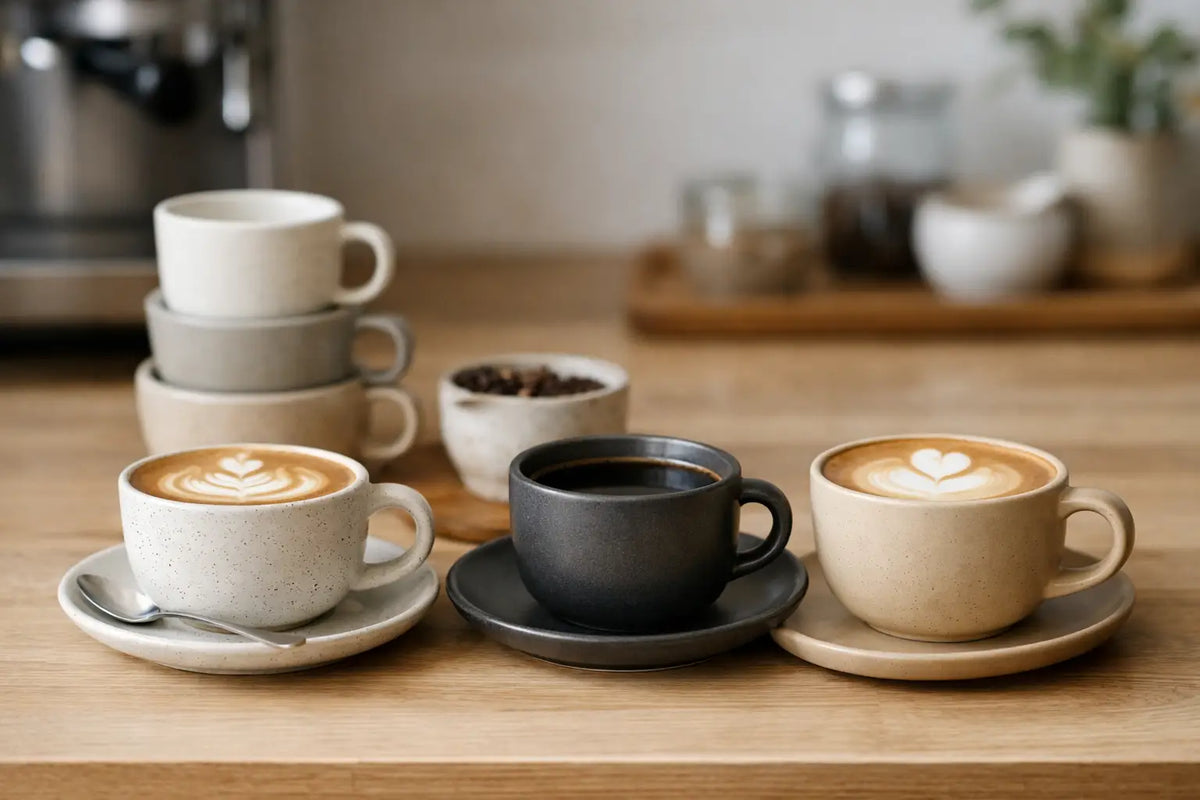
Start by matching the cup to the beverage and the way it is served. An espresso cup needs enough thermal presence to keep a short pour enjoyable, while a cappuccino cup should offer room for milk texture and intentional latte art. A matching saucer adds more than visual cohesion: it creates a stable place for the spoon, a biscotti, or a guest's first graceful impression.
For cafés and restaurants, ordering a cohesive collection can also simplify replacement planning. A consistent shape, color, and saucer pairing makes it easier to refresh damaged pieces without compromising the tabletop's visual rhythm. This is where a porcelain collection becomes part of the operating standard, not merely a purchasing decision.
When a Cup Should Leave Service
A small chip on an exterior foot may not immediately affect a cup's performance, though it can scratch a saucer or table. A chip on the rim, a crack through the body, or interior crazing that traps discoloration should take the piece out of beverage service. In a hospitality environment, this is both a presentation and a safety decision.
Inspect high-use cups periodically under clear light. Pay attention to the rim, handle joins, and the base. Replacing a few compromised pieces early protects the overall look of a coffee program and prevents one tired cup from diminishing an otherwise composed table setting.
Choose for the Ritual You Want to Repeat
The right porcelain cup should make daily coffee feel elevated without adding fragility to the ritual. Consider how often it will be used, who will handle it, whether it needs to move through commercial dishwashing, and how its silhouette will sit beside your glassware, linens, and tableware.
A graceful espresso cup for slow weekend mornings may justify a finer profile. A high-volume café or a household that hosts often may benefit from a slightly more substantial form with a generous handle and stable saucer. Neither choice is automatically better. The most durable piece is the one whose material and design suit its actual life.
Treat porcelain with the respect given to any beautifully made service piece, and it will return the favor: a clean pour, a composed table, and a coffee ritual that continues to look as intentional on its hundredth use as it did on its first.