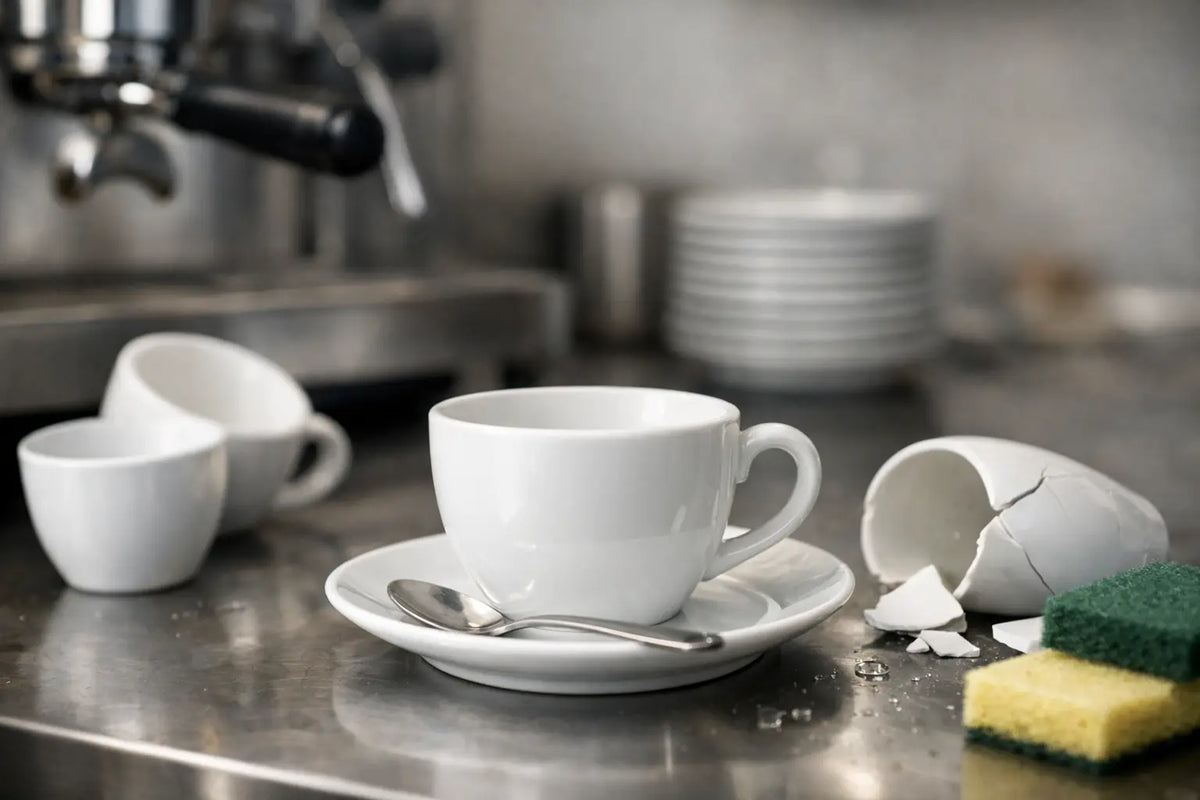
Ceramic Coffee Cups for Cafes That Feel Considered
The cup arrives at the table before the first sip. Its weight, rim, color, and silhouette quietly tell a guest what kind of coffee experience to expect. For operators, ceramic coffee cups for cafes are not a minor back-of-house purchase. They are a visible part of the brand - one handled, photographed, and remembered with every flat white, cortado, and after-dinner espresso.
A well-chosen cup makes a carefully dialed-in drink feel complete. The wrong one can diminish it: too heavy for a delicate espresso, too wide to hold heat, too thin to withstand service, or too visually disconnected from the room. The goal is not simply to buy attractive cups. It is to choose a coffee service that supports the way your café works and the feeling you want guests to carry with them.
Start With the Drinks You Actually Serve
Cup selection should begin at the espresso machine, not with a catalog page. A café serving traditional espresso needs a different vessel from one built around large-format oat milk lattes. Volume matters, but proportion matters more. A cup should give each drink enough room for its intended ratio of espresso, milk, foam, and visual finish without looking underfilled.
For espresso, a compact porcelain cup with a gently rounded interior helps preserve crema and keeps the ritual focused. Cappuccino cups benefit from a broader opening that gives milk texture room to bloom and provides a graceful surface for latte art. For cafés that serve both in high volume, a coordinated family of cup sizes creates consistency without making every drink look identical.
There is no universal sizing formula. A busy neighborhood café may need versatile cups that can flex between menu items and simplify dishwashing. A more deliberate coffee program may prefer a distinct silhouette for every beverage. What matters is that the cup feels purposeful in the guest’s hand and proportionate on the table.
Why Porcelain Earns Its Place in Café Service
Ceramic is a broad category, and the material beneath the glaze shapes daily performance. Porcelain is especially valued in hospitality because it pairs a refined appearance with the density needed for repeated use. Its smooth, nonporous surface presents coffee cleanly, resists everyday staining, and brings a crisp, elevated finish to the table.
That finish is more than cosmetic. White or softly toned porcelain creates contrast with espresso and milk, allowing crema, foam, and latte art to read clearly. It also lets a café’s food, linens, woodwork, and surrounding design take the lead rather than competing with an overly decorative cup.
Durability still deserves an honest look. No ceramic cup is indestructible, and a thinner, more delicate profile will require more care than a heavier commercial piece. The best choice balances tactile elegance with the realities of stacked shelves, dish racks, crowded bussing stations, and a Saturday morning rush. Look for even glazing, a stable foot, well-finished handles, and saucers that sit securely beneath the cup.
Ceramic Coffee Cups for Cafes Should Feel Good to Hold
A beautiful cup that feels awkward in the hand will never become part of a guest’s favorite ritual. Comfort is a design detail, not an afterthought. The handle should allow a natural grip without forcing fingers against hot porcelain, while the body should feel balanced when full. A cup that is too thick can feel clumsy; one that is too light may feel fragile or lose heat quickly.
The rim deserves just as much attention. A fine, gently rounded rim can make a coffee feel more polished on the palate, particularly for espresso and smaller milk drinks. It should not be so delicate that it becomes impractical for a high-turnover café. This is where thoughtful porcelain design performs well: it can feel precise and elevated without asking staff to treat every cup like a gallery object.
Whenever possible, test a sample in real service. Pull the drinks you serve most, steam milk, set the cup on your actual tables, and run it through your dishwasher. Notice how it pours, how quickly it cools, whether the handle remains comfortable, and how it looks after several cycles. A few days of honest testing reveal more than an afternoon of admiring a product image.
Build a Coffee Service, Not a Collection of Random Pieces
Guests may not identify the exact style of a saucer or the curve of a handle, but they notice when the table feels composed. Matching espresso and cappuccino cups create visual rhythm across a café, especially when drinks are carried through an open dining room or photographed in natural light near a window.
A coordinated cup-and-saucer service also gives the team a more intentional way to serve. The saucer creates space for a spoon, a small cookie, or a check presenter without crowding the table. It protects surfaces from drips and offers a small visual pause around the drink. In a café where presentation is part of the experience, those details can make an ordinary coffee break feel considered.
This does not mean every piece must be identical. A tonal palette can add character without creating clutter. Clean white porcelain feels classic and adaptable, while a soft neutral glaze can lend warmth to a space with stone, oak, brushed metal, or sun-washed plaster. The key is restraint. Choose a visual language that supports your interiors, food presentation, and brand rather than chasing a passing trend.
Think Through Service Before You Commit
The most successful café drinkware earns its place after closing time as well as during service. Consider where cups will be stored, how many fit safely in racks, whether saucers stack efficiently, and how easily staff can identify sizes during a rush. A dramatic shape may look remarkable on a tabletop but become frustrating if it wastes shelf space or chips easily at the pass.
Replacement planning matters, too. Café service is demanding, and breakage is part of the operating picture. Ordering from a collection with dependable availability makes it easier to replace individual pieces while keeping the room visually consistent. For hospitality buyers, wholesale access and manageable replenishment can be as valuable as the opening order itself.
Also consider the relationship between cup and machine. If cups are warmed on top of the espresso machine, their base diameter and height should suit that workflow. If beverages are often served to-go after being photographed at the bar, choose a presentation strong enough to carry the in-house moment before the lid goes on.
Let the Cup Support the Coffee, Not Compete With It
Coffee has its own color, aroma, texture, and craft. The cup’s role is to frame those qualities. A restrained silhouette, clear material quality, and comfortable proportions give baristas room to show their work and guests room to enjoy it.
The Wilshire porcelain espresso and cappuccino cups from Angeleno Drinkware reflect this approach: clean lines, matching saucers, and a polished presence designed for both daily ritual and professional service. Their appeal lies in that balance of visual clarity and practical use - the kind of tabletop detail that feels elevated without becoming precious.
When selecting cups, resist the urge to treat them as the final decorative layer. They are part of the beverage program itself. The right ceramic coffee cup holds heat, carries the drink gracefully, fits the pace of service, and makes a guest want to slow down for one more sip. That is a small object doing meaningful work.