Ultra Thin Wine Glasses for Better Pours
A wine glass can change the first impression of a pour before anyone takes a sip. Ultra thin wine glasses bring a particular kind of refinement to the table: a nearly weightless rim, a clear and elegant silhouette, and a closer connection between the wine and the palate. They are not simply delicate-looking vessels. When chosen thoughtfully, they can make a weeknight bottle feel more intentional and a dinner service feel quietly polished.
For design-minded hosts and hospitality teams, that difference matters. The glass is part of the presentation, but it is also part of the tasting experience. Its shape directs aroma, its bowl gives wine room to open, and its rim influences how the liquid meets the mouth. The best ultra-thin styles balance those sensory details with the realities of modern entertaining: frequent use, handwashing, storage, and a table that looks considered rather than overly formal.
Why Ultra Thin Wine Glasses Feel Different
The defining feature is the rim. A thinner rim creates less physical interruption between the wine and the person drinking it. Instead of feeling the thickness of the glass first, the palate meets the wine more directly. That subtle shift is one reason fine restaurants have long favored delicate stemware for their more expressive pours.
Weight also changes the ritual. A well-proportioned, thin-walled wine glass feels balanced in the hand, even when its bowl is generously sized. It lends an ease to swirling and holding, which encourages guests to slow down and notice color, fragrance, and texture. There is a visual effect, too: clear, slender glass allows the wine itself to carry the color and drama.
This does not mean every wine needs the thinnest possible glass. A highly fragile glass may be better suited to a formal tasting than a busy restaurant floor or a home with limited storage. The right choice depends on how the glass will actually be used. A refined everyday glass should still feel special, but it should invite use rather than remain reserved for a rare occasion.
The Shape Still Matters More Than Sheer Thinness
A thin rim is only one part of the experience. Bowl geometry has a greater influence on how a wine presents itself, especially for aromatic whites, structured reds, and sparkling wines. The goal is not to own a separate glass for every grape. It is to choose a small, cohesive set of silhouettes that serves the wines you pour most often with confidence.
For red wines, give aroma room to develop
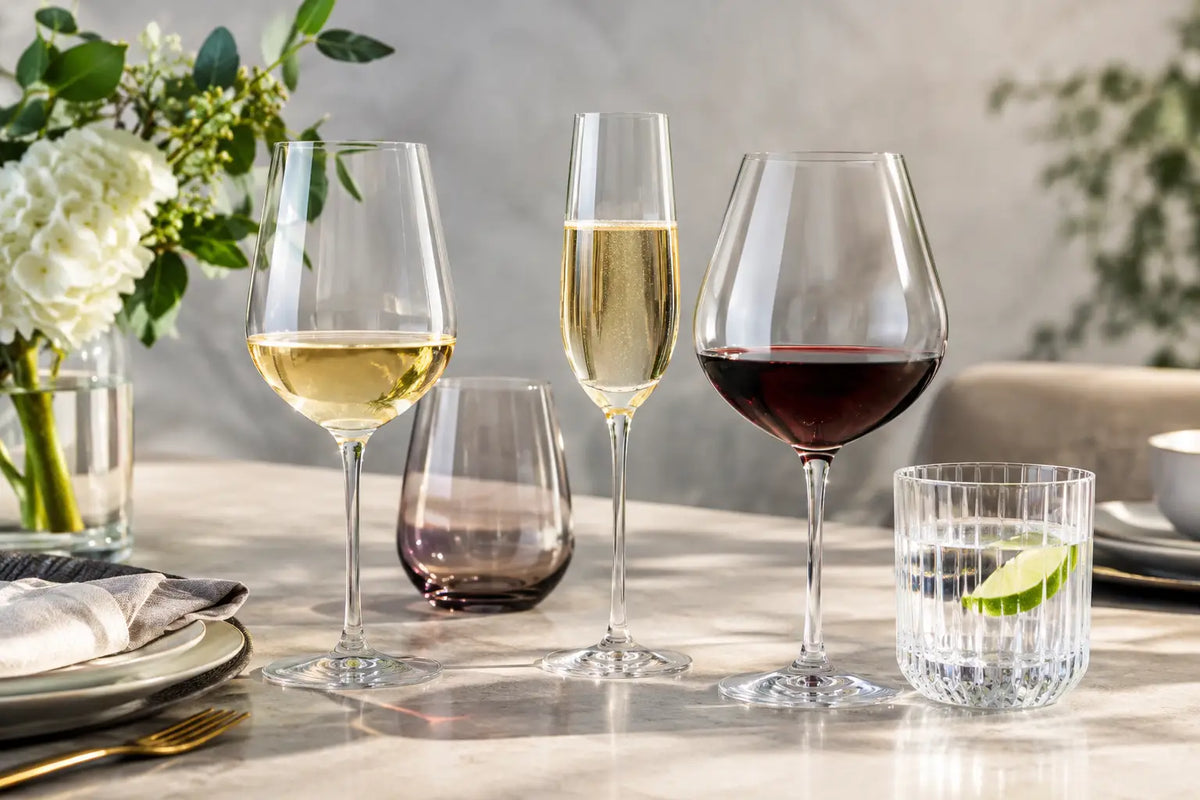
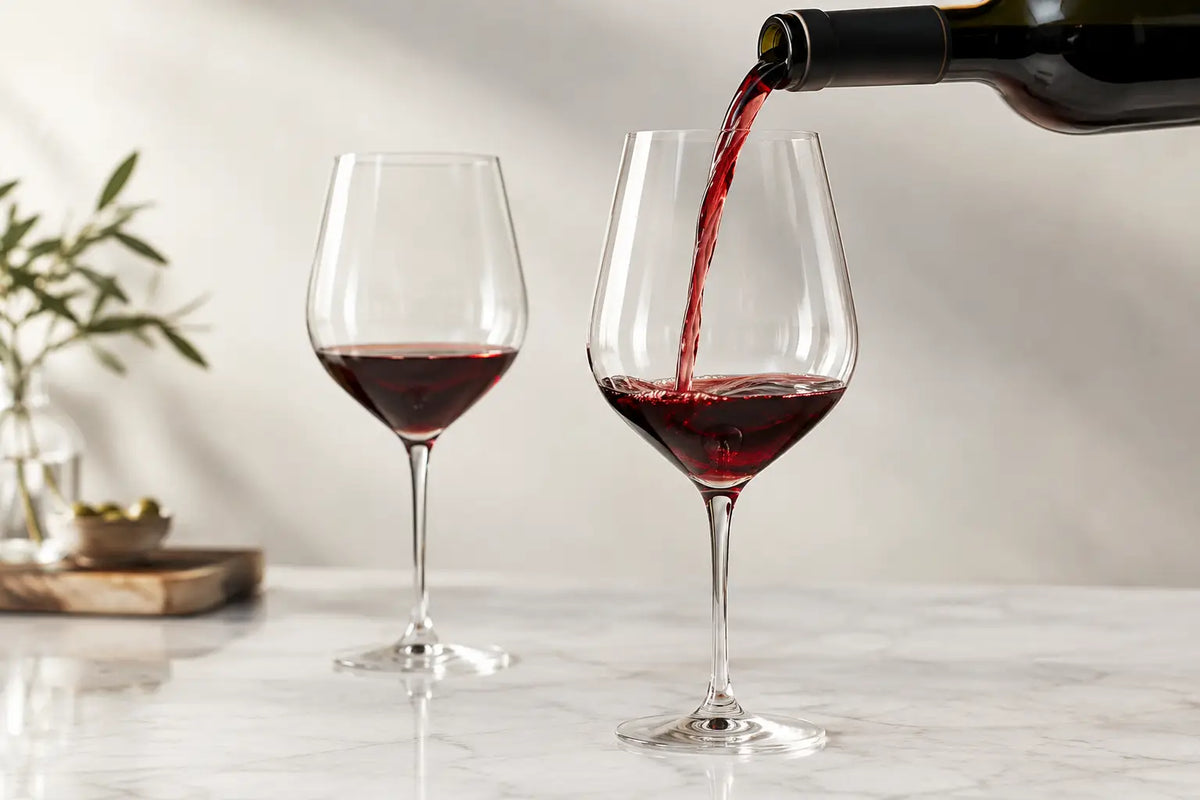
Red wine generally benefits from a wider bowl that creates surface area for swirling. This helps release aromas while the bowl’s taper gathers them near the rim. Medium-bodied reds such as Pinot Noir often shine in a broader, rounder bowl, while Cabernet Sauvignon and Syrah can feel at home in a taller, more structured shape.
At home, one versatile red wine glass is usually enough. Look for a bowl that is large without being exaggerated, with a stem that feels balanced rather than spindly. In hospitality, consistency is often the better luxury: a silhouette that flatters a range of reds, photographs beautifully, and feels natural in a server’s hand.
For whites, preserve freshness and focus
White wine glasses are typically smaller because whites are served cooler and are best enjoyed before they warm too much. A narrower bowl helps concentrate delicate floral, mineral, and citrus notes, while a fine rim keeps the sip clean and precise.
A universal white glass is especially useful for hosts who enjoy Sauvignon Blanc, Chardonnay, rosé, and lighter reds served with a slight chill. The silhouette should feel graceful but not precious. A glass that is comfortable to refill and easy to carry from kitchen to table will become part of the weekly rotation.
For sparkling wine, look beyond the narrow flute
A flute preserves bubbles elegantly, but its narrow opening can limit aroma. For Champagne and other quality sparkling wines, a tulip-shaped glass offers a more expressive alternative. It retains effervescence while allowing room for the wine’s fragrance to gather.
This is where thin glass makes a particularly visible impact. Fine bubbles rising through a clear, lightweight bowl create a sense of occasion without excessive ornament. It is a small detail that makes a celebratory pour feel more composed.
Material Determines How the Glass Lives With You
Not all thin wine glasses are made from the same material, and the distinction matters. Traditional crystal is admired for brilliance and a very fine profile, though many contemporary buyers prefer lead-free crystal for its clarity and modern practicality. Lead-free crystal can offer the luminous look associated with fine stemware while aligning with an everyday approach to entertaining.
Standard soda-lime glass is often more affordable and can be durable, but it may have a thicker rim and less visual clarity. That does not make it a poor choice. It simply serves a different purpose. For large outdoor gatherings, casual patios, or high-turnover service, utility may be the priority. For a dinner table, tasting menu, or thoughtful housewarming gift, thin lead-free crystal offers a more elevated presentation.
Durability is nuanced. Thickness alone does not determine whether a glass performs well over time. Quality of manufacture, the integrity of the stem-to-bowl connection, and proper care all play a role. A glass can be fine and still be designed for regular use. It should be handled with intention, not anxiety.
How to Choose a Set That Looks Collected, Not Complicated
A cohesive wine glass collection does not need to be extensive. For most homes, start with a versatile all-purpose wine glass, then add a larger red wine shape or a sparkling wine glass if those pours are part of your entertaining style. The visual relationship between pieces matters as much as the individual design.
Look for shared details: similar stem proportions, a consistent degree of clarity, and bowls with complementary curves. Modern geometry can be subtle. A gently tapered rim, a clean stem, and a stable foot create a polished table without competing with the meal, linens, or florals.
For restaurants, wine bars, and event spaces, consider the service environment before selecting the most delicate option. Think about rack compatibility, washing volume, storage height, and how many hands will touch the glass during a shift. A beautiful glass that is impractical for the operation will not deliver the guest experience it promises. The most successful choice pairs a refined silhouette with a dependable service rhythm.
The Figueroa collection from Angeleno Drinkware reflects this balance, pairing lead-free crystal clarity with silhouettes designed to make cocktail, wine, champagne, and beverage service feel visually connected. A unified collection gives home hosts and professional teams a more intentional foundation for the entire table.
Care That Protects the Fine Rim
Ultra-thin glassware rewards a little care. If the manufacturer permits dishwasher use, avoid overcrowding the rack and make sure stems cannot knock together during the cycle. If washing by hand, hold the bowl rather than twisting it against the stem. Use warm water, a gentle detergent, and a soft cloth that will not leave lint behind.
For drying, support the glass by the bowl and base instead of gripping the stem alone. Store stemware upright on a clean shelf when possible. Hanging racks can be attractive, but long-term suspension may place stress on the rim depending on the design and how often the glasses are moved.
Cloudiness is another consideration. Hard-water deposits can dull the clarity that makes fine glassware so compelling. A careful rinse and immediate drying preserve that crisp, luminous finish. For hospitality settings, polishing should be part of the final presentation check, just as it is for flatware and plates.
When Thin Glass Is Worth It
Ultra-thin wine glasses are worth choosing when the experience of serving wine matters as much as the wine itself. They make sense for dinner parties where the menu, music, and tabletop have been considered together. They are equally compelling for a restaurant that wants its wine program to feel more elevated without relying on theatrical presentation.
They may not be the first choice for a crowded poolside gathering, a casual children’s celebration, or any setting where relaxed durability is the primary goal. There is no need to force one type of stemware into every occasion. Thoughtful entertaining is about matching the object to the moment.
Set out a glass that feels good in the hand, gives the pour enough space to breathe, and belongs naturally with the rest of the table. Whether the bottle is a special vintage or an easy Tuesday-night red, that small act of care makes the ritual feel more complete.