Best Champagne Glasses for Brunch, Chosen Well
A brunch table can be beautifully set and still feel slightly unfinished if the sparkling wine arrives in the wrong glass. The best champagne glasses for brunch do more than hold a mimosa. They preserve a lively stream of bubbles, flatter the color of the pour, and bring a sense of occasion to a meal that sits somewhere between leisurely and celebratory.
That does not automatically mean choosing the tallest flute or the most formal stemware in the cabinet. Brunch is relaxed by nature. The right glass should make a citrus-forward mimosa feel polished, a dry sparkling rosé look especially inviting, and a simple pastry spread feel like a curated experience.
What Makes a Champagne Glass Right for Brunch
Brunch calls for glassware with range. Unlike a dinner party built around one bottle of Champagne, a late-morning table may include mimosas, Bellinis, nonalcoholic sparkling drinks, and a few guests who prefer their wine neat. A glass that works beautifully across those serves earns its place far beyond a single occasion.
Start with proportion. An ideal brunch glass usually holds enough liquid to accommodate sparkling wine and a modest splash of juice without being filled to the rim. Overfilled glasses look crowded, warm quickly in the hand, and leave little room for bubbles to develop. A capacity in the general range of 6 to 9 ounces tends to feel considered for mixed sparkling cocktails, though the exact choice depends on how generously you pour.
Then consider the rim. A thin, refined rim creates a more elegant sip and makes even a familiar mimosa feel less casual. It also lets the visual qualities of the drink take center stage: pale gold, peach, ruby grapefruit pink, or the soft blush of sparkling rosé. These details may seem small, but brunch is built from them.
Finally, think about the table as a whole. Champagne glasses should relate to your water glasses, coffee cups, linens, and plates rather than competing with them. Clean silhouettes and clear glass offer the most flexibility, especially if you entertain in different moods, from a sunlit California-style breakfast to a more formal holiday spread.
Flutes, Coupes, and Tulips: Which Shape Serves Best?
The classic flute
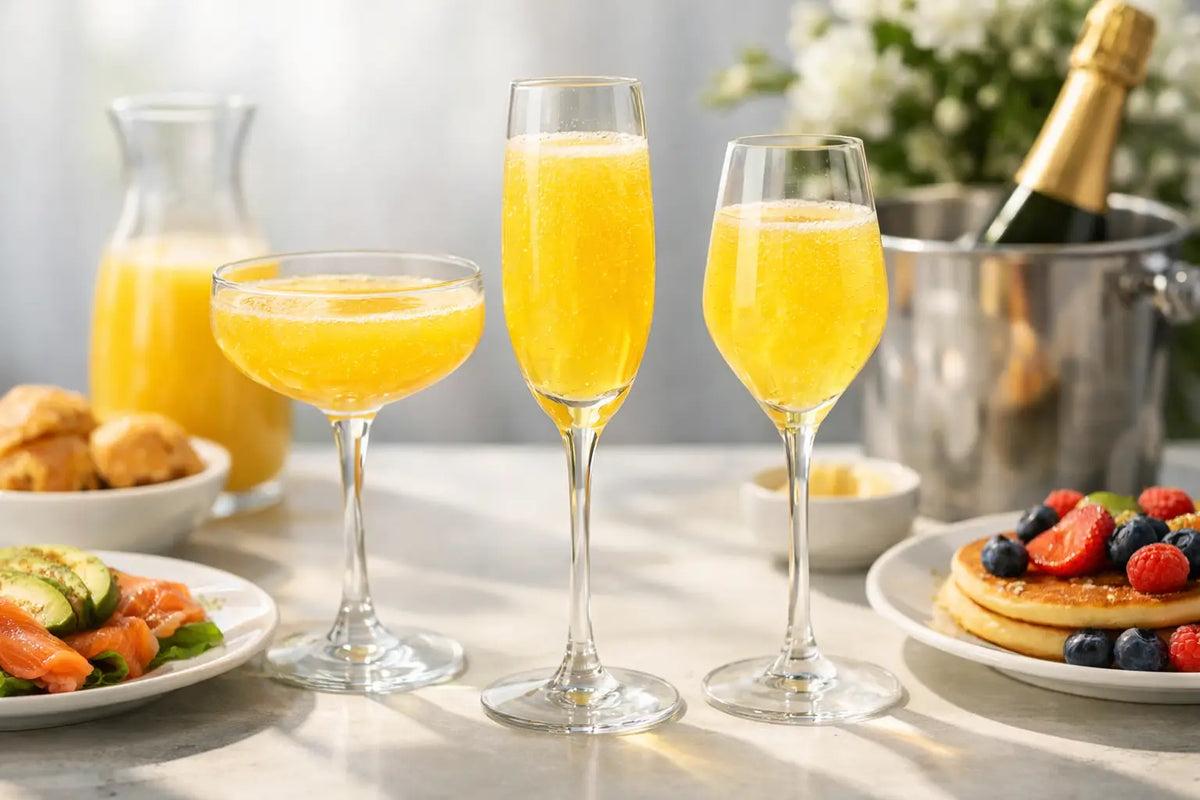
A flute is the familiar choice for Champagne, and for good reason. Its narrow bowl helps preserve carbonation by limiting the wine's exposure to air. The upright silhouette also emphasizes the rise of bubbles, giving sparkling wine the visual drama people expect.
For brunch, flutes are particularly well suited to simple mimosas and pours of Champagne or prosecco served without juice. They look crisp and composed on the table, take up little space, and encourage smaller, slower sips. Their limitation is that a very narrow opening can make it harder to appreciate the wine's aroma, particularly when you are serving a more expressive sparkling wine.
The coupe
The coupe brings an unmistakable sense of glamour. Its broad, shallow bowl feels celebratory and photographs beautifully beside fruit, pastries, and a well-styled brunch table. It is an excellent choice when presentation is central to the occasion and cocktails will be served immediately.
The trade-off is practical: the wider surface allows bubbles to dissipate more quickly. A coupe is not the best vessel for lingering over a vintage Champagne, but it is compelling for a Bellini, a sparkling cocktail, or a welcome pour passed around as guests arrive. Choose it for theatricality, not maximum effervescence.
The tulip-shaped sparkling wine glass
For many hosts, the tulip is the most versatile answer. It is wider through the middle than a flute, then gently narrows toward the rim. That shape gives the wine room to open while still directing aroma upward and preserving bubbles better than a coupe.
A tulip glass has an easy sophistication that suits both Champagne and brunch cocktails. It also feels less ceremonial than a flute, which can be useful when the menu includes everything from soft scrambled eggs to smoked salmon and citrus salad. If you want one elevated style that can handle a range of sparkling pours, this is often the strongest choice.
The white wine glass
A small, stemmed white wine glass is an unexpected but highly functional brunch option. The broader bowl gives aromatic sparkling wines more expression and provides comfortable room for a mimosa garnish, such as a slim orange wheel or a few raspberries. It also transitions naturally to still wine later in the day.
This is a particularly smart approach for hosts who prefer a less traditional table or want fewer glassware categories to store. It will not create the same vertical bubble display as a flute, but it brings warmth and versatility to a long, food-focused gathering.
Material Matters More Than Most Hosts Expect
Glass composition changes both the experience of drinking and the practicality of entertaining. Lead-free crystal offers exceptional clarity and a finely finished rim, qualities that make sparkling drinks appear brighter and feel more refined at the table. Its lightness can add an immediate sense of luxury without requiring a highly ornate design.
For frequent entertaining, though, beauty has to meet real use. Consider how the glasses will be washed, stored, carried from kitchen to table, and handled by guests. A well-made glass with a balanced stem and a stable foot is easier to enjoy than an overly delicate piece that makes everyone cautious.
For hospitality settings, this balance is even more decisive. A restaurant brunch service needs stemware that presents beautifully under natural light, feels appropriate for the menu's price point, and stands up to repeated handling. The goal is not fragility for its own sake. It is a glass that looks intentional at first service and still performs through a busy weekend.
Collections such as Angeleno Drinkware's Figueroa lead-free crystal glassware make this kind of cohesion easier to achieve. When champagne, wine, cocktail, and beverage glasses share a contemporary design language, the entire table reads as more composed without feeling overly matched.
Choose for the Drink You Actually Serve
The best champagne glasses for brunch depend partly on what is in the pitcher. For a classic orange juice mimosa, a flute or tulip glass keeps the serving elegant and gives the drink a clean, vertical profile. Use freshly squeezed juice when possible, and add it after the sparkling wine to avoid flattening the bubbles before the glass reaches the table.
For Bellinis and fruit purées, a tulip or small white wine glass is more forgiving. These drinks have texture and color, and they benefit from a little extra bowl width. A coupe can be beautiful here too, especially if each cocktail is made to order and served promptly.
If the bottle itself is the focus, choose a tulip-shaped glass over a very narrow flute. Higher-quality Champagne, cava, and sparkling rosé often show more floral, citrus, brioche, or mineral character when the bowl gives their aromas room to develop. The difference is subtle, but it is precisely the kind of detail that turns a bottle into part of the meal rather than a simple accompaniment.
For nonalcoholic sparkling options, do not default to a lesser glass. A well-chosen stemmed vessel gives every guest the same visual experience and makes the table feel generous rather than divided into alcoholic and nonalcoholic categories.
Details That Keep Brunch Feeling Effortless
Set the champagne glass above and slightly to the right of the plate, near the water glass. If coffee is part of the service, allow enough space so stems do not crowd cups, saucers, and cutlery. A table with room to breathe always feels more luxurious than one layered with every possible piece.
Chill sparkling wine thoroughly, but avoid freezing the glasses. An excessively cold glass can mute aroma and create unnecessary condensation. Freshly polished glassware matters, too. Even a faint watermark is more visible against a bright brunch drink than it is at an evening dinner.
If you are serving a crowd, keep the garnish restrained. An orange twist, a small strawberry slice, or a single edible flower can be enough. Large fruit pieces and heavy garnish may look festive at first, but they crowd the bowl and distract from the glass's silhouette.
A thoughtfully chosen champagne glass gives brunch its finishing note: not fussy, not formal for formality's sake, but quietly considered. Pick the shape that fits your pour, the material that fits your routine, and the silhouette you will be pleased to see catching the morning light long after the plates have been cleared.