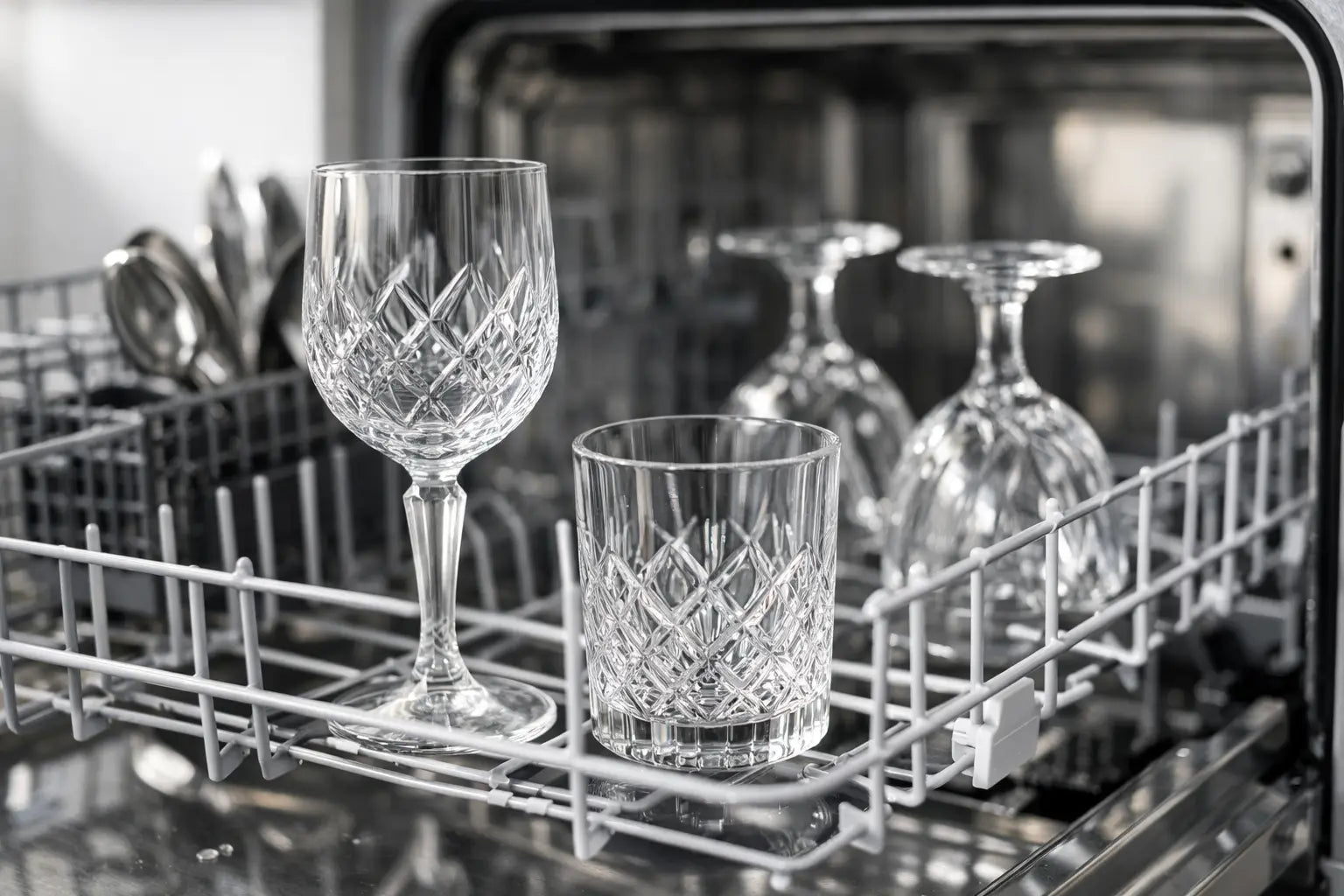
Are Crystal Glasses Dishwasher Safe?
That first cloudy haze on a crystal glass is hard to ignore. When you care about table presence, the question is not just whether the machine can clean it. It is whether are crystal glasses dishwasher safe in a way that preserves clarity, brilliance, and the refined feel that made you choose crystal in the first place.
The honest answer is: sometimes. Some crystal glasses can go in the dishwasher, but not all crystal is built for it, and not every dishwasher cycle is gentle enough to protect the glass over time. If you want your drinkware to keep its polish and presentation value, the label matters, the material matters, and the way you load the machine matters just as much.
Are crystal glasses dishwasher safe or better hand washed?
For many households, the dishwasher is a practical default. For hospitality settings, it can be essential. But crystal occupies a different category than everyday soda-lime glass. It is often thinner, more finely finished, and designed to deliver a more elevated drinking experience through lightness, balance, and visual clarity.
That does not automatically make it fragile. Modern lead-free crystal is often more durable than people expect, especially when it is made for regular use. Still, durability and dishwasher safety are not exactly the same thing. A glass can survive the occasional cycle and still lose some of its luster after repeated exposure to heat, detergent, hard water, and contact with other items.
If your crystal glasses are marked dishwasher safe by the maker, that is your best signal. It means the material and finish have been tested with machine washing in mind. If there is no guidance, caution is usually the better choice, particularly for hand-cut crystal, antique pieces, very thin stems, or anything with metallic detailing.
What determines whether crystal can go in the dishwasher?
The biggest variable is the type of crystal. Traditional lead crystal has a soft, luminous quality, but it is generally less suited to the dishwasher. Harsh detergents can react with the material, and high heat can dull the finish over time. Lead-free crystal is the more practical option for modern entertaining and service because it is designed to offer brilliance with better resilience.
Construction matters too. A thick-based tumbler usually handles machine washing better than an ultra-thin champagne flute. Long stems, delicate rims, and oversized bowls create more opportunities for vibration, chipping, or stress fractures during a cycle.
Then there is the dishwasher itself. Newer machines often have gentler glass settings, lower-temperature options, and better rack stability. Older machines can be rougher, both in heat and water pressure. The detergent you use also plays a role. Heavy-duty pods may be excellent for baked-on cookware, but they can be too aggressive for fine drinkware.
Water quality is another quiet factor. Hard water leaves mineral deposits that make crystal look tired even when it is technically clean. What many people read as damage is sometimes buildup. The problem is that repeated mineral exposure can still affect the look of the glass, especially if rinse performance is inconsistent.
When dishwasher-safe crystal really is safe
If you are buying crystal for daily use, dishwasher-safe lead-free crystal is often the sweet spot. It gives you the elevated feel of crystal without turning every post-dinner cleanup into a hand-washing ritual. For home hosts, that means more ease after a dinner party. For restaurants and bars, it means a more realistic balance of presentation and service flow.
Even then, safe does not mean careless. The dishwasher is most suitable when the glasses have enough space around them, the cycle is mild, and the detergent is formulated for glassware rather than heavy soil. In that setting, many modern crystal glasses perform very well.
This is one reason design-forward collections made for contemporary use tend to favor lead-free crystal. They meet the moment aesthetically, but they also respect the reality of how people live and entertain now. A beautiful glass should feel special in the hand, not precious in the exhausting sense.
When hand washing is the better call
Some pieces simply deserve a gentler approach. If the crystal is vintage, expensive, sentimental, irreplaceable, or unusually fine, hand washing gives you more control. The same is true if the glass has decorative etching, painted accents, gold rims, or other finishes that may fade in a machine.
Hand washing is also the better option when you notice your dishwasher runs hot, leaves residue, or jostles stemware during the cycle. If the racks do not hold glasses securely, even dishwasher-safe crystal is at greater risk.
For many people, the dividing line is use case. Everyday wine glasses or cocktail coupes may go in the dishwasher, while heirloom champagne flutes come out only for special occasions and get washed by hand. That is a sensible way to protect the pieces that carry the most visual and emotional value.
How to wash crystal glasses in the dishwasher without ruining them
If your crystal is approved for machine washing, a few adjustments make a noticeable difference. Place glasses securely on the top rack if your dishwasher design supports it, and leave enough space so rims and bowls do not touch. Contact is where chips begin.
Choose a gentle or glass cycle with lower heat whenever possible. Skip intense drying settings. High heat is one of the fastest ways to age crystal before its time, especially if you run frequent loads.
Use a mild detergent rather than the strongest formula on the shelf. More detergent does not equal better shine. For crystal, it can mean more residue, more abrasion, and less brilliance. If your water is hard, a rinse aid can help reduce spotting.
Take the glasses out promptly when the cycle ends. Letting them sit in steam can contribute to water marks. If needed, polish lightly with a soft, lint-free cloth once they are cool enough to handle.
Signs your crystal should stay out of the dishwasher
If you see cloudiness that does not rinse away, tiny scratches, dulled sparkle, or a rougher feel at the rim, the dishwasher may be taking a toll. One or two cycles might not reveal much. Repetition does.
You should also be cautious if the glasses feel unusually light and thin, if the stems seem flexible, or if the manufacturer offers no care guidance at all. In premium drinkware, refined silhouettes are part of the appeal, but the more delicate the shape, the more care it tends to require.
A practical rule: if replacing the glass would be frustrating, expensive, or impossible, hand wash it. Convenience is valuable, but so is preserving the integrity of the piece.
Crystal care for homes and hospitality settings
At home, crystal care is mostly about preserving the pleasure of the ritual. A clear, polished glass changes how a cocktail looks, how sparkling wine catches the light, and how intentional the table feels. If the drinkware is part of the atmosphere, maintenance is part of the experience.
In hospitality, the stakes are slightly different. Efficiency matters, but so does consistency. Guests notice clouded stemware, spotted tumblers, and worn rims. Those details shape perception quickly. For restaurants, bars, and cafés, choosing dishwasher-safe lead-free crystal for high-turn service is often the smartest move, while reserving more delicate pieces for limited use.
This is where thoughtful product selection matters as much as care technique. A well-designed glass should support service, not complicate it. Angeleno Drinkware approaches crystal with that balance in mind - visual sophistication, modern geometry, and everyday usability should coexist.
So, are crystal glasses dishwasher safe?
Some are, and some are not. The better question is whether your specific crystal glasses were designed for machine washing and whether your dishwasher habits support their long-term finish. Modern lead-free crystal often handles the dishwasher well, especially on gentle settings. Antique, ultra-fine, or decorative crystal usually does better with hand washing.
If you want crystal to keep its refined clarity, treat dishwasher safety as a feature, not an assumption. Check the maker's care instructions, pay attention to material and silhouette, and let the value of the piece guide your choice. The most beautiful glassware earns its place not only by how it looks on the table, but by how well it holds up to the rituals that bring people back to it.