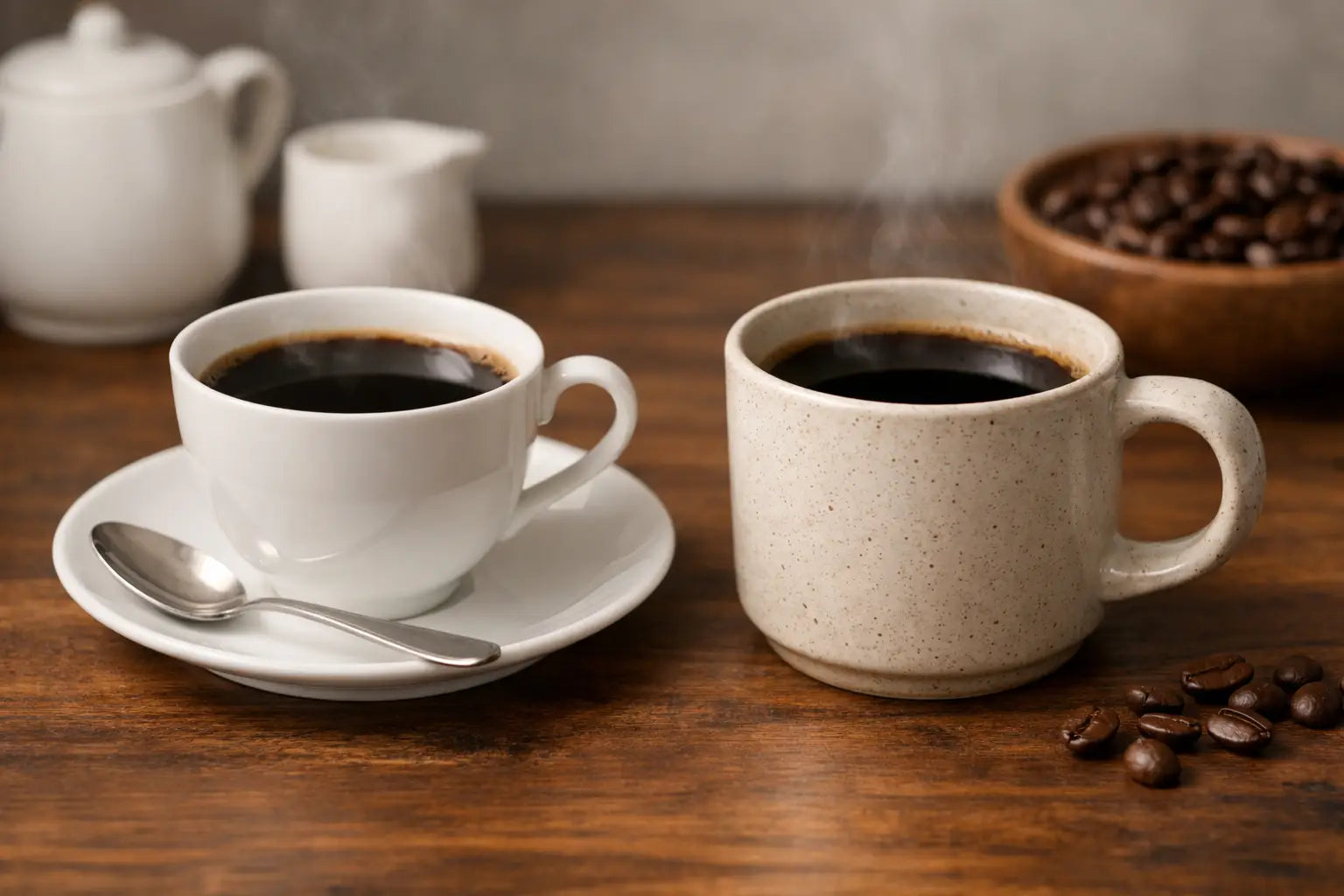
Porcelain vs Ceramic Coffee Cups
A coffee cup does more than hold a pour. It frames the heat in your hands, the color of the crema, the weight of the first sip, and the way a table feels when everything is considered. That is why porcelain vs ceramic coffee cups is not a minor material question. It is a choice that affects taste perception, presentation, durability, and the overall mood of a coffee ritual.
For home entertaining, the difference might show up in how refined a cappuccino service feels on a breakfast table. In a café or restaurant, it can shape guest perception in seconds. Material changes silhouette, surface finish, heat retention, and how polished the final presentation appears under natural light or across a busy dining room.
Porcelain vs ceramic coffee cups: what is the actual difference?
The short version is that porcelain is a type of ceramic, but not all ceramic is porcelain. Ceramic is the broader category, covering clay-based drinkware fired at high temperatures. Stoneware, earthenware, and porcelain all sit under that larger umbrella.
Porcelain is typically made from finer clay and fired at higher temperatures, which creates a denser, less porous body. The result is a cup that often feels smoother, more refined, and visually cleaner. It tends to have thinner walls without sacrificing strength, which is part of why porcelain has long been favored in espresso service and more elevated tabletop settings.
When people say "ceramic coffee cups," they are often referring to standard stoneware mugs. These usually have a slightly thicker build, a more casual feel, and a broader range of rustic or artisanal finishes. They can be beautiful, substantial, and highly functional, but they usually communicate a different design language than porcelain.
How each material changes the drinking experience
Coffee is sensory, and the vessel plays a larger role than many people expect. A porcelain cup generally feels lighter in the hand and more precise at the lip. That finer edge can make espresso and milk-based drinks feel more composed, almost more tailored, because the flow of the liquid is cleaner and the cup itself doesn’t visually compete with the drink.
Standard ceramic cups often feel heartier. They can create a cozy, grounded experience that suits larger brewed coffees and slower morning routines. If your preference leans toward a substantial mug with warmth and weight, ceramic has immediate appeal.
Neither effect is universally better. It depends on what you want the moment to feel like. Porcelain tends to sharpen presentation. Ceramic tends to emphasize comfort and informality.
Heat retention and temperature feel
Heat retention is one of the biggest reasons people compare porcelain vs ceramic coffee cups. Thicker ceramic mugs can hold heat well simply because they have more mass. That can be useful for leisurely drinking, especially with drip coffee or larger milk drinks.
Porcelain can also retain heat effectively, especially when well made, but it often does so with a more balanced feel. Because porcelain cups are frequently thinner and denser, they may warm quickly and present the beverage in a way that feels more controlled rather than overly hot to the touch.
For espresso and cappuccino service, that control matters. You want enough heat retention to support the drink without making the cup feel clunky. In hospitality settings, porcelain often strikes that balance beautifully.
Taste neutrality and porosity
A denser, less porous material is generally better at staying neutral over time. Porcelain has an advantage here. Its smooth, vitrified surface is less likely to absorb moisture, oils, or lingering odors, particularly if the glaze quality is strong.
Many ceramic mugs perform very well too, but lower-density ceramics can be more susceptible to wear, crazing, or subtle absorption over years of use. For coffee drinkers who rotate between espresso, dark roast, flavored drinks, and tea, material stability becomes more relevant than it first appears.
If the goal is a clean, consistent tasting experience with minimal interference, porcelain tends to feel more exacting.
Design, finish, and table presence
This is where the decision often becomes obvious. Porcelain usually delivers a more polished visual effect. Its body is finer, its surface often reads brighter, and its silhouette can be crisper. On a tray, table, or café counter, it gives coffee service a more edited and intentional look.
That is especially true when cups are paired with saucers. Porcelain has a natural affinity for coordinated service pieces because it supports elegant proportions and a cleaner overall profile. If presentation matters as much as performance, porcelain often wins on sheer visual discipline.
Ceramic, especially stoneware, offers a different kind of beauty. It can feel tactile, organic, and expressive. Matte glazes, speckled finishes, hand-thrown character, and thicker forms all create warmth. This style works well in relaxed interiors, neighborhood cafés, and homes where the goal is less formal refinement and more lived-in charm.
The key is to match the material to the setting. A minimalist dining room, modern kitchen, or hospitality concept built around sharp presentation may benefit from porcelain. A softer, more rustic environment may be better served by ceramic.
Durability in daily use
People often assume thicker ceramic automatically means more durable. In practice, durability depends on more than thickness. Clay composition, firing temperature, glaze quality, and manufacturing consistency all matter.
Porcelain is often stronger than it looks. Its density gives it excellent resistance to wear in many day-to-day settings, and high-quality porcelain can stand up well to repeated use, dishwashing, and commercial service. That is one reason it remains a staple in restaurants and cafés that need a cup to look elegant without becoming precious.
Ceramic mugs can also be very durable, particularly stoneware. Their heft can make them feel reassuringly solid, though heavier pieces may chip at the rim or handle if handled roughly. In busy service environments, that extra weight can also affect stacking, carrying, and storage efficiency.
For high-volume hospitality, the best choice often comes down to the exact use case. If you need a refined cup profile with strong long-term presentation, porcelain is hard to beat. If you need casual durability for larger-format coffee service, ceramic may be a better fit.
Which is better for home use?
At home, the answer is usually about ritual and aesthetic alignment. If your coffee moment includes a tray, a saucer, a carefully made flat white, or a kitchen that leans clean and contemporary, porcelain feels naturally at home. It brings a sense of refinement to even a simple morning pour.
If your ideal cup is oversized, comforting, and part of a slower, less structured routine, ceramic may suit you better. It has an approachable quality that makes everyday coffee feel relaxed and generous.
There is also room for both. Many design-minded homes keep porcelain cups for espresso, cappuccino, and entertaining, while ceramic mugs handle daily drip coffee and weekend lounging. That kind of mix creates a more responsive coffee setup rather than forcing one material to do everything.
Which is better for cafés and hospitality?
For cafés, restaurants, and hotels, porcelain often makes the stronger impression. It photographs well, supports a more premium presentation, and pairs easily with curated tabletop programs. It also complements latte art and espresso service because the cup form tends to be more deliberate.
Ceramic still has a place, especially in concepts built around warmth, craft, or handmade character. The right stoneware mug can reinforce a brand identity beautifully. But if consistency, stackability, and a more elevated service profile matter most, porcelain usually offers more control.
That is part of why design-led collections remain so relevant in hospitality. A cup is not only functional inventory. It is part of the guest experience, the table composition, and the visual language of the brand. Angeleno Drinkware approaches coffee service with that same point of view, treating each piece as both a performance tool and a presentation asset.
So, should you choose porcelain or ceramic?
Choose porcelain if you want a cleaner silhouette, a finer feel at the lip, strong material density, and a more elevated tabletop presence. It is especially compelling for espresso, cappuccino, coordinated saucer service, and spaces where visual polish matters.
Choose ceramic if you want warmth, weight, a more relaxed character, and the kind of mug that feels easygoing in the hand. It suits generous pours, casual settings, and interiors that lean organic rather than tailored.
The smartest choice is not the material with the louder reputation. It is the one that supports the kind of coffee experience you want to create. A well-made cup changes how a drink is received before anyone takes a sip. Choose the one that makes your table, your service, and your daily ritual feel more considered.