How to Serve Espresso Elegantly at Home
A well-pulled espresso can lose some of its magic in the wrong setting. Serve it in a thick diner mug or set it down without a saucer, and even excellent coffee feels casual. If you are wondering how to serve espresso elegantly, the answer is not excess. It is proportion, timing, material, and a sense of visual calm.
Espresso is small by design, which means every detail around it becomes more visible. The cup matters more. The temperature matters more. The way the spoon rests on the saucer matters more. Elegant service is really about respecting scale and giving a compact drink the presentation it deserves.
What elegant espresso service actually looks like
Elegant service is precise without feeling stiff. The espresso arrives hot, centered, and intentional. The cup feels balanced in the hand. The saucer is not an afterthought but part of the composition. If something accompanies the drink, it is restrained and chosen with care.
That restraint is what separates refined presentation from overstyling. Espresso does not need garnishes, oversized accessories, or a cluttered tray. It benefits from clean lines, quality materials, and a serving setup that feels curated rather than crowded.
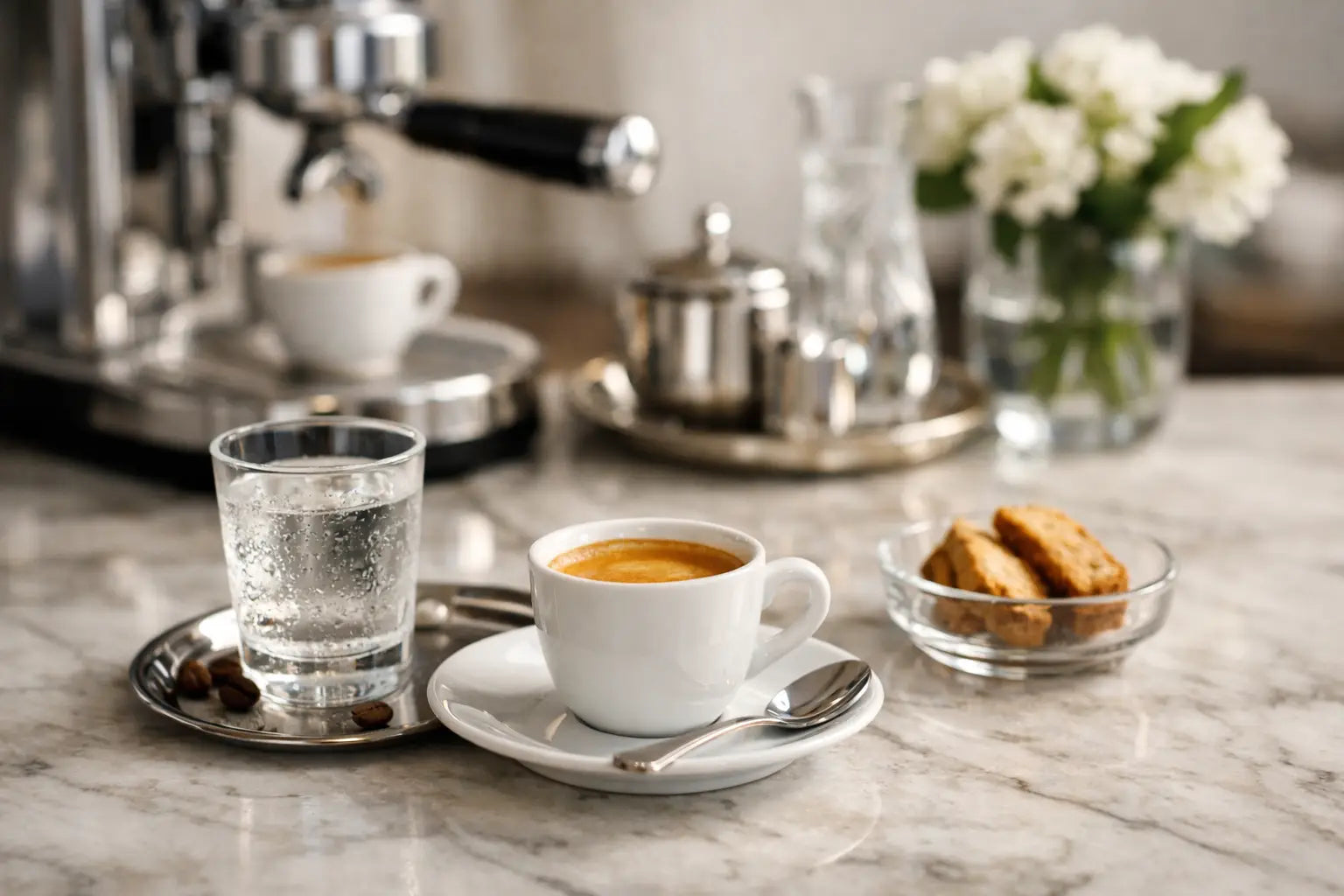
In a home setting, that might mean a porcelain cup and saucer on a small tray with sparkling water and a neatly folded napkin. In a café or hospitality environment, it may mean a consistent cup silhouette across service, polished spoons, and thoughtful spacing that reinforces the brand experience. In both cases, elegance comes from consistency.
Start with the cup if you want to know how to serve espresso elegantly
The cup is the centerpiece of espresso service, and the wrong one changes the entire experience. Espresso should be served in a demitasse-sized vessel, typically around 2 to 3 ounces, with enough room for the shot and its crema without making the drink look lost. A cup that is too large weakens the visual impact and allows heat to dissipate more quickly.
Porcelain remains a favorite for good reason. It holds heat well, feels substantial, and offers a smooth, refined finish that suits both modern and classic table settings. A well-made porcelain espresso cup also gives the crema a beautiful contrast, especially in white or soft neutral tones. The silhouette matters too. A gently rounded interior helps preserve crema and supports the aromatic concentration that makes espresso feel complete.
Glass can be striking, especially in contemporary settings, but it is a more specific look. It highlights the layers of the shot and can feel architectural on the table. The trade-off is temperature retention and, depending on the glass, the tactile experience. If the goal is warmth, softness, and a timeless service ritual, porcelain usually wins.
A matching saucer is not optional if elegance is the aim. It frames the cup, gives the spoon a place to rest, and makes the service feel finished. This is where collection-based drinkware stands out. When cup and saucer are designed together, the proportions read more clearly and the entire setting feels more intentional.
Temperature, timing, and the small discipline of good service
Espresso is unforgiving about timing. It should be served immediately after extraction, while the crema is still intact and the aromas are fully present. Even a beautiful cup cannot compensate for a shot that sat too long on the machine.
Preheating the cup is one of the simplest ways to elevate service. A warm cup helps maintain temperature and signals care. It also changes the first tactile impression for the guest. Cold porcelain against fresh espresso creates a slight disconnect. Warm porcelain feels considered.
The service sequence should be smooth and minimal. Pull the shot, wipe any drips from the cup if needed, place the cup neatly on the saucer, and present it without delay. If sugar is offered, it should be placed beside the cup in a clean, orderly way rather than scattered across the tray. If a spoon is included, it should be polished and scaled appropriately to the demitasse cup.
These details sound small because they are. That is precisely why they matter. Espresso is a compact ritual, and compact rituals magnify imprecision.
The tray or tabletop should support the cup, not compete with it
One of the easiest mistakes in espresso presentation is visual noise. A busy tray, too many accompaniments, or mismatched materials can make the setting feel fussy rather than refined. Elegant service relies on editing.
Think in terms of composition. The cup and saucer should be the focal point. A spoon, napkin, and small glass of water are often enough. On a tabletop, leave breathing room around the setting. On a serving tray, avoid crowding the edges. Negative space gives the service a more premium feel and lets the shape of the cup stand out.
Material contrast can be especially effective when used with restraint. Porcelain against stone, wood, or a lacquered tray creates depth without requiring ornament. If your aesthetic leans modern, choose pieces with crisp geometry and clean glazing. If it leans softer or more classic, focus on rounded forms and a quieter color palette. Either approach works as long as the presentation feels cohesive.
This is where design-minded hosts and hospitality teams can create a memorable impression. Espresso service is often one of the final visual moments in a meal or gathering. It should feel resolved.
What to serve with espresso, and what to leave out
A small accompaniment can make espresso feel more generous, but this is a place where judgment matters. The best additions are simple and scaled to the drink. Sparkling water is classic because it refreshes the palate and adds a subtle sense of ceremony. A petite biscuit, a square of dark chocolate, or a single almond cookie can work beautifully as well.
The keyword is petite. Oversized sweets pull attention away from the espresso and shift the experience toward dessert. That may be right in some contexts, but not if the goal is elegant espresso service. Keep the proportion tight and the presentation neat.
There is also a difference between offering options and creating clutter. If you are serving guests at home, one well-chosen accompaniment usually feels more sophisticated than a mix of wrapped sweeteners, random cookies, and multiple utensils. In a café or restaurant, consistency matters even more. Guests remember the polished repetition of a thoughtful service model.
How to serve espresso elegantly in different settings
At home, elegance is often about intimacy. You do not need a formal table or elaborate setup. What you need is cohesion. A beautiful demitasse set, a clean tray, and attention to temperature can make an everyday shot feel like a refined pause in the day. This is particularly true in smaller homes and apartments, where the ritual itself creates atmosphere.
For entertaining, espresso service works best when it feels integrated into the flow of the gathering. After dinner, bring out a coordinated set rather than serving cups one at a time from the kitchen. If milk is offered for those who want it, present it in a small pitcher that matches the tone of the rest of the service. Avoid mixing casual pieces into an otherwise polished setting.
In hospitality spaces, elegance has to coexist with durability and speed. Cups should be beautiful, but they also need to stack well, hold heat, and maintain their finish through repeated service. The ideal piece balances presentation value with performance. This is why many operators prefer well-crafted porcelain with a confident silhouette - it photographs well, feels substantial in the hand, and supports a consistent guest experience.
The role of color, shape, and table presence
Color affects how espresso reads on the table. White porcelain remains the standard because it gives the crema contrast and keeps the presentation crisp. Black can feel dramatic and modern, but it obscures the visual warmth of the shot. Soft neutrals, warm ivory, and muted stone tones can be beautiful in interiors that lean more residential or design-forward.
Shape also changes perception. A cup with a gently flared lip can feel more delicate, while a straighter silhouette often looks more architectural. Neither is inherently better. It depends on the environment and the mood you want to create. The key is choosing a shape with presence. Espresso is small, so the cup must do more visual work than a larger coffee mug ever would.
That is why thoughtfully designed collections tend to feel more elevated than one-off pieces. When the cup, saucer, and surrounding serveware share a visual language, the ritual becomes more coherent. Angeleno Drinkware approaches espresso service this way - as a complete tabletop expression rather than a single isolated object.
The mistakes that make espresso service feel ordinary
Most ordinary espresso service comes down to one of three things: poor proportion, poor timing, or poor coordination. A cup that is too large makes the drink look diminished. A delayed serve flattens the sensory experience. A mismatched setup makes even good coffee feel improvised.
There is also a tendency to confuse luxury with excess. Gold accents, ornate trays, or too many side elements can make the service feel performative. True elegance is quieter. It lets quality materials, balanced proportions, and careful presentation speak for themselves.
If you want to elevate your espresso ritual, start by simplifying. Choose better cups. Warm them first. Serve the shot immediately. Add only what improves the experience. When each element has a reason to be there, espresso feels less like a caffeine stop and more like a design-minded act of hospitality.
The beauty of elegant espresso service is that it does not ask for grand gestures. It asks for taste, consistency, and a little restraint - the kind that turns a two-ounce pour into a moment people want to linger over.