How to Set a Modern Cocktail Table With Style
A chilled coupe catching the light, one substantial napkin, a small dish of perfectly salted almonds: this is the kind of restraint that makes a cocktail table feel considered. Knowing how to set a modern cocktail table is less about filling every inch of surface area and more about creating a composed moment for the drink, the guest, and the conversation.
Modern entertaining favors clarity over excess. The best table feels relaxed but intentional, with glassware that suits the pour, a few tactile details, and enough open space for guests to set down a drink without negotiating around decorative clutter. Whether you are hosting a dinner party, serving aperitifs before an event, or styling an intimate Friday evening at home, the goal is the same: make every element feel like it belongs.
Start With the Table's Purpose
Before choosing a glass or arranging a garnish, decide what the table needs to do. A cocktail table set for a standing gathering has different priorities than a low table beside a sofa. For a larger party, guests need easy access to drinks, napkins, and small bites. For a seated setting, you have more freedom to create a layered, lounge-like composition.
Think in zones rather than a single crowded display. The drink service should be the visual anchor, while garnishes, snacks, and accessories support it from the perimeter. If you are serving from a bar or console nearby, the cocktail table can stay especially edited: one glass per guest, a small snack, and a discreet place for used picks or napkins.
Scale matters. On a compact bistro table, a pair of beautiful glasses and one low vessel may be enough. On a generous coffee table, use a tray to create definition, then leave the rest of the surface intentionally open. Negative space is not unfinished styling. It is what gives premium materials and clean silhouettes room to register.
How to Set a Modern Cocktail Table in Layers
A refined table comes together in a quiet sequence. Begin with the foundation, establish the drinkware, then add only the details that make the service more comfortable or inviting.
Choose a restrained foundation
A stone, wood, lacquer, or smoked-glass table can stand on its own. If the surface needs softening, begin with a textile rather than a full formal tablecloth. A linen runner, a set of tailored cocktail napkins, or a small woven placemat introduces texture without hiding the table beneath it.
Keep the color story tight. Warm neutrals, charcoal, deep olive, espresso brown, clear crystal, and soft ivory create an elevated backdrop for most interiors. A more expressive room can support a saturated napkin or colored glass, but choose one focal color instead of several competing accents.
A tray is useful when you want a clearly framed drink station. Look for a silhouette with architectural simplicity: a low metal edge, rich wood grain, or matte ceramic surface. It should organize the composition, not turn it into a display case. If the table is small, skip the tray and let the materials of the table remain part of the setting.
Let the glassware lead
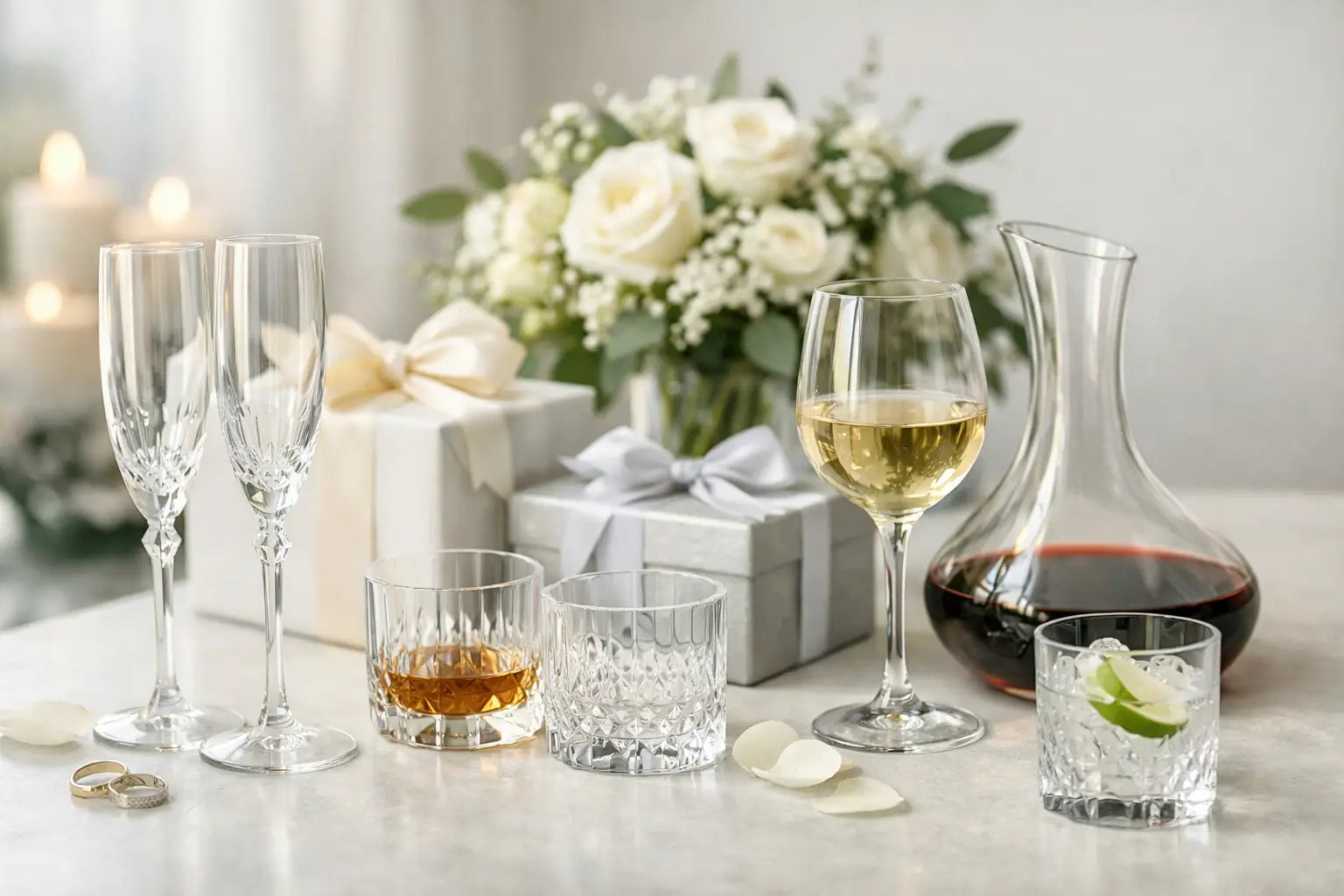
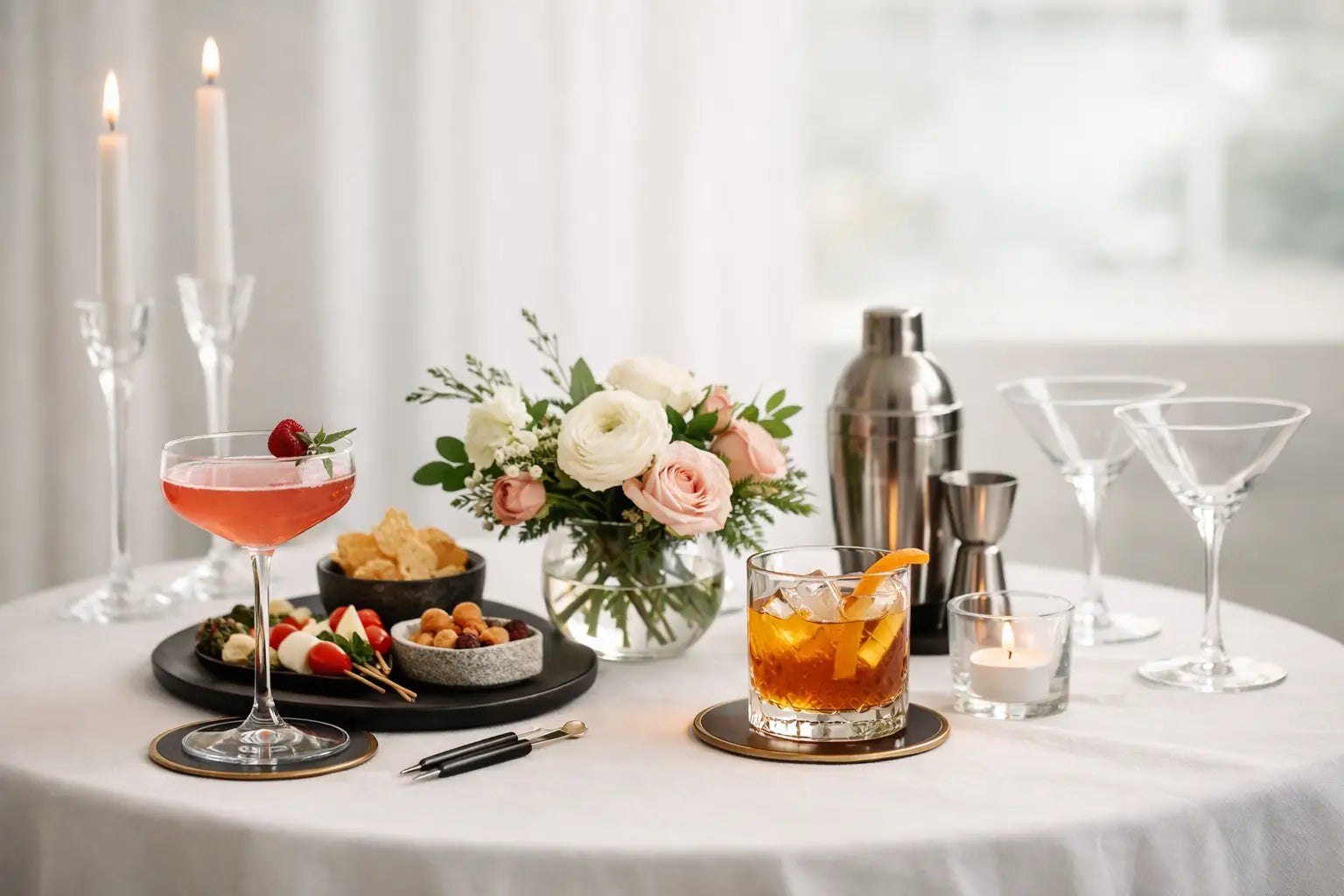
The cocktail glass is often the most visible object on the table, especially before guests take their first sip. Choose a shape that honors the drink rather than relying on one glass for everything. A coupe brings ceremony to a Martini, Sidecar, or French 75. A rocks glass gives an Old Fashioned or Negroni visual weight. A highball suits a Paloma, Collins, or sparkling spritz and leaves room for ice and garnish.
For a polished look, use one cohesive collection across the table. Matching glassware does not mean every vessel must be identical; it means the forms share a visual language. Similar clarity, proportion, and material quality make a mixed drink menu feel curated rather than improvised. Lead-free crystal with clean, contemporary geometry offers brilliance without making the setting feel overly formal.
Place each glass where a guest can reach it without crossing over another person’s space. At a seated cocktail table, position it slightly above and to the right of the napkin. For a standing gathering, arrange ready-to-serve drinks in a loose row or small cluster, never packed so tightly that guests must lift one glass to reach another.
If cocktails are being built to order, set empty glassware out only when the room allows for it. This is a practical trade-off: pre-setting creates a strong visual first impression, but it can also invite dust, fingerprints, and unnecessary handling during a long event. For a more formal occasion, keep pristine glasses at the bar and bring drinks over as they are finished.
Add one considered garnish moment
A modern cocktail table does not need a buffet of citrus, herbs, and elaborate tools. One compact garnish arrangement is usually enough. A shallow ceramic dish with lemon twists, a small coupe of cocktail cherries, or a narrow vase holding fresh rosemary can look generous without becoming busy.
Choose garnishes that belong to the menu. If you are serving Martinis, olives and lemon twists are sufficient. For a smoky mezcal drink, orange wheels and a small pinch bowl of flaky salt may be appropriate. The key is to avoid adding ingredients simply because they photograph well. Every object should either improve the drink or enhance the guest experience.
Keep garnishes low. Tall floral arrangements can be beautiful at a dining table, but they interrupt conversation on a cocktail table and compete with the glassware. A single bud vase, low branch, or sculptural fruit bowl offers dimension while preserving sight lines.
Build in Comfort, Not Clutter
Good hosting often appears effortless because the practical details have already been resolved. Set out cocktail napkins before guests arrive, ideally in a material with enough weight to feel substantial. Paper is perfectly appropriate for a lively gathering, but choose a clean, unfussy design. Linen works well for slower, more intimate service and adds a soft counterpoint to crystal and metal.
Provide a small dish for olive pits, citrus rinds, or cocktail picks. This humble detail keeps the table looking composed after the first round. If food is part of the occasion, choose bites that can be eaten cleanly with a napkin or small pick: spiced nuts, marinated olives, crisp crackers, or a neatly arranged selection of cheese and fruit.
Coasters depend on the table and the drink. On porous stone, lacquer, antique wood, or a treasured vintage surface, they are essential. On an outdoor metal table or a casual, sealed surface, they may feel unnecessary. If you use them, select coasters with a slim profile and material contrast, such as dark leather against pale stone or pale marble against a black table.
Lighting is another practical luxury. Candlelight can make crystal and ice look exceptional, but use low votives or shaded lamps that do not crowd the table. Avoid heavily scented candles near cocktails, where fragrance can interfere with aroma and flavor. A warm pool of light is enough to make the setting feel more intimate.
Use Height and Texture With Intention
The most compelling modern tables have variation, but not visual noise. Aim for low, medium, and slightly taller elements. The glasses naturally provide one level; a small snack bowl or candle provides another; a slim floral accent can provide the highest point. Keep the overall profile low enough for easy conversation.
Texture creates a sense of warmth in a minimal setting. Pair clear glass with linen, brushed metal, ceramic, or natural stone. A faceted crystal glass beside a matte porcelain olive dish feels more dimensional than a table made entirely from one glossy material. For an especially composed look, repeat one finish twice. For example, a brass cocktail pick can echo a brass candleholder, or an ivory ceramic bowl can relate to pale linen napkins.
This is where a collection-based approach earns its place. Glasses, espresso cups, serving pieces, and accessories do not need to match exactly, but they should feel as though they were chosen by the same eye. Angeleno Drinkware collections are designed around that sense of continuity, bringing a cohesive presence to both everyday pours and more formal hospitality.
Make the Table Work for the Menu
The drink itself should influence the setting. A clear, stirred cocktail benefits from a darker, more dramatic backdrop that lets the liquid and garnish stand out. A bright spritz or citrus-forward highball looks at home with lighter ceramics, fresh greenery, and airy linen. Champagne calls for less ornamentation than most hosts expect: beautiful flutes, a chilled bottle, and a few thoughtful nibbles already feel celebratory.
For a single signature cocktail, you can be more specific. Set the appropriate glasses, garnish each one before guests arrive, and make the table feel like a focused ritual. For a menu with several options, keep the cocktail table simpler and place bottles, ice, tools, and extra garnishes at a separate service station. This preserves the table as a place to enjoy the drink rather than a place to manage its preparation.
Do not overlook temperature. Chilled glassware signals care before the drink is even tasted. Keep stemmed glasses cool but dry, and avoid filling them too early if the cocktail will lose its texture or effervescence. A few well-timed rounds are often more elegant than setting out every drink at once.
Edit Before Guests Arrive
Once the table is set, remove one thing. Then step back and look at it from where guests will stand or sit. Can they see the drinks? Is there room to rest a glass? Does the table invite conversation, or does it look too precious to touch?
The answer to a modern cocktail table is rarely more decoration. It is better proportion, a more appropriate glass, a cleaner surface, and details that anticipate what a guest will need. When the first drink is poured, the table should feel ready for the evening to unfold - polished enough to be memorable, relaxed enough to be lived in.