Crystal vs Glassware for Cocktails
The first thing guests notice about a cocktail is rarely the spirit. It is the silhouette in their hand, the way light catches the rim, the weight of the glass as it meets the table. That is why crystal vs glassware for cocktails is not a minor detail. It shapes presentation, texture, and the overall ritual of serving a drink well.
For home entertaining, the choice often comes down to atmosphere and lifestyle. For bars and restaurants, it also becomes a question of durability, replacement cycles, and how a glass performs across repeated service. The right answer is not always the more expensive one. It is the one that fits the drink, the setting, and the standard you want your table to communicate.
Crystal vs glassware for cocktails: what is the real difference?
At a glance, crystal and standard glass can look similar, especially in clean, modern shapes. The difference is in the material composition and how that material behaves. Traditional crystal contains minerals that give it greater brilliance and a finer feel. Many contemporary versions are lead-free crystal, which offers that elevated clarity and resonance without using lead.
Standard soda-lime glass, which is what most everyday drinkware is made from, is practical and widely used. It tends to be less expensive, often a bit thicker, and generally more casual in feel. There is nothing inherently wrong with it. In fact, for many high-volume settings, it is the sensible choice. But it usually does not have the same light refraction, edge refinement, or visual crispness that crystal brings to a cocktail presentation.
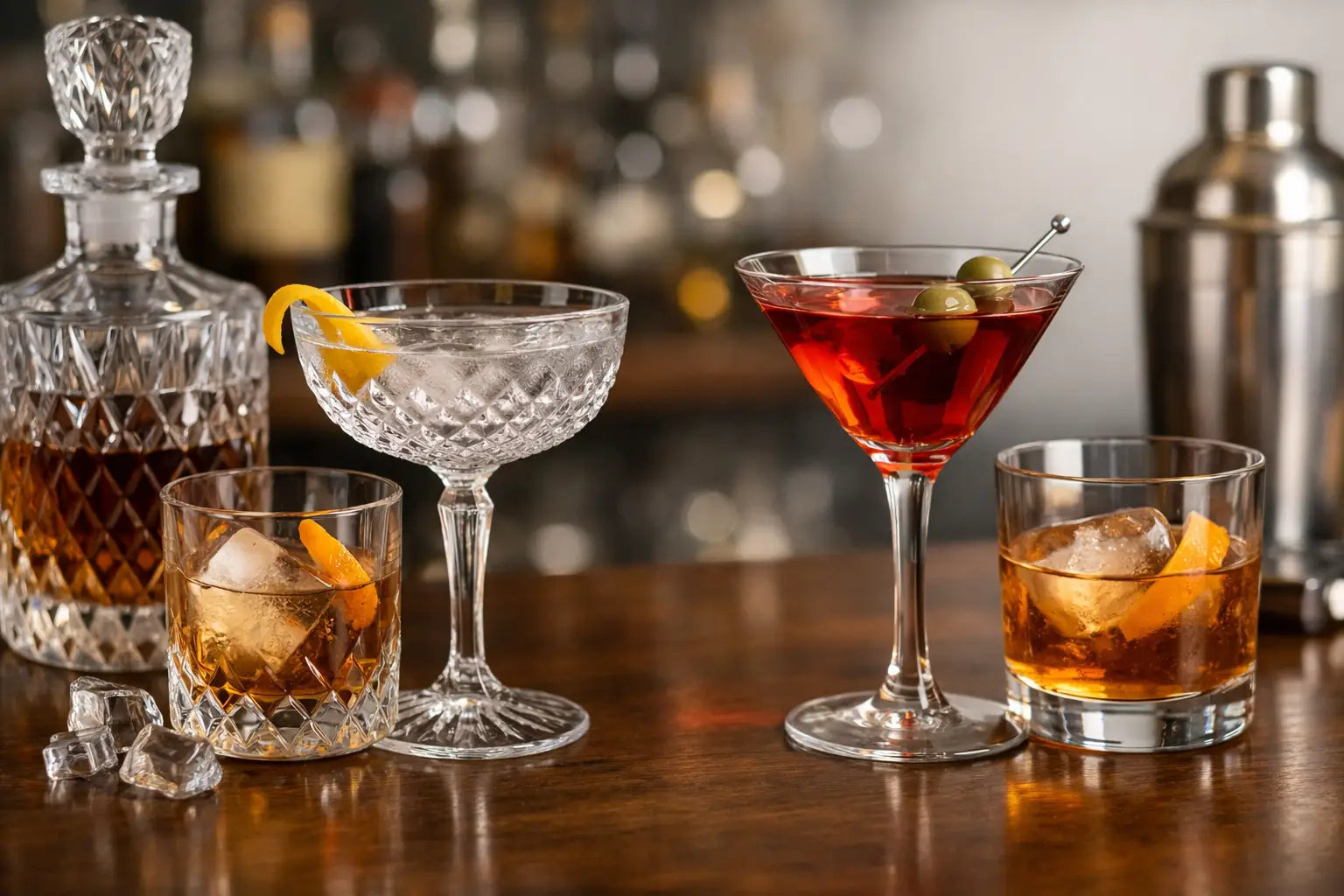
If you care about how a martini catches candlelight or how an Old Fashioned looks against a perfectly cut cube, the material difference is visible. It is not just a technical distinction. It changes the mood of the drink.
How crystal changes the cocktail experience
Crystal has a way of making a drink feel composed before the first sip. The bowl often appears clearer, the walls can be made thinner without feeling flimsy, and the rim tends to deliver a more refined mouthfeel. That last detail matters more than many people realize. A thin, well-finished rim can make stirred cocktails feel sleeker and more precise.
There is also the matter of weight. Good crystal often feels balanced rather than heavy for the sake of being heavy. In a coupe or Nick and Nora glass, that balance gives elegance. In a rocks glass, it gives presence. The drink feels intentional in the hand, which reinforces the sense that what is being served is worth slowing down for.
For design-conscious hosts, crystal also works harder visually. It elevates a bar cart, photographs beautifully, and creates consistency across a table setting. In hospitality, that presentation value can support the entire identity of a beverage program. A cocktail served in a sharp, luminous vessel reads differently than the same recipe poured into a generic tumbler.
Where standard glassware still makes sense
Standard glassware earns its place because not every cocktail moment calls for delicacy. If you host often, have a busy household, or need versatile pieces for mixed use, glass can be the more forgiving option. It is often less expensive to replace and, depending on the construction, may feel more suitable for casual, frequent handling.
This matters in real life. A set of glasses that makes you nervous every time someone reaches for ice is not always the right set for a weekend gathering. In restaurants and bars, especially high-volume environments, standard glassware can make operational sense if breakage, stacking, and turnover are priorities.
There is also a style argument in favor of standard glass. Some cocktails benefit from a less polished, more relaxed presentation. A paloma on the patio, a ranch water at a summer dinner, or a simple whiskey soda for a crowd does not always need high sparkle. Sometimes restraint looks better than ceremony.
Crystal vs glassware for cocktails in home bars
For the home bar, the best choice usually depends on how you entertain. If your style leans curated, layered, and design-forward, crystal tends to reward that effort. It makes a smaller collection feel special and turns familiar drinks into a more elevated ritual. A lead-free crystal coupe, for example, can make even a simple gimlet feel considered.
If your home bar is more flexible and social, with guests helping themselves and glasses moving from kitchen island to patio table, a mixed approach often works best. Use crystal for the signature pieces that define the experience, then rely on durable glass for everyday pours and larger gatherings.
This is where collection-based thinking helps. Instead of buying a random assortment, choose silhouettes with distinct roles: a rocks glass for spirit-forward cocktails, a coupe for served-up drinks, and a versatile highball for long drinks. In premium materials, fewer pieces can create a stronger impression than a crowded cabinet full of mismatched basics.
What matters most for bars and restaurants
Professional buyers have a more layered calculation to make. The visual standard matters, but so do wash cycles, storage, replacement cost, and consistency across service. Crystal can be an excellent fit for cocktail programs where presentation is central to guest experience, especially in lounges, hotel bars, and fine dining settings where every table detail supports the brand.
That said, not every venue needs crystal across every category. Many hospitality operators reserve higher-end crystal for martinis, Manhattans, premium pours, and featured cocktails, while using more durable glassware for water service, beer, and high-volume mixed drinks. That strategy protects the aesthetic where it is most visible without making the whole program fragile or cost-heavy.
Rim durability, stackability, and dishwasher performance are worth considering as much as appearance. A beautiful glass that chips easily during service quickly loses its luxury value. The best drinkware for hospitality has to hold up under pressure while still looking composed on the table.
Design, clarity, and the psychology of presentation
People taste with their eyes before they taste with their palate. That is especially true with cocktails, where color, dilution, garnish, and glass shape all signal what kind of experience is about to happen. Crystal supports that visual theater with higher clarity and more precise edges.
A clear stirred cocktail in crystal looks colder. A sparkling spritz looks brighter. Even a minimalist pour of tequila over ice can feel more premium when the vessel has definition and polish. This is not vanity. Presentation changes expectation, and expectation changes perception.
For a design-led brand like Angeleno Drinkware, that connection between form and experience is the point. Drinkware is not an afterthought. It is part of the composition, just like the lighting, the linens, and the bottle selection behind the bar.
Which should you choose?
Choose crystal if you want elevated clarity, a finer rim, and stronger visual impact. It is especially compelling for cocktail styles where presentation is part of the pleasure: martinis, coupes, neat pours, and spirit-forward classics. It suits hosts who want their barware to feel as intentional as their interiors.
Choose standard glassware if ease, volume, and utility come first. It is practical for everyday drinking, outdoor settings, larger parties, and operations where turnover is high. It can still look polished, especially when the silhouette is clean and proportioned well.
For many people, the most satisfying answer is not either-or. It is a thoughtful combination. Save crystal for the moments you want to frame. Keep everyday glassware for the moments that should feel easy.
A good cocktail deserves a vessel that matches its point of view. When the material, shape, and setting align, the drink does more than taste good. It leaves an impression.