What Glass Shape Preserves Champagne Bubbles Best?
A Champagne bottle makes its entrance with sound, but the glass determines how long that energy stays in the room. If you have wondered what glass shape preserves champagne bubbles, the short answer is a tall, narrow glass with a gently tapered opening - ideally, a tulip-shaped Champagne glass. It gives effervescence room to rise while slowing the release of carbon dioxide at the surface.
That answer comes with a worthwhile nuance. The best glass is not only about keeping bubbles alive. Champagne is built from texture, aroma, temperature, and visual rhythm. The right silhouette should preserve its sparkle while allowing its citrus, brioche, orchard fruit, or mineral character to be experienced with intention.
What Glass Shape Preserves Champagne Bubbles Most Effectively?
For most Champagnes and quality sparkling wines, the tulip is the most balanced choice. Its bowl begins relatively narrow, broadens slightly through the middle, then draws inward at the rim. This modern geometry gives the wine more aromatic space than a classic flute, while the tapered top helps retain carbon dioxide and directs fragrance toward the nose.
A traditional flute also preserves bubbles beautifully. Its long, slim bowl limits the surface area exposed to air, so less gas escapes at once. That makes it especially effective for a fresh, bright pour when the visual procession of bubbles matters most.
The distinction is subtle but meaningful. A flute prioritizes length, lift, and a crisp presentation. A tulip preserves much of that lively effervescence while offering a fuller sensory experience. For celebratory hosting, restaurant service, or a considered home bar, the tulip is often the glass that feels as complete as the wine itself.
Why Shape Changes the Way Champagne Sparkles
Champagne's bubbles are carbon dioxide escaping from the wine after the bottle is opened. They form at tiny points on the glass surface called nucleation sites, then travel upward and burst when they reach the top. The size of the opening influences how quickly that carbon dioxide disperses into the air.
A wide opening releases gas quickly. A narrow opening slows that release, helping the wine stay animated for longer. Glass height also creates a more dramatic path for the bubbles to rise, turning each pour into part of the presentation.
But Champagne is not simply a study in fizz. As bubbles burst, they carry aromatic compounds upward. A glass that is too narrow can concentrate the sensation of carbonation while limiting the wine's bouquet. This is why many Champagne producers and sommeliers have moved beyond the strictly narrow flute for more complex vintage bottlings and prestige cuvées.
A tapered tulip answers both needs. It provides enough width for the wine to open, yet its narrowed rim holds aroma and helps prevent the effervescence from disappearing too quickly. It is the design-forward middle ground: expressive without becoming unruly.
The role of the rim
A finely finished rim has its own quiet impact. It creates a more refined contact point, so the first sip feels less interrupted by the glass itself. For sparkling wine, that delicacy supports the impression of fine, creamy bubbles rather than emphasizing sharp carbonation.
The rim diameter matters, too. A slightly inward curve guides aroma toward the drinker and keeps the wine's mousse, the soft foamy texture created by bubbles, closer to the surface. It is a small detail that can make a familiar bottle feel more composed.
The role of the bowl
A little breathing room is beneficial, particularly for aged Champagne. Wines with time on lees often have layered notes of toasted almond, pastry, honey, and dried citrus. A tulip bowl gives these elements space to emerge without sacrificing the freshness that makes sparkling wine so compelling.
For a young Prosecco or a light, fruit-forward sparkling rosé, a narrower flute can still be exactly right. The wine's charm is often its directness: bright fruit, chilled refreshment, and immediate sparkle. The glass should support that mood rather than overcomplicate it.
Flute, Tulip, or Coupe?
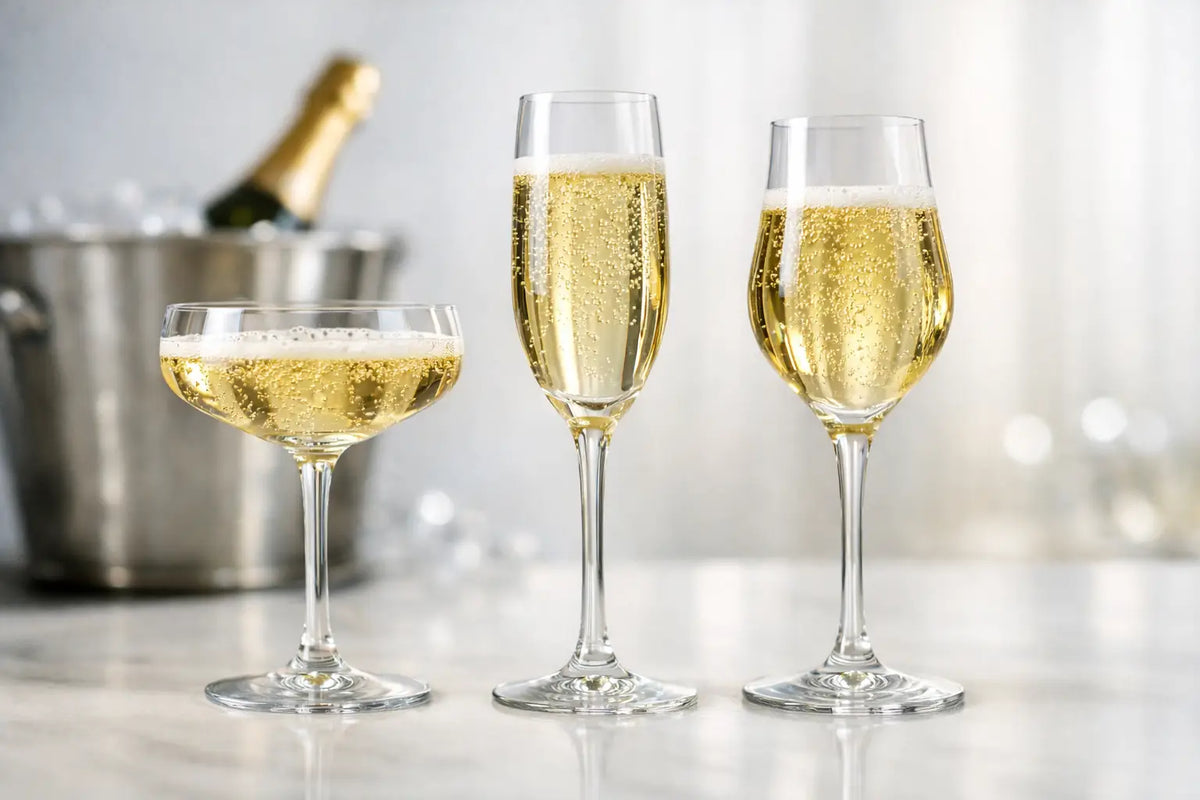
Each of the three iconic Champagne shapes creates a different experience at the table. None is wrong in every setting, but they do serve different priorities.
The Champagne flute: best for a crisp, celebratory pour
The flute is the familiar symbol of a toast. Its narrow profile preserves carbonation effectively, showcases a steady column of bubbles, and looks striking on a dressed table or passed tray. It is a natural choice for large gatherings, aperitif service, weddings, and occasions where Champagne is being enjoyed young and cold.
Its trade-off is aroma. Because the bowl is slim, it offers less space for nuanced wines to unfold. A flute can make an exceptional vintage Champagne feel more linear than it truly is, emphasizing sparkle over depth.
The tulip glass: best for balance and expression
The tulip is the most versatile shape for drinkers who care about both presentation and flavor. It maintains a graceful vertical silhouette while adding a broader center and tapered rim. The result is a glass that honors fine bubbles, holds temperature well, and gives the wine's fragrance more dimension.
It is particularly well suited to grower Champagne, vintage Champagne, Blanc de Blancs, rosé Champagne, and polished domestic sparkling wines. For hosts building a collection with a single elevated Champagne shape, this is the strongest all-around choice.
The coupe: best for style, not bubble retention
The coupe brings unmistakable glamour. Its broad, shallow bowl is made for a certain kind of scene: a candlelit dinner, a retro cocktail moment, or a tower of sparkling wine that turns a reception into theater.
Still, it is the least effective option for preserving bubbles. The wide surface exposes more wine to air, allowing carbon dioxide to escape quickly. Aromas also disperse rather than gathering near the rim. Serve Champagne in coupes when the visual statement is the point, and pour smaller portions so every sip is enjoyed while bright and cold.
The Glass Is Only Part of the Equation
Even the most considered silhouette cannot compensate for warm wine or an overfilled bowl. Champagne performs best when served well chilled, generally around 45 to 50 degrees Fahrenheit for non-vintage bottles. More complex vintage expressions can be served a touch warmer, allowing their aromas to become more visible.
Pour with restraint. Filling a flute or tulip roughly two-thirds full leaves room for the mousse to form and for the bouquet to collect near the opening. It also keeps the wine colder as you drink. A generous pour may look festive at first, but a smaller, more deliberate serving usually tastes better from first sip to last.
Cleanliness matters more than many hosts realize. Residual dishwasher film, detergent, or oil can affect how bubbles form and can mute the wine's clarity. Rinse glasses thoroughly, dry them with a lint-free cloth, and avoid storing them where kitchen odors can settle inside the bowl.
For hospitality teams, consistency is equally valuable. The same glass shape across a service program creates a recognizable visual language, improves the guest's first impression, and ensures every pour is experienced as intended. A cohesive collection turns a routine toast into a curated moment.
Choosing a Champagne Glass for Your Table
Start with the wine you pour most often and the experience you want to create. If your celebrations lean lively, spontaneous, and effervescent, a tall flute brings the right sense of occasion. If you open Champagne for dinner, gift exceptional bottles, or enjoy noticing how a wine changes in the glass, choose a tulip silhouette.
Material also shapes the ritual. Clear, lead-free crystal can bring notable brilliance and a lighter, more refined feel in hand, allowing the wine's color and bead to take center stage. A balanced stem and comfortable bowl make a difference over the course of a long dinner, especially when glassware is part of a larger tabletop story.
At Angeleno Drinkware, that relationship between form and function is central to the table. A well-proportioned Champagne glass should feel considered before it is filled, then quietly disappear into the pleasure of the pour.
The next time you open something sparkling, let the glass match the bottle's intention. A narrow, tapered silhouette will keep the bubbles composed, but the real luxury is giving every bright, fleeting sip the attention it deserves.