Best Glasses for Negroni Cocktails, Chosen Well
A Negroni arrives at the table with very little room to hide. Three equal parts, a broad orange peel, a flash of ruby-red color, and a single large cube are all it takes to reveal whether the serve feels considered. The best glasses for negroni cocktails do more than hold the drink. They frame its color, preserve its measured chill, and give a familiar aperitivo ritual the presence it deserves.
For most home bars and polished hospitality programs, the answer is a low, substantial rocks glass. But that simple recommendation leaves out the details that distinguish an ordinary pour from a refined indulgence: capacity, rim shape, weight, clarity, and the relationship between glass and ice. Choosing well means understanding what the Negroni asks of its vessel.
Why a Negroni Belongs in a Lowball Glass
The classic Negroni is a short, spirit-forward cocktail. Unlike a highball or spritz, it does not need the visual height or extra volume of a tall glass. Its composed balance of gin, Campari, and sweet vermouth is best experienced in a compact vessel that keeps the drink close, chilled, and aromatic.
A double old fashioned or generous rocks glass is usually the most natural fit. The lower silhouette lets the orange oils gather near the rim, while the wide opening gives the guest room to appreciate the garnish and the drink's layered botanical character. It also accommodates a large-format ice cube or sphere, which chills slowly and dilutes with restraint.
A smaller single old fashioned glass can work beautifully for a Negroni served up or with a modest cube. For a standard rocks pour, however, it can feel crowded once the ice and orange peel are in place. A little breathing room is part of the presentation.
The Best Glasses for Negroni Cocktails: What to Look For
The ideal Negroni glass is not necessarily ornate. It should feel deliberate in the hand and proportioned for the drink. A capacity of roughly 10 to 14 ounces offers the most flexibility for a classic pour over a large cube without making the cocktail look lost inside the glass.
A wide, clean opening
The Negroni's aroma is as integral as its bitterness. Gin brings botanicals, vermouth adds herbal depth, and expressed orange oil lifts the whole composition. A reasonably wide rim allows those aromas to open rather than funneling them too tightly. It also creates a generous visual field for a clear ice cube and a neatly cut peel.
This does not mean the glass must be excessively broad. A vessel that is too wide can make a modest three-ounce cocktail appear flat and underfilled. Look for an opening that feels balanced with the glass's height, rather than a shallow bowl that prioritizes drama over proportion.
Enough weight to feel composed
A Negroni has a certain gravity, and its glass should echo it. A substantial base gives the serve a grounded, confident feel on a coffee table, marble bar, or restaurant tabletop. It also improves stability when guests are settling into conversation with a drink in hand.
Weight is a matter of preference, though. Extremely heavy glassware can be satisfying in a traditional steakhouse setting, but it may feel visually dense in a lighter, more contemporary tablescape. Fine lead-free crystal offers another direction: luminous clarity and a more precise silhouette, with enough durability for regular use when properly cared for.
Crystal clarity and considered geometry
The Negroni's saturated red-orange hue is one reason it remains an enduring visual icon. Clear glass lets that color do its work. Crystal or high-quality clear glass catches candlelight, highlights the edge of the ice, and makes the citrus garnish read as intentional rather than incidental.
Modern geometry can be especially effective here. A clean-sided tumbler, subtle faceting, or a softly tapered form adds visual interest without competing with the cocktail. For design-minded hosts, the glass becomes part of the ritual: a small architectural object that looks as good on an open shelf as it does in a hand.
A rim that supports the garnish
The rim should feel smooth and comfortable, but it does not need to be paper-thin. Negronis are sipped slowly, often over the course of an evening. A finely finished rim makes that experience more elegant, while a well-proportioned opening gives an orange peel a natural place to rest or curl within the drink.
Avoid using a very narrow tumbler simply because it looks sleek. Compressing the peel can mute its aromatic contribution, and a tight opening makes large ice difficult to place without splashing or awkward adjustments.
Rocks Glasses, Coupes, and Nick & Nora Glasses
A rocks glass is the classic choice, but it is not the only option. The right glass depends on how you serve the drink and what kind of occasion you are creating.
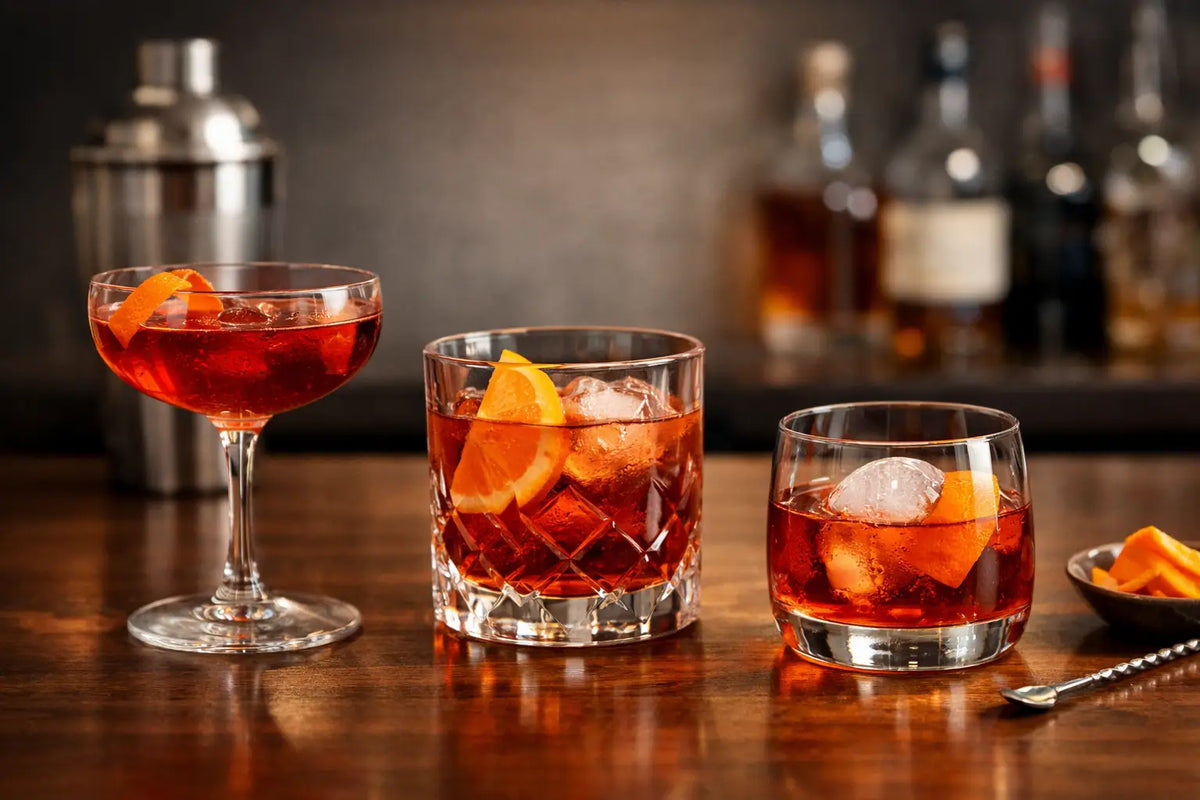
A rocks glass is best for the classic Negroni on a large cube. It is relaxed yet polished, practical for home entertaining, and ideal for the slow dilution that softens the drink as it opens. It also transitions naturally from aperitivo hour to late-night conversation.
A coupe suits a Negroni served up, without ice. This presentation feels more formal and is especially appealing when the drink has been stirred with ice and strained very cold. The trade-off is temperature. Without ice, the cocktail will warm more quickly, so it is best for a smaller serve enjoyed promptly. A chilled coupe also leaves less room for the large orange peel that defines many classic presentations.
A Nick & Nora glass offers a poised middle ground. Its smaller bowl and stem create an elegant serve-up format while offering slightly more containment than a broad coupe. For restaurant bars serving a chilled Negroni variation, it can feel precise and quietly luxurious.
There is no need to force every Negroni into stemware for the sake of ceremony. The original pleasure of the drink is its confident simplicity. For most occasions, a beautifully proportioned lowball remains the more convincing choice.
Match the Glass to the Ice
The ice is not an accessory. It is an ingredient with a visual role, and the glass should make space for it.
Large clear cubes are especially well suited to Negronis because they melt slowly, maintain the cocktail's concentrated character, and create a sculptural focal point. Choose a tumbler with a broad enough base to seat the cube securely. If the ice presses against the sides or rises above the rim, the glass is too small for the serve.
Spheres offer a softer, more cinematic look and can work in rounded rocks glasses. They are slightly less practical to garnish around than a cube, but they create a striking contrast with the Negroni's sharp citrus peel. Standard smaller cubes are perfectly acceptable for a casual pour, although they melt faster and can make an otherwise elegant drink feel less intentional.
For hospitality settings, consistency matters as much as style. Select one glass-and-ice pairing that bartenders can reproduce quickly and that photographs well across the bar. The result is a more recognizable guest experience, from the first round to the final table check.
Build a More Considered Negroni Service
The glass earns its place when the rest of the serve is equally thoughtful. Chill the tumbler briefly if possible, use fresh and clear ice, and cut a substantial strip of orange peel with enough surface area to express over the drink. Twist it above the glass to release its oils, then run the colored side along the rim before placing it inside.
Keep the garnish restrained. A Negroni does not need herbs, dehydrated wheels, or elaborate picks to look complete. Its appeal lies in contrast: clear glass, amber-red liquid, bright orange, and a clean block of ice. When each element is well chosen, the effect is memorable without being busy.
For a coordinated bar cart or restaurant program, match the tumbler to the overall collection rather than treating cocktail glassware as an afterthought. The Figueroa line from Angeleno Drinkware, crafted in lead-free crystal, brings a polished clarity and contemporary profile that suits the drink's timeless structure while complementing wine and celebratory glassware at the same table.
A great Negroni glass should invite a slower first sip. Choose one with clarity, comfort, and a silhouette that gives the cocktail room to glow, then let the orange oils and evening light handle the rest.