Coupe Versus Flute Champagne for Every Pour
A Champagne toast can feel entirely different before the first sip. Set a shallow coupe beside a tall flute and the table immediately takes on two distinct personalities: one cinematic and celebratory, the other polished and precise. The coupe versus flute champagne decision is not simply about tradition. It shapes the wine’s aroma, the life of its bubbles, the pace of the occasion, and the visual language of your table.
For a casual Friday aperitif, a wedding reception, or a restaurant’s signature welcome pour, the right silhouette depends on the experience you want to create. Both glasses have a place. The more useful question is what you want the Champagne to do once it reaches the guest.
Coupe versus flute champagne: the essential difference
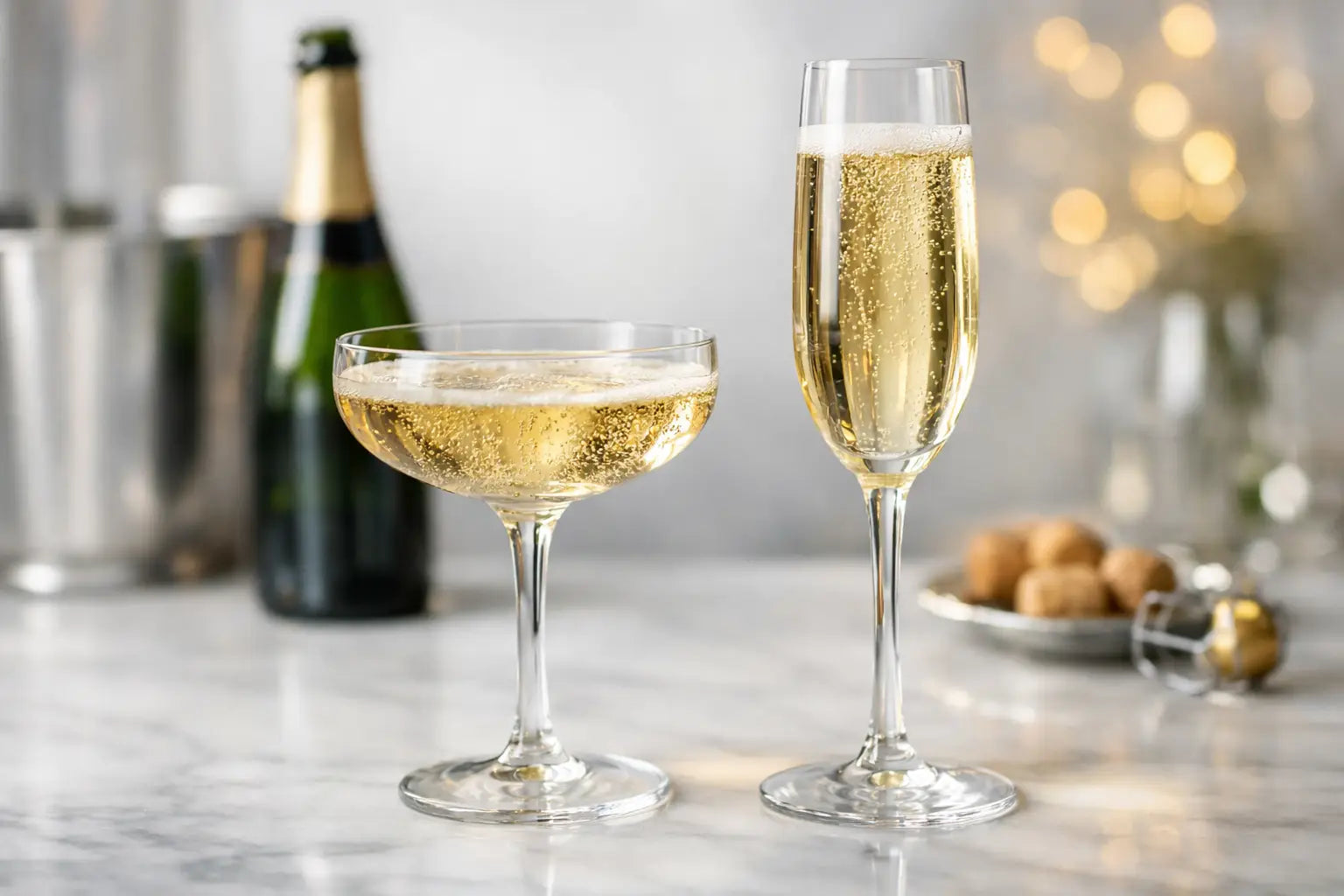
A coupe is broad, shallow, and open at the top. Its low, wide bowl creates an expressive presentation, especially when poured with a pale sparkling wine, a rosé Champagne, or a classic cocktail. It invites a quick first sip and puts the drink’s color, movement, and garnish in full view.
A flute is tall and narrow, with a small opening designed to guide bubbles upward in a continuous stream. It is the familiar choice for formal toasts, receptions, and celebrations where a pour may be held for a while before it is finished. Its vertical profile feels elegant in the hand and makes the effervescence itself part of the presentation.
Neither is automatically better. A coupe privileges atmosphere and openness; a flute favors retention and height. Your choice should reflect the style of sparkling wine, the setting, and whether the glass is meant to be a fleeting visual moment or a vessel for slower appreciation.
Why glass shape changes Champagne
Champagne is a sensory wine. Its tension comes from acidity, texture, scent, and carbon dioxide working together. The bowl and rim affect how those elements arrive.
Bubbles and temperature
The flute’s narrow opening slows the release of carbon dioxide. That is why a flute tends to preserve its bead longer, particularly during a standing toast or a large event where guests may chat before taking a sip. Its smaller surface area also gives the wine less exposure to room temperature.
A coupe exposes more wine to air. The bubbles soften sooner, and the wine can warm more quickly if held for a long time. This is not necessarily a flaw. For guests who find intensely fizzy Champagne a little aggressive, the coupe creates a softer, rounder drinking experience. It is especially suited to a pour that will be enjoyed promptly rather than carried around the room.
Aroma and flavor
A wide coupe allows aromas to disperse quickly, making the first impression more open but less concentrated. You may notice bright fruit and florals, yet the wine will not hold its fragrance as tightly near the rim. This can work beautifully with uncomplicated, fruit-forward sparkling wines or with festive cocktails where aroma is only one part of the experience.
A flute concentrates bubbles, but its narrow rim can limit how fully the wine’s aroma develops. This creates a clean, focused sip, though it may not show the complexity of an aged Champagne as generously as a broader, gently tapered sparkling-wine glass.
For a serious bottle with layered notes of brioche, citrus peel, stone fruit, or toasted almond, many wine professionals prefer a tulip-shaped glass. It is worth knowing, even when choosing between coupe and flute, because it clarifies the trade-off: the flute is best for sustained sparkle, while a wider bowl is better for aromatic expression.
When a coupe is the right choice
A coupe is made for a table with a point of view. Its silhouette brings immediate softness and old-Hollywood glamour to dinner parties, dessert courses, anniversary pours, and celebratory cocktail service. It feels intentional without requiring a formal occasion.
Choose coupes when presentation is central to the moment. Their broad bowls photograph beautifully, complement low floral arrangements, and create a generous visual rhythm when set in multiples across a table. A coupe can make even a simple sparkling wine feel like part of a curated experience.
It is also the natural choice for Champagne cocktails. A French 75, a Champagne cocktail with bitters and sugar, or a sparkling aperitif with a delicate garnish benefits from the coupe’s open bowl. The shape gives the drink room to breathe and makes the garnish visible rather than hidden behind a narrow rim.
For home entertaining, coupes reward a host who serves in smaller rounds. Keep the bottle well chilled, pour just before guests sit down, and enjoy the wine while its texture is still lively. The ritual becomes less about preserving every last bubble and more about creating a generous, beautiful first sip.
When a flute earns its place
The flute remains a classic for good reason. It is graceful, practical, and especially effective when timing is less controlled. At a wedding, gallery opening, holiday party, or restaurant reception, guests may receive Champagne before everyone is ready to drink. A flute gives the pour more staying power.
Its tall silhouette also suits spaces where drinks are carried rather than served at a seated table. The glass is easier to hold in one hand, its narrower profile is more efficient on a tray, and the visual effect of rising bubbles instantly signals celebration.
For hospitality teams, that practicality matters. Flutes create a consistent presentation across a room and keep pours looking fresh through a service window. Their shape can help preserve the polish of a welcome beverage even when the event is moving quickly.
The flute is particularly fitting for crisp non-vintage Champagne, Prosecco, Cava, and other sparkling wines whose appeal centers on freshness and energetic effervescence. Serve well chilled, and let the glass highlight its clean, bright character.
Design the setting, not just the pour
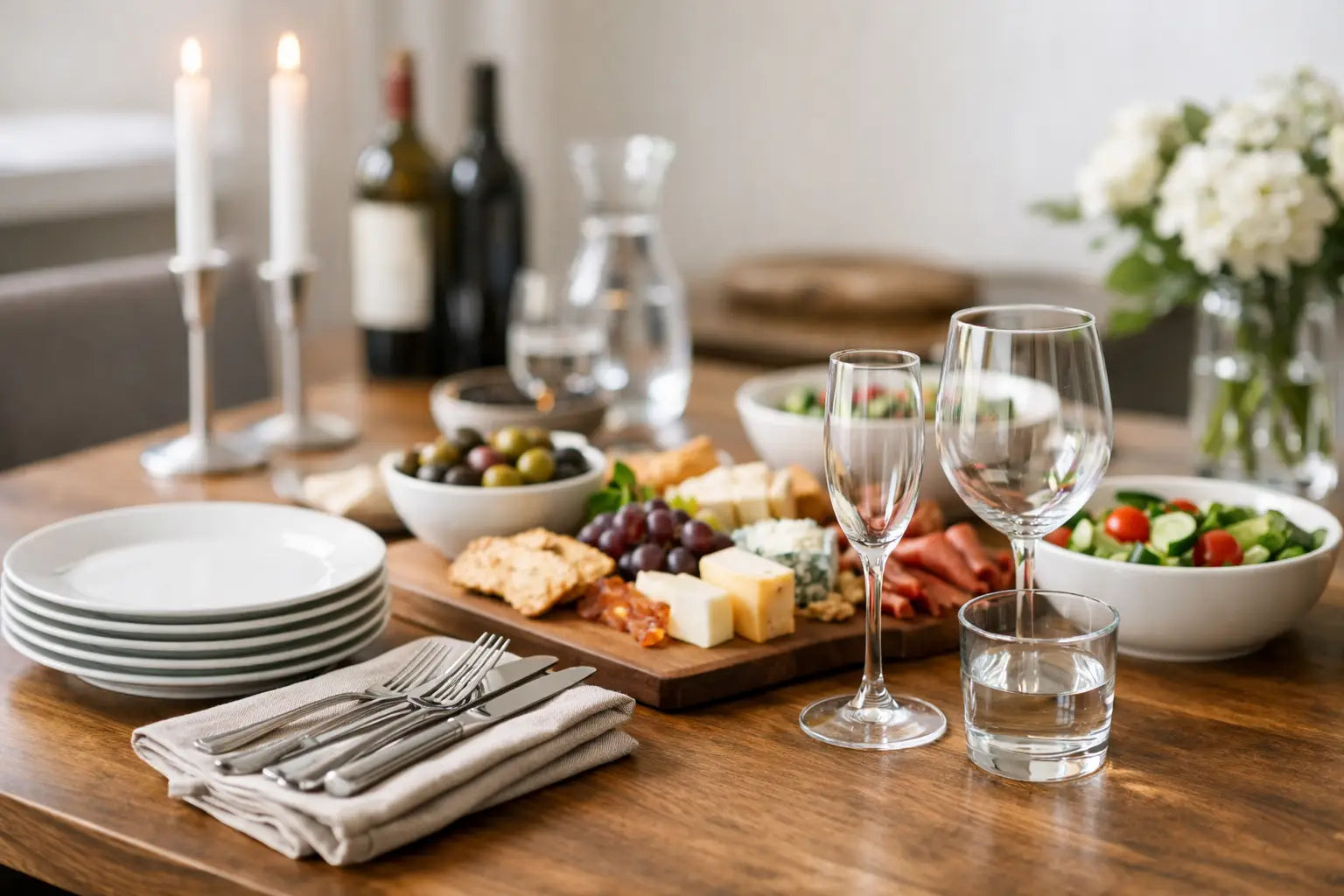
The most compelling glassware choices consider the entire table. A flute introduces verticality. It pairs naturally with a formal place setting, clean-lined dinnerware, and a refined reception table where candles and tapering stems create height.
A coupe sits lower and wider, bringing a more relaxed sense of occasion. It works especially well with sculptural serving pieces, generous linens, low candles, and an abundant cocktail-hour spread. The form feels expressive and social, inviting guests to linger close to the table rather than simply raise a glass and move on.
Material matters as much as silhouette. Clear, lead-free crystal offers brightness and definition, allowing the color and movement of the wine to take center stage. A fine rim makes each sip feel more considered, while a balanced stem gives the glass a composed presence in the hand. These details are subtle individually, but together they turn a functional pour into refined indulgence.
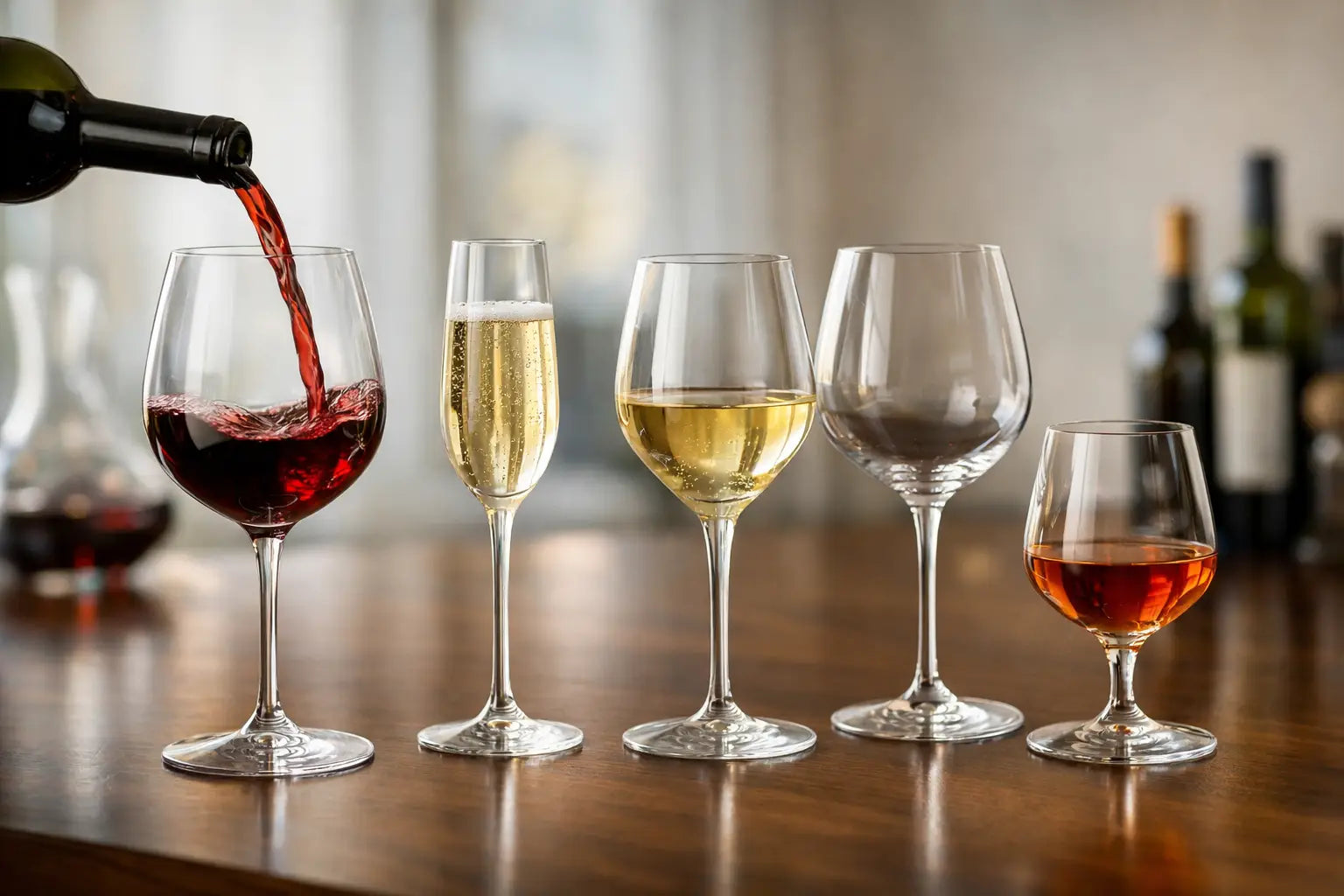
If you are building a versatile home collection, there is no need to declare loyalty to one shape. A set of flutes covers holidays, large gatherings, and traditional toasts. A set of coupes adds range for cocktail nights, intimate dinners, and the occasions that deserve a little theater. In a cohesive collection, the two shapes do not compete. They give you options for different moods.
A few serving details that make a difference
Whatever glass you choose, temperature is nonnegotiable. Champagne should be chilled thoroughly, generally around 45 to 50 degrees Fahrenheit. If it is too warm, bubbles expand too quickly and the wine can taste broad or overly foamy. If it is too cold, aroma and flavor become muted.
Pour slowly down the inside of the bowl rather than straight into the center. This controls foam, protects more of the wine’s effervescence, and produces a cleaner presentation. Fill a flute to roughly two-thirds full. In a coupe, a modest pour is both more elegant and more practical, since it leaves room for movement without sacrificing the moment.
Avoid chilling delicate crystal in a freezer. A cold glass is pleasant, but extreme temperature changes can be hard on fine glassware. Instead, keep the bottle cold and use clean, room-temperature glasses for the most reliable service.
Choose the glass that matches the moment
If your priority is a long-lasting stream of bubbles and a classic toast, reach for the flute. If you want a more expressive table, a softer sip, or a memorable Champagne cocktail, choose the coupe. And if the bottle itself is rare or especially complex, consider serving it in a tulip-shaped glass that gives aroma more room to unfold.
The best celebration glass is the one that makes guests pause for a second before they drink. Set the table with intention, pour while the wine is at its brightest, and let the vessel carry its share of the occasion.