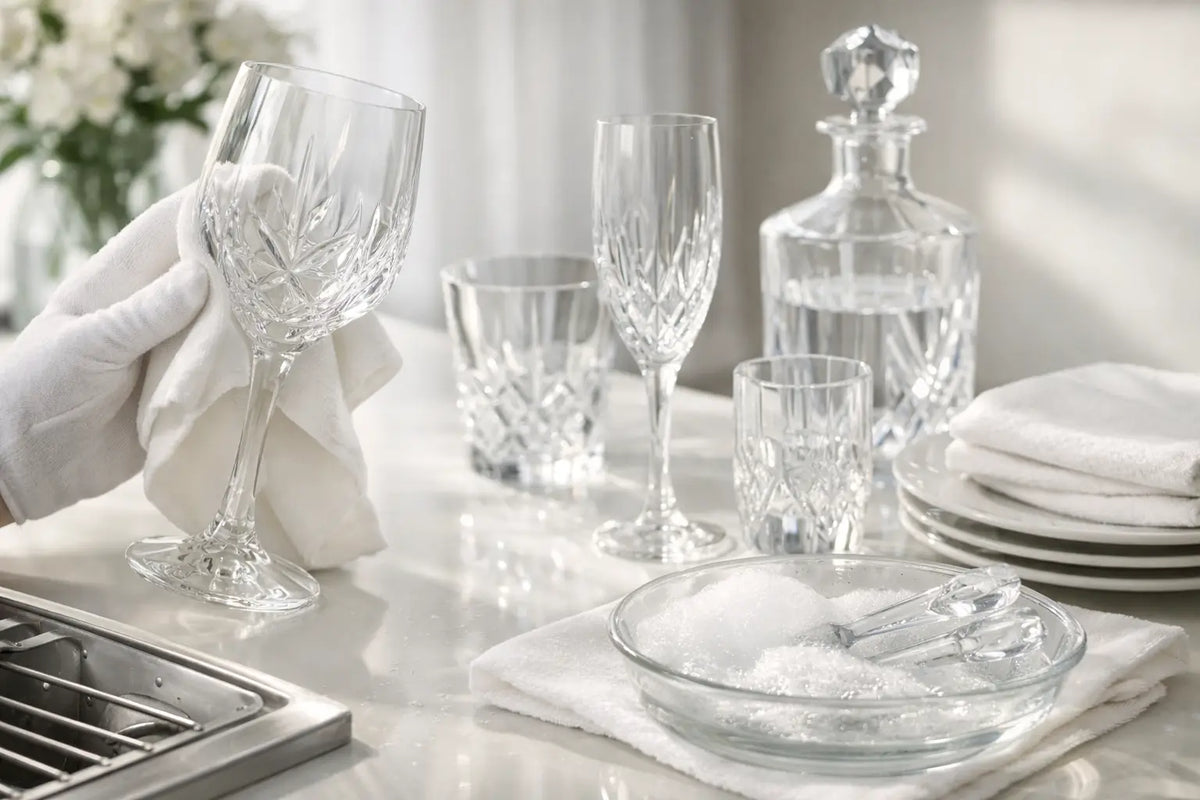
Crystal Glass Care Guide for a Brighter Table
A finely proportioned crystal glass changes the entire read of a table. It catches candlelight, clarifies the color of a cocktail, and gives even chilled water a more considered presence. This crystal glass care guide is designed to help preserve that effect, whether you are setting six places for friends or turning tables in a busy dining room.
Crystal does not need to be treated like a museum piece. It does, however, reward a more intentional routine. The difference between a glass that stays luminous for years and one that develops haze, chips, or a tired-looking rim is usually not dramatic misuse. It is the small habits: how it is washed, dried, stored, and handled between pours.
Crystal Glass Care Guide: Start With the Material
Not every glass labeled crystal should be cared for in precisely the same way. Traditional crystal may contain lead and is often prized for its weight, brilliance, and resonant ring. Modern lead-free crystal offers much of that clarity and refinement with a lighter, more everyday-ready feel. Many contemporary collections are made for regular use, but their thin rims, polished bowls, and precise silhouettes still benefit from gentler handling than standard utility glassware.
The manufacturer’s care guidance should always lead. If a glass is marked dishwasher safe, that is useful information, not an invitation to send it through the most crowded, hottest cycle available. Dishwasher-safe crystal can perform beautifully when loaded thoughtfully and removed promptly. Hand washing remains the safest choice for especially delicate stems, heirloom pieces, hand-decorated glass, or glasses with metallic detailing.
For hospitality teams, consistency matters as much as care. A rushed process that leaves lipstick, detergent film, or water spotting undermines the presentation value of an otherwise beautiful pour. A polished glass is part of service, not an afterthought.
Wash for Clarity, Not Just Cleanliness
Cloudiness is one of the most common frustrations with crystal glassware. Sometimes it is residue on the surface, which can be corrected. Sometimes it is etching caused by repeated exposure to high heat, harsh detergent, or mineral-heavy water. Etching changes the glass itself, so prevention is far more effective than restoration.
For hand washing, use warm water rather than very hot water and a small amount of mild dish soap. Avoid abrasive sponges, scouring powders, and citrus-heavy cleaners. They can dull the surface over time and may be especially unforgiving on fine stems and rims.
Hold a stemmed glass by the bowl when washing it. Twisting the bowl and base in opposite directions puts unnecessary pressure on the narrowest part of the glass. Wash the bowl, rim, and base with a soft cloth or sponge, then rinse thoroughly so no soap remains to mute the glass’s sparkle.
If you use a dishwasher, choose a gentle cycle with moderate heat and place each glass where it cannot touch another piece. Never overcrowd the rack. Vibration during a wash cycle can leave small chips along rims or create stress at the stem, even when no breakage is obvious in the moment. Use a quality detergent sparingly, because excess detergent can leave a film that makes crystal look dull.
For four situations, hand washing is the clear choice:
- A glass has a very fine stem, hand-applied decoration, or metallic accent.
- The dishwasher has no secure stemware rack or runs especially hot.
- The glass has held dried red wine, lipstick, or a sugary cocktail garnish.
- You are preparing glassware for an event where pristine presentation matters.
Dry Without Adding Water Spots
Air drying is convenient, but it can leave mineral spots, especially in areas with hard water. Those small marks become much more visible once a glass is filled with a pale wine, clear spirit, or sparkling water. Drying by hand is the more polished finish.
Use a clean, lint-free microfiber cloth or a soft cotton bar towel reserved for glassware. Paper towels can leave fibers behind, while heavily laundered kitchen towels may carry detergent residue or oils. Hold the glass securely by the bowl or base and polish with light pressure. Again, avoid twisting a stem between the bowl and foot.
For service settings, keep separate polishing cloths for glassware and flatware. This simple distinction prevents the faint grease transfer that can create streaks on an otherwise clean bowl. Replace towels once they become damp. A dry cloth gives a much clearer polish.
When a cloudy film is caused by mineral residue rather than etching, a brief soak in diluted white vinegar can help. Use one part white vinegar to three parts warm water, soak for several minutes, then rinse and dry immediately. Do not leave crystal soaking for extended periods, and skip this approach for pieces with painted, gilded, or otherwise delicate finishes.
A Note on Temperature Changes
Thermal shock is a quiet risk. Moving a chilled glass directly into very hot water, or pouring hot liquid into a cold glass, can create stress that leads to cracking. Let glassware return closer to room temperature before washing it, particularly after it has been used for iced drinks or stored in a cold cabinet.
The same principle applies to entertaining. If you want to chill cocktail or wine glasses, a brief refrigerator chill is generally gentler than an aggressive freezer session. Frosted glass can look dramatic, but extreme cold may be impractical for finer crystal and can interfere with the intended aroma and temperature of the drink.
Store Crystal Glasses With Breathing Room
A cabinet is not merely storage. It is where rims, stems, and bowls spend most of their life, so its layout has a direct effect on longevity. Store glasses upright on their bases whenever possible. Hanging racks can be visually appealing and useful in the right setting, but prolonged suspension places weight on the rim, which is the most delicate area of the glass.
Give each piece enough room that it can be removed without knocking its neighbor. Stacking is best avoided unless the glasses were specifically designed to stack. Even then, clean them before nesting and use care when separating them. Fine glass can develop scratches where pieces repeatedly meet.
Before placing crystal in a closed cabinet, make sure it is completely dry. Trapped moisture can leave spots and create a stale odor that is noticeable when the glass is raised for a first sip. If glassware is stored for a season, a quick rinse and polish before service restores its ready-to-pour appearance.
Treat Everyday Rituals Like Good Service
The most effective crystal glass care routine is one you can repeat. Rinse glasses soon after use, especially after red wine, citrus, cream liqueurs, and cocktails with sugar or egg white. Letting residue dry makes cleaning more aggressive than it needs to be.
For a home bar, this may mean washing two cocktail glasses before the night ends rather than leaving them for the morning. For a restaurant or café, it means building polishing and inspection into side work, not waiting until a guest notices a mark. A single chipped rim or streaked water glass can distract from a carefully plated meal, a well-pulled espresso, or an otherwise composed tablescape.
Lead-free crystal collections such as Angeleno Drinkware’s Figueroa line are made to bring that refined indulgence into regular rotation. The goal is not to preserve your best glassware for rare occasions. It is to give ordinary pours the clarity, modern geometry, and sense of occasion they deserve.
A final polish before guests arrive takes only a moment, yet it changes the first impression of every place setting. Keep a soft cloth nearby, handle each glass with an unhurried hand, and let the light do the rest.