Wine Glass Shapes Explained for Better Pours
A generous red served in a narrow flute is not a disaster, but it does leave something on the table. Aroma gathers differently, the wine warms faster in your hand, and the visual rhythm of the setting loses some of its intention. Wine glass shapes explained is less about memorizing rules for every grape and more about understanding how a considered vessel can make a familiar bottle feel more expressive.
For a polished dinner table, a relaxed rooftop pour, or a hospitality program built around guest experience, the right glass creates a quieter kind of luxury. It gives the wine room to open, directs its aroma toward the nose, and makes each serving feel purposeful before the first sip.
Wine Glass Shapes Explained: What Changes in the Glass
A wine glass is a small piece of functional design. Its bowl affects the amount of air that meets the wine. Its opening guides aroma and the flow of liquid onto the palate. Its stem or stemless base changes the way the glass feels in hand and how easily the wine maintains its preferred temperature.
The bowl is where most of the transformation happens. A wider bowl creates more surface area, which helps a wine mingle with oxygen as it is swirled. This can soften the impression of tannin in a structured red and encourage layered scents such as dark fruit, spice, cedar, or earth to emerge. A narrower bowl keeps delicate aromas closer together, often serving wines whose freshness and floral character deserve focus rather than a broad, open presentation.
The rim matters, too. A thinner rim creates a more refined transition from glass to palate. It does not change the wine itself, but it can make the act of drinking feel lighter and more precise. For a premium tabletop, these details add up. The guest may not identify the source of the difference, but they notice the experience.
The Essential Wine Glass Silhouettes
A thoughtfully assembled glassware collection does not need a separate shape for every varietal. For most homes and many hospitality settings, a small group of well-proportioned silhouettes provides both flexibility and visual cohesion.
The universal wine glass
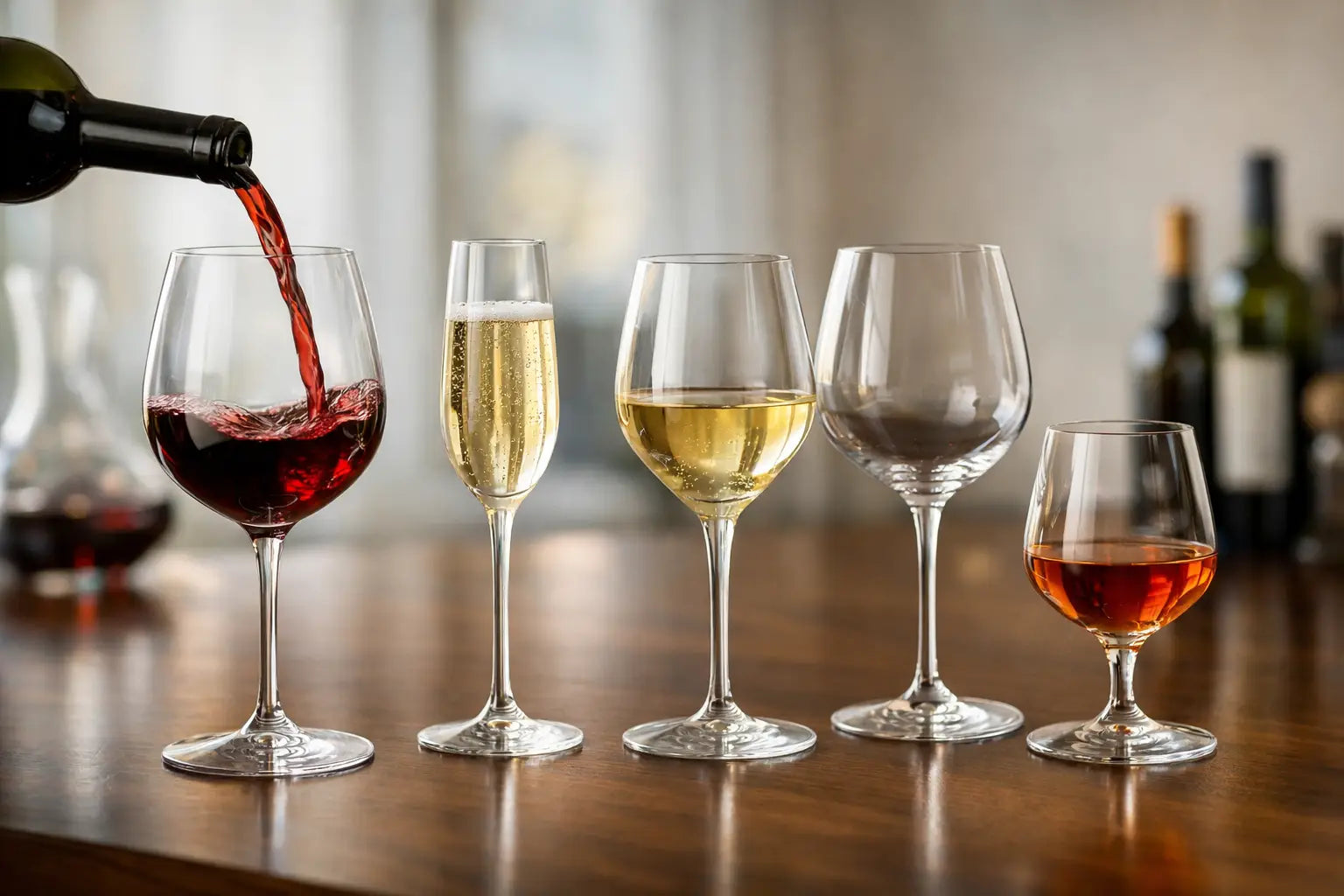
A universal wine glass sits comfortably between a large red bowl and a narrow white wine bowl. It has enough room for swirling, a gently tapered opening to collect aroma, and a balanced profile that works across red, white, rosé, and lighter sparkling pours.
This is the most practical choice for apartment entertaining, wedding registries, and restaurants that need a polished all-purpose vessel. The trade-off is specificity: it will not showcase a powerful Cabernet in quite the same way as a larger Bordeaux glass, or preserve the lift of a crisp Sauvignon Blanc as precisely as a narrower white wine glass. Still, a beautiful universal shape is often the glass reached for most often because it makes everyday hosting feel considered without requiring a crowded cabinet.
The large red wine glass
Large red wine glasses typically have a broad bowl and a tapered rim. They are designed for fuller-bodied wines with ample tannin, concentration, or oak influence, including Cabernet Sauvignon, Bordeaux blends, Syrah, and many bold Italian reds.
The wide bowl gives these wines oxygen and space. A measured swirl wakes up the aromatics and makes the texture feel more integrated. The tapered top helps hold those aromas near the rim rather than allowing them to dissipate immediately.
Generosity is useful here, but bigger is not automatically better. An oversized bowl can feel theatrical for a light Pinot Noir or a casual midweek pour. Choose a large red glass when the wine has depth to reveal and when the table calls for a dramatic, refined silhouette.
The Pinot Noir or Burgundy glass
The Burgundy-style glass is distinctive for its rounded, balloon-like bowl. It is usually wider than a standard red wine glass, with a relatively narrow opening. This geometry suits aromatic, lighter-bodied reds such as Pinot Noir, Gamay, Nebbiolo, and Grenache, as well as some complex, fuller white wines.
Because these wines are often defined by perfume as much as structure, the expansive bowl gives their aromas room to circulate. The narrower rim then concentrates that fragrance, making every sip feel more dimensional. On the table, this shape also brings instant occasion - sculptural enough for a celebratory meal, yet elegant rather than ornate.
Its limitation is storage and versatility. The bowl takes up more space, and its dramatic form can be unnecessary for straightforward reds. It is a worthwhile addition for people who frequently open nuanced bottles and want their glassware to match the ritual.
The white wine glass
White wine glasses are generally smaller and more upright than red wine glasses. Their narrower bowls help retain cooler temperatures and preserve fresh aromatics, which is especially useful for Sauvignon Blanc, Pinot Grigio, Albariño, Grüner Veltliner, and dry Riesling.
A smaller pour also makes sense with white wine. It keeps the glass looking composed while allowing the wine to stay chilled as it is enjoyed. The shape is not a constraint, though. Richer whites such as Chardonnay, white Burgundy, Viognier, or skin-contact wines can benefit from a slightly roomier bowl that offers more oxygen and aromatic expression.
For hosts, the white wine glass earns its place because it brings proportion to a mixed table. Its leaner silhouette creates visual contrast beside a generous red bowl, making the setting feel curated rather than uniform.
The sparkling wine glass
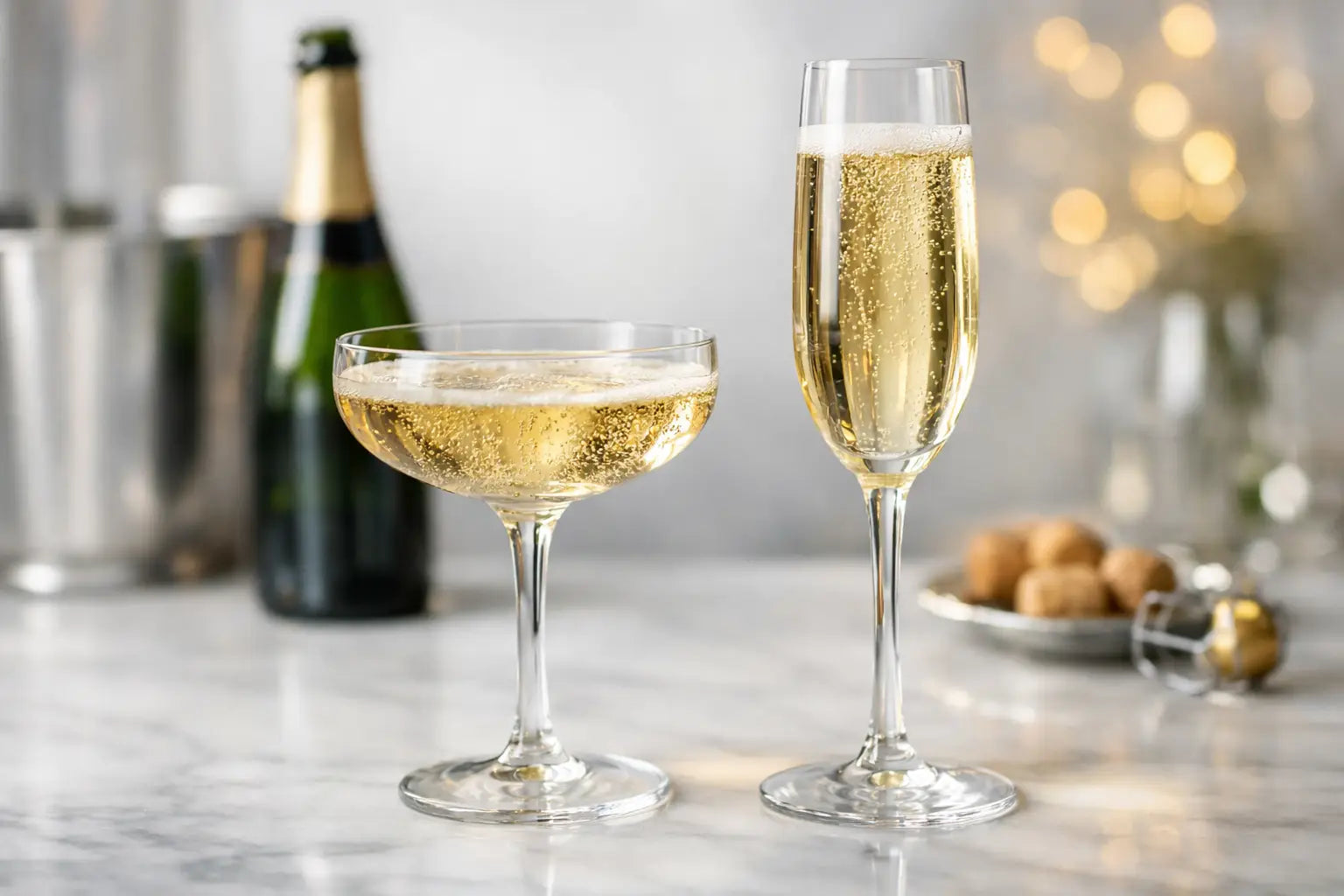
The classic flute is tall and narrow, designed to preserve effervescence and create an unmistakably celebratory line. It remains a natural choice for toasts, receptions, and moments when the visual rise of the bubbles is part of the pleasure.
For drinking Champagne or other serious sparkling wines, however, a tulip-shaped glass often offers more. It has a slightly wider center for aroma development and a tapered opening that helps retain both fragrance and fizz. This is particularly valuable for vintage Champagne, grower Champagne, and sparkling wines with brioche, citrus, orchard fruit, or mineral complexity.
A coupe brings a different kind of appeal. Its wide, shallow bowl feels glamorous and festive, especially for cocktails or styled celebrations, but it allows bubbles to fade more quickly. Choose it for atmosphere; choose a flute or tulip when the wine itself is the focus.
Stemmed or Stemless: A Matter of Ritual and Use
Stemmed wine glasses remain the classic choice for wine service because the stem keeps warm hands away from the bowl. This is especially helpful with chilled whites and sparkling wines. A stem also gives the table height and delicacy, creating a more formal visual composition.
Stemless glasses offer an easy, contemporary alternative. They feel relaxed, stable, and well suited to patios, casual gatherings, and compact storage. They can also be a practical choice in high-traffic settings where a lower center of gravity is welcome.
The compromise is temperature. Holding a stemless glass warms the wine more quickly, so it is best for shorter pours or wines served slightly cooler than their ideal drinking temperature. For a dinner party, use stemmed glassware where the wine is central to the meal and stemless pieces where ease and informality set the tone.
How to Build a Better Everyday Glassware Collection
Start with the occasions you actually host. If you regularly serve a range of wines but prefer a streamlined cabinet, choose a versatile universal wine glass and a dedicated sparkling shape. If red wine dinners are a signature ritual, add a larger red bowl. If bright whites, rosés, and aperitif pours are common, a refined white wine glass will earn steady use.
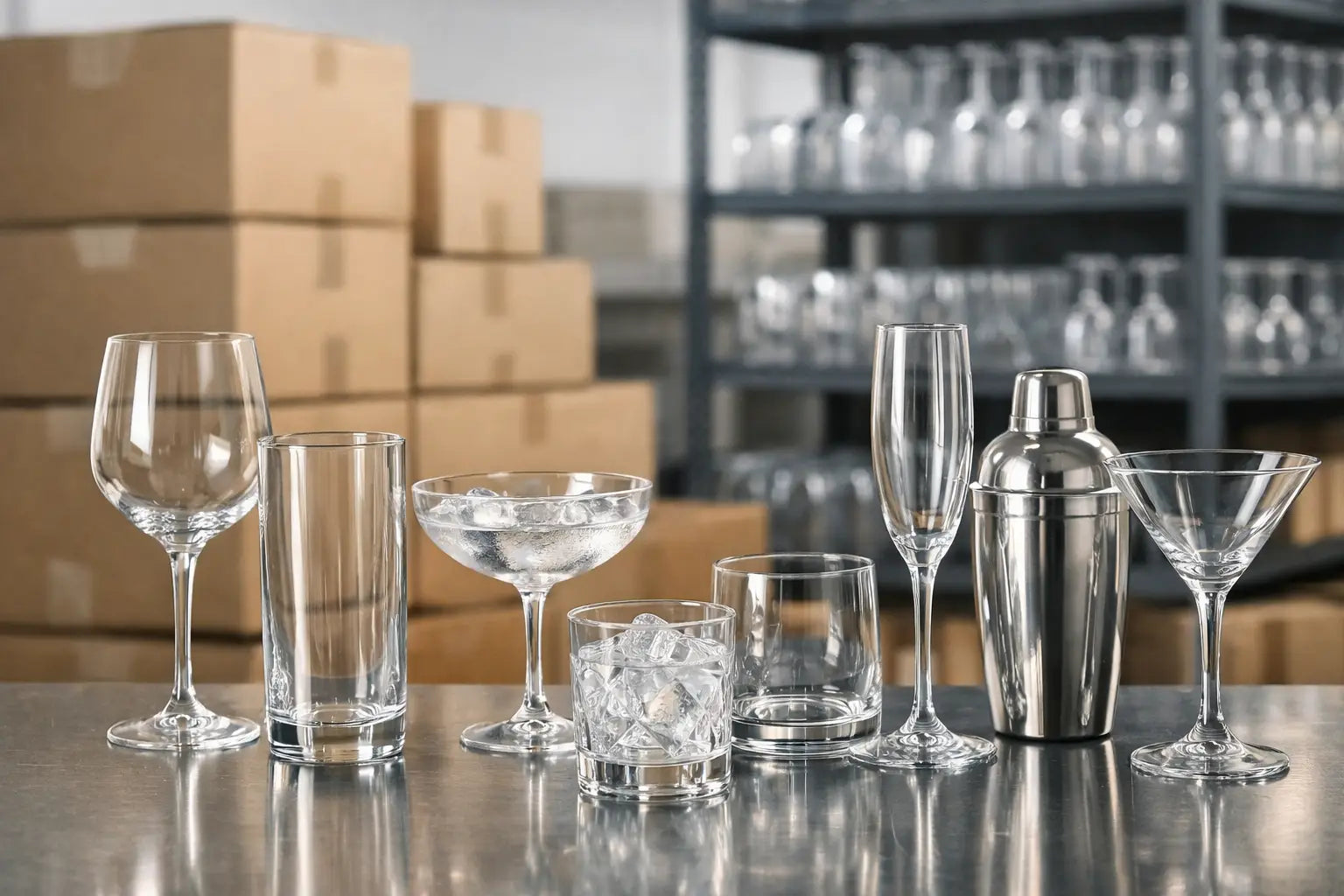
Collection-based glassware has a particular advantage: even when shapes vary, shared design language keeps the table visually composed. Similar proportions, clear lead-free crystal, and modern geometry create a sense of continuity across water, wine, cocktails, and Champagne. That cohesion is as meaningful in a dining room as it is in a restaurant service program, where every place setting carries the brand of the space.
Care should factor into the decision as well. Delicate-looking glassware can still be designed for everyday use, but handwashing helps protect clarity and fine rims over time. Avoid gripping the bowl when polishing, and give larger bowls enough room in the cabinet so they are not pressed against one another.
The most successful wine service is not about following a rigid chart. It is about choosing shapes that suit the wine, the setting, and the way you want people to feel at the table. Pour a wine you enjoy into a glass that gives it room to speak, then let the rest of the evening unfold from there.