Why Do Restaurants Use Crystal Glassware?
A wine list can be impeccably chosen, a cocktail perfectly balanced, and a dining room beautifully lit, yet the experience can still fall flat at the moment of service. The vessel matters. That is why restaurants use crystal glassware: it brings clarity, balance, and a sense of occasion to the table while helping each pour look and feel intentional.
For hospitality teams, crystal is not simply a decorative upgrade. The right glass can support aroma, preserve temperature, elevate visual presentation, and give guests a more tactile connection to what they are drinking. It is one of the quietest details in a room, but it has an outsized influence on perceived quality.
Why Do Restaurants Use Crystal Glassware for Service?
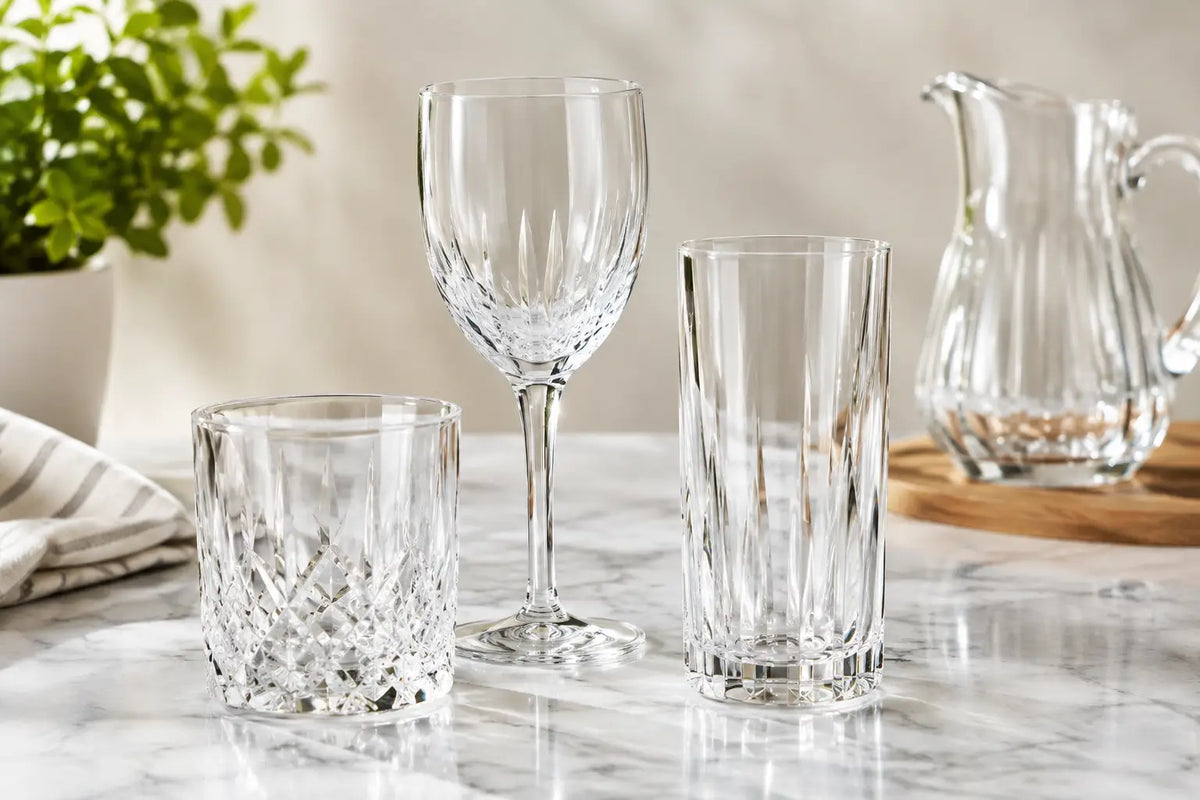
Crystal glassware has a distinct visual presence. Its exceptional clarity allows the deep ruby of a red wine, the pale gold of a Champagne, or the layered hue of a cocktail to appear clean and luminous. Under restaurant lighting, that transparency matters. Drinks look more vivid, garnishes appear more precise, and a thoughtfully composed bar program receives the presentation it deserves.
There is also a sensory reason. Well-designed crystal glasses are often thinner at the rim than standard glassware. A fine rim creates a more refined point of contact, so the guest encounters the drink rather than the heaviness of the vessel. With wine, the bowl shape can direct aromas toward the nose and guide the flow of liquid across the palate. With a cocktail, the silhouette can frame the garnish, maintain the intended dilution, and make a familiar serve feel more considered.
None of this means every beverage requires a highly specialized glass. A busy all-day restaurant may need versatility as much as ceremony. But when a glass has proportion, clarity, and a comfortable weight, even a simple sparkling water or house wine feels like part of a curated experience.
Crystal Makes a First Impression Before the First Sip
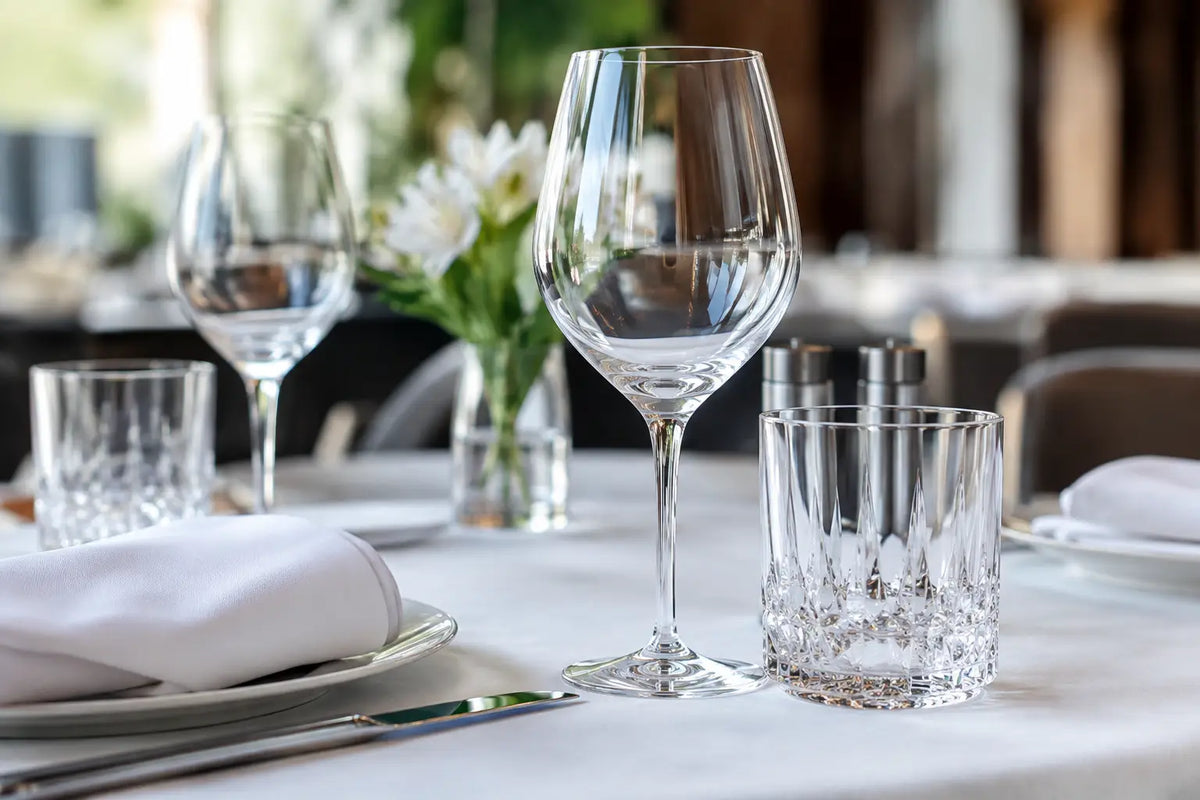
Guests begin forming an opinion of a restaurant long before the entrée arrives. They notice the table setting, the chair, the menu stock, and the way light catches a glass at the place setting. Crystal communicates care because it looks deliberate. Its brilliance and clean edges give the table a polished, dimensional quality that ordinary, thick beverage glassware rarely achieves.
That effect is especially valuable for restaurants building a visual identity. A coastal Italian dining room may choose broad-bowled wine glasses that feel relaxed but elegant. A modern steakhouse may favor angular cocktail glassware with a more architectural profile. A design-forward café may pair sculptural water glasses with porcelain coffee cups for a consistent visual language from lunch through espresso.
The goal is not to make every table feel formal. It is to make the setting feel coherent. When the glassware reflects the restaurant's food, interiors, and service style, guests read the whole experience as more resolved.
The Camera Notices, Too
A restaurant table is now part of the guest's visual memory and, often, their camera roll. Crystal catches candlelight, photographs with a crisp edge, and gives a drink enough presence to hold its own in a dining scene. That does not mean operators should select glassware for social media alone. It does mean presentation has commercial value when guests naturally want to share it.
A beautifully served drink is a small piece of brand storytelling. The glass should make that story stronger, not disappear into it.
The Functional Case: Aroma, Temperature, and Balance
The best restaurant glassware earns its place through performance as well as appearance. Shape affects how a drink is experienced. A generous wine bowl gives aromatics room to develop. A narrow Champagne glass helps retain effervescence. A wide coupe creates a celebratory visual for cocktails that are served up, while a substantial rocks glass gives stirred drinks a grounded, tactile quality.
Weight and balance also matter in a fast-paced dining room. A glass should feel stable when set down, comfortable when lifted, and proportionate to its intended serve. Guests may not describe those details explicitly, but they feel them. A stem that is awkwardly thin, a bowl that tips easily, or a base that feels overly heavy can interrupt an otherwise graceful moment.
Crystal can also make beverage colors and textures easier to appreciate. The glossy surface of an espresso martini, the fine bead of sparkling wine, and the clarity of a chilled martini all benefit from a vessel that does not look cloudy or bulky. For beverage directors, that is valuable because the glass reinforces the care already invested in ingredients and technique.
Modern Crystal Is Built for Real Hospitality
The word crystal sometimes brings to mind fragile heirlooms reserved for a formal cabinet. That picture is incomplete. Many contemporary hospitality collections use lead-free crystal, a material designed to offer the brightness and refined feel associated with crystal while being better suited to regular service.
Lead-free crystal is particularly appealing for restaurants that want an elevated look without introducing lead into their tabletop program. Depending on the formula and manufacturing process, it can provide excellent transparency, a pleasing ring, and the fine walls that make drinks feel more elegant in hand.
Still, material alone does not determine whether a glass is right for a restaurant. Operators should look closely at rim thickness, stem construction, base stability, capacity, and whether the manufacturer recommends commercial dishwashing. A beautiful glass that does not fit the service model can become an expensive frustration.
Durability Is About More Than “Unbreakable”
No fine glassware is truly break-proof, and a restaurant that promises itself zero breakage will be disappointed. The better question is whether a collection can perform reliably within the reality of its operation.
A fine-dining room with paced service may prioritize delicate stems and distinct shapes for each wine style. A high-volume bar may need a slightly more substantial profile, stackable options where appropriate, and a short list of multipurpose glasses that simplify storage and replacement. Banquet programs may value consistency and easy replenishment above highly specialized silhouettes.
This is where thoughtful specification matters. Selecting a small, cohesive family of glasses often produces a more polished result than buying a different shape for every possible drink. It also makes inventory, staff training, and replacement ordering easier.
Crystal Supports Better Service Rituals
Glassware influences the person serving the drink, too. When a server presents a bottle in a properly proportioned wine glass or delivers a cocktail in a vessel designed for it, the gesture feels complete. The guest receives a finished experience rather than a beverage transferred from bar to table.
That sense of ritual is useful at every price point. A neighborhood restaurant can make a carafe of house wine feel more generous with elegant stemware. A cocktail bar can make a signature drink memorable through a silhouette guests have not seen everywhere. A hotel can establish consistency across its lobby bar, restaurant, and in-room dining with one refined collection.
For commercial buyers, collections such as Angeleno Drinkware's lead-free crystal Figueroa line offer a way to create that cohesion across wine, Champagne, cocktails, and everyday beverages. The strongest programs do not treat each piece as an isolated purchase. They consider how the entire table reads together.
The Trade-Offs Restaurants Should Consider
Crystal is not automatically the right answer for every setting. It usually costs more than entry-level soda-lime glass, and premium pieces require more careful handling. Fine rims can chip if they collide in racks or are stored carelessly. Stemware also demands staff practices that protect bowls and stems during clearing, polishing, and transport.
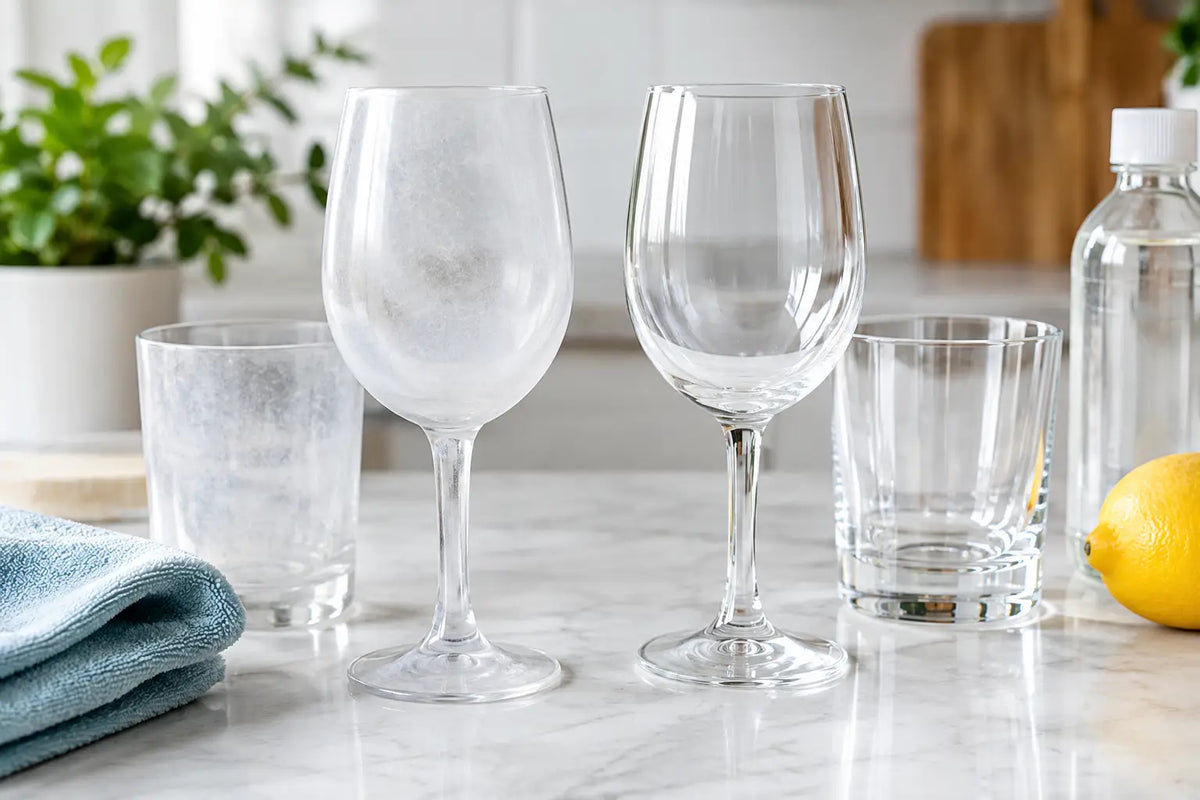
Dishwasher compatibility deserves particular attention. Even when glassware is rated for dishwasher use, harsh chemicals, very high heat, crowded racks, and residue can affect its appearance over time. A restaurant that invests in crystal should pair that investment with suitable racks, correct polishing cloths, and training that teaches staff to carry, clear, and store glasses properly.
There is a design trade-off as well. Extremely ornate or delicate crystal can feel out of place in a casual, contemporary restaurant. In many rooms, a clean, modern shape with a fine rim is more versatile than a heavily cut pattern. The best choice depends on the concept, beverage program, volume of service, and the level of formality guests expect.
Choosing Crystal Glassware With Intention
Start with the drinks guests order most. If wine drives the program, prioritize a versatile all-purpose wine glass, a dedicated sparkling option, and a water glass that sits comfortably alongside them. If cocktails lead the experience, define the core serves first: highballs, rocks drinks, shaken cocktails served up, and perhaps a coupe or Nick and Nora for more precise presentation.
Then look at the dining room as a whole. Consider the color and texture of the tabletop, the scale of the plates, the lighting, and the storage available behind the bar. A glass can be beautiful on its own and still feel wrong in context if it is too tall for the shelves, too small beside the dinnerware, or too formal for the room.
Finally, order samples and use them as the team would. Pour the actual wine. Build the actual cocktail. Run glasses through the actual dish process. Hold them under the restaurant's lighting. The right choice should look exceptional, but it should also make service feel easier and more confident.
Crystal glassware is one of those details guests may never name, yet they remember its effect. Choose pieces that honor the drink, suit the pace of the room, and make every place setting feel like an invitation to stay a little longer.