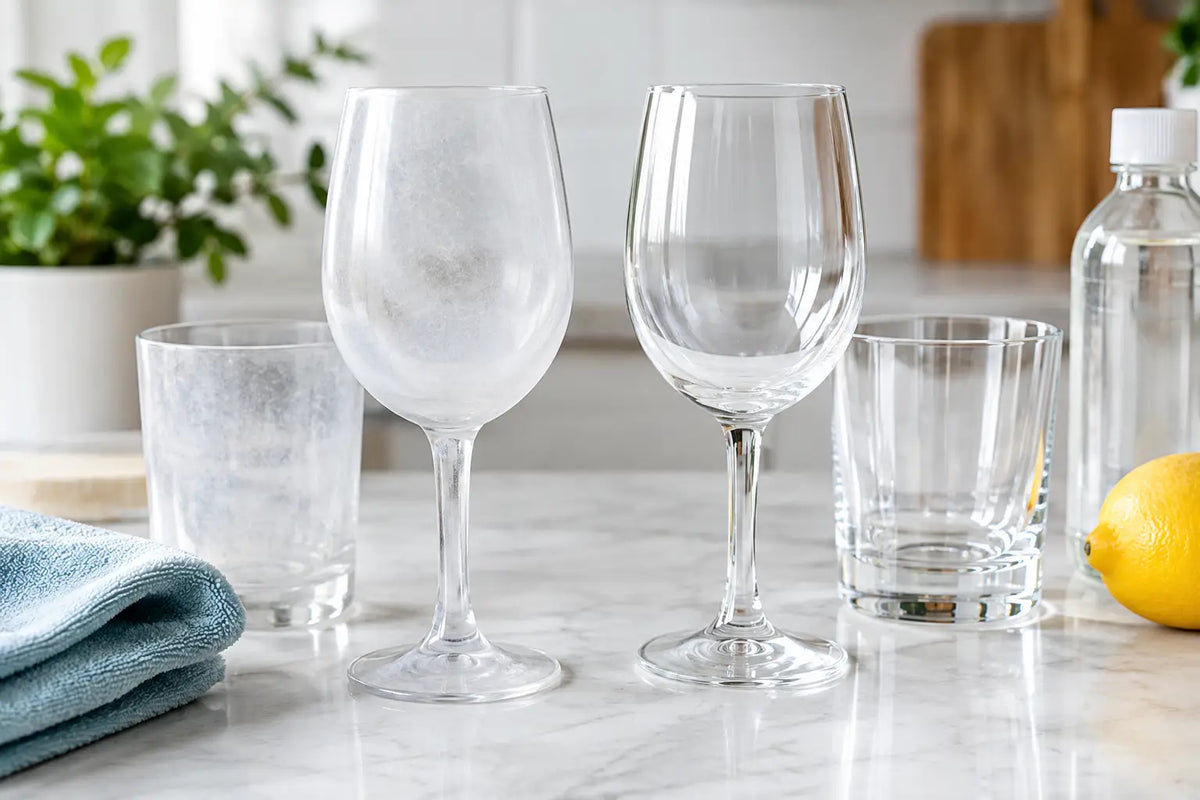
How to Remove Cloudy Crystal Glassware Safely
A crystal glass can look immaculate in the cabinet, then lose its presence the moment it catches candlelight. To remove cloudy crystal glassware successfully, first determine whether you are looking at a removable surface film or permanent etching. The distinction matters: one can often be restored with patient, gentle care; the other calls for a different kind of acceptance and a smarter care routine going forward.
For a beautifully set table, clarity is not a minor detail. It allows the shape of a coupe, the fine rim of a wine glass, and the color of a cocktail to register exactly as intended. The goal is not aggressive cleaning. It is preserving the material's polish, balance, and refined visual impact.
Why crystal glassware turns cloudy
Most cloudiness comes from one of two sources. The more forgiving cause is mineral buildup - usually calcium and magnesium left behind when hard water dries on the glass. It can appear as a white cast, dull spots, or a hazy ring near the bottom of the bowl. Detergent residue, especially from using too much soap or a dishwasher with mineral-heavy water, can create a similar film.
The less forgiving cause is etching. This is physical damage to the glass surface, often caused by repeated dishwasher cycles, harsh detergents, very hot water, or prolonged contact with acidic cleaning solutions. Etching may look like a milky veil, fine scratches, or a rainbow-like dullness that remains even after careful washing.
A quick test helps. Wet the glass thoroughly and hold it to the light. If the cloudiness largely disappears while wet but returns as the glass dries, mineral film is the likely culprit. If it remains visible when wet, the surface may be etched. Do not reach for stronger chemicals before making this assessment. More force will not reverse etching, and it can make delicate crystal look worse.
How to remove cloudy crystal glassware
For contemporary lead-free crystal, a short vinegar treatment is usually the most effective way to lift hard-water film without compromising the glass. Start with a clean sink lined with a folded cotton towel or a soft dish towel. The lining is not decorative - it reduces the chance of a chipped foot, rim, or base while you work.
Fill the vessel with a mixture of equal parts lukewarm water and distilled white vinegar. Do not use hot water. Sudden temperature changes can stress glass, and heat can set residue rather than releasing it. Let the solution sit inside the glass for five to 10 minutes. For exterior haze, dampen a soft microfiber cloth with the same mixture and hold it against the affected area briefly.
After the short soak, wash the glass by hand with a small amount of mild, fragrance-free dish soap and lukewarm water. Use a soft sponge, microfiber cloth, or clean cotton towel. Avoid scrub pads, powdered cleaners, and anything marketed as abrasive. Crystal is polished for light play and clarity; an abrasive surface treatment can leave permanent micro-scratches that diffuse that light.
Rinse thoroughly with distilled water if your tap water is particularly hard. This small finishing step can make a visible difference because it prevents fresh mineral droplets from drying onto the surface. Dry immediately with a lint-free microfiber towel, holding the bowl in one hand and the base in the other. Never twist the bowl against the stem. That familiar polishing motion is a common source of breakage in stemware.
If a faint film remains, repeat the process once rather than extending the vinegar soak. Stubborn buildup responds better to two restrained treatments than one prolonged exposure. If the cloudiness does not change after a second attempt, it is likely etching rather than residue.
A note on antique, cut, or decorated crystal
Older crystal deserves extra caution. Traditional lead crystal, hand-cut pieces, gilded rims, painted details, and heirloom glassware can react differently to acids and temperature changes. For these pieces, avoid soaking entirely. Instead, use a soft cloth lightly dampened with diluted vinegar, test an inconspicuous area first, then rinse and dry promptly.
When the piece has sentimental or financial value, a professional conservator or specialty glass restorer is a better choice than experimenting with stronger cleaning methods. A cloudy antique decanter may have more to lose than a modern everyday tumbler.
What not to use on crystal
The impulse to make glass sparkle can lead to cleaning shortcuts that compromise it. Skip toothpaste, baking soda paste, salt, scouring powders, steel wool, and melamine sponges. They may seem gentle in another context, but they can scratch crystal at a microscopic level. Once the surface is abraded, it catches light unevenly and often looks permanently dull.
Avoid mixing baking soda with vinegar, too. The fizz is visually satisfying, but the ingredients largely neutralize each other. You are left with a weaker cleaning solution and unnecessary residue to rinse away.
Dishwasher detergent deserves caution as well. Some modern lead-free crystal is described as dishwasher safe, but safe does not always mean ideal for maintaining a pristine finish over years of use. High heat, aggressive detergents, and hard-water minerals can gradually cloud even durable glassware. For glasses chosen for their silhouette and table presence, hand washing is the more considered routine.
If the haze is permanent
Etched crystal cannot be restored to its original factory polish with household methods. Products that promise to “polish away” haze can remove an extremely thin layer of glass or create uneven results, particularly on delicate stems and finely formed bowls. That trade-off is rarely worthwhile for premium drinkware.
There is still a practical way forward. Reserve lightly etched glasses for water service, casual brunches, or flowers, where a subtle haze is less noticeable. Keep your clearest pieces for wine, Champagne, martinis, and other drinks where visual presentation is central to the ritual. A well-composed table does not require every object to be identical, but it does reward intentional placement.
If a full set has become etched, replacing only the most visibly affected pieces can be more sensible than trying to repair each one. Collection-based glassware makes this especially useful: you can maintain a cohesive look while refreshing the pieces that work hardest in your rotation.
Keep crystal clear between gatherings
The best care routine is quiet and consistent. Wash crystal soon after use, especially after wine, citrus-forward cocktails, coffee drinks, or anything with a sugary rim. Rinse promptly if washing has to wait, since dried residue is more difficult to remove without extra friction.
Use a modest amount of mild dish soap, rinse completely, and dry by hand before storing. Letting glasses air-dry upside down on a towel can trap moisture around the rim and leave mineral marks. Store them upright in a clean, low-humidity cabinet, with enough space that bowls and rims do not touch.
For hospitality settings, consistent hand-washing standards are part of the guest experience. Clear glassware makes a beverage look more considered before the first sip, whether it is an espresso tonic at a café or a coupe presented at the bar. For home entertaining, the same principle holds. The vessel frames the pour.
Modern lead-free crystal collections, including Angeleno Drinkware's Figueroa glassware, are designed to bring elevated clarity and modern geometry to regular use. Thoughtful care protects that effect far better than occasional heavy-duty cleaning. Treat each glass as part of the presentation, not merely the cleanup, and it will continue to make everyday pours feel composed and special.