Lead Free Crystal vs Glass: What Changes?
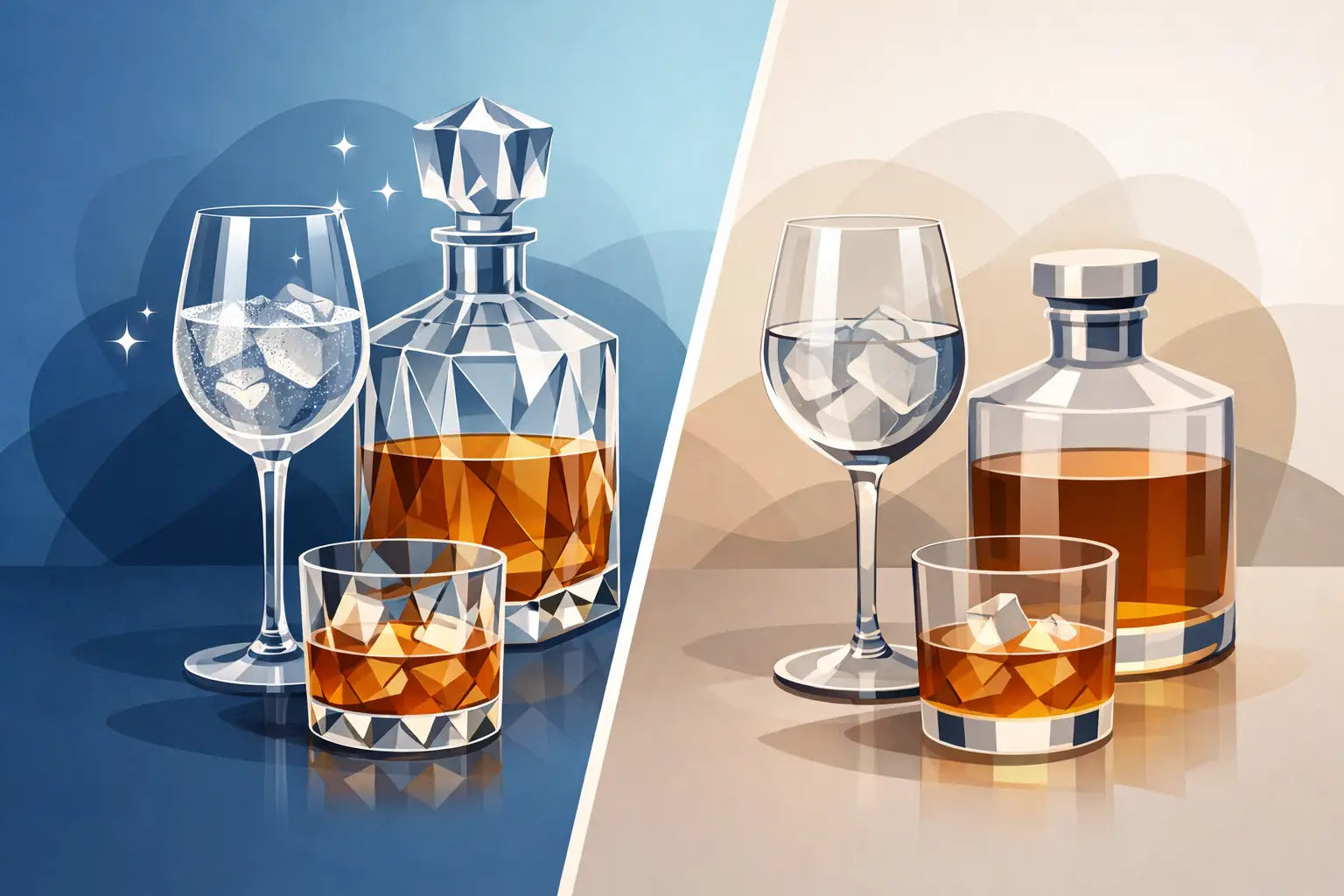
Set two water glasses on a table - one in standard glass, one in lead free crystal - and most people can spot the difference before they know why. The rim feels finer. The bowl catches light more cleanly. The whole piece seems a little more intentional. That is the real question behind lead free crystal vs glass: not just what they are made of, but how each one shapes the drinking experience.
For home entertaining, gifting, and hospitality service, material choice changes more than appearance. It affects balance in the hand, the way a cocktail presents at golden hour, how durable a stem feels during a busy dinner service, and whether a glass looks elevated enough to make the table feel curated instead of merely set.
Lead free crystal vs glass at a glance
Standard glass is typically made from silica, soda ash, and lime. It is practical, widely used, and often more utilitarian in feel. Lead free crystal starts with a similar base but replaces lead oxide, once used in traditional crystal, with other mineral additives such as magnesium, zinc, or titanium. Those additions help create a material that can offer the brilliance and refinement associated with crystal, without the concerns tied to lead.
That difference in composition changes performance in subtle but noticeable ways. Lead free crystal is often clearer, thinner, and more resonant. Standard glass is often thicker, heavier in a blunt way rather than a balanced one, and generally less expressive from a design standpoint. Not always, but often enough that the distinction matters when presentation is part of the ritual.
What you actually notice in daily use
The easiest difference to understand is visual. Lead free crystal usually has a brighter, more polished clarity. It tends to reflect light with a livelier finish, which is part of why it feels at home on a well-styled bar cart, a candlelit dining table, or a restaurant table where ambiance matters.
Then there is the rim. Because lead free crystal can often be formed with greater finesse, it frequently allows for a slimmer lip. That changes how wine, sparkling pours, and spirit-forward cocktails meet the palate. It feels less bulky and more refined, which may sound minor until you compare them side by side.
Weight also plays a role. People often assume finer means lighter in a fragile, insubstantial way. The better reality is balance. A thoughtfully designed lead free crystal glass can feel substantial without feeling clunky. It sits comfortably in the hand and tends to read as premium because its weight distribution is more elegant.
Sound is another detail that gets overlooked until you hear it. Crystal is known for a cleaner ring when tapped or toasted. In a hospitality setting, that small sensory cue contributes to the overall atmosphere. It is not the reason to choose a glass, but it is part of why crystal tends to feel more ceremonial.
Where standard glass still makes sense
Not every moment calls for crystal. Standard glass remains a strong choice for plenty of settings, especially when budget, high-volume replacement, or casual everyday use takes priority.
If you are stocking a busy household with kids, building out basic kitchen staples, or outfitting an environment where breakage is frequent and presentation is secondary, standard glass can be the practical answer. It is often more affordable and easier to replace in large quantities. For iced water, juice, or the kind of weekday utility that does not ask much from the vessel, it can do the job perfectly well.
This is where the conversation gets more useful than a simple better-versus-worse comparison. Lead free crystal is not automatically the right choice for every shelf. Standard glass is not automatically inferior. The better question is what kind of experience you want to create.
Why lead free crystal appeals to design-minded buyers
For people who care about table presence, lead free crystal usually offers more visual payoff. It supports cleaner silhouettes, sharper lines, and a more elevated feel overall. That matters if your home aesthetic is considered, if you entertain often, or if you want your glassware to contribute to the room rather than disappear into it.
It is especially compelling in stemware and cocktail glasses. A coupe, martini glass, or red wine glass benefits from precision. The proportions matter. The profile matters. The way the bowl catches color and movement matters. Lead free crystal tends to support those details beautifully.
That is one reason design-forward collections feel so cohesive when made in lead free crystal. The material complements modern geometry and refined shapes without asking you to choose between beauty and daily functionality.
Lead free crystal vs glass for wine and cocktails
If your main concern is serving wine or cocktails well, lead free crystal usually has the edge. Wine benefits from a thinner rim and a bowl with better clarity, because both the tactile and visual experience become more nuanced. Cocktails benefit from a glass that makes the drink look composed, even before the first sip.
Consider a chilled martini, a pale rosé, or a champagne pour. These are visually expressive drinks. The vessel is part of their presentation. Standard glass can hold them, of course, but lead free crystal often gives them the right frame.
For whiskey tumblers and double old fashioned glasses, the gap can be narrower. Some standard glass options feel satisfyingly solid, and that can suit a more casual or rugged mood. But if the goal is sophistication rather than brute heft, lead free crystal still tends to offer a cleaner, more polished result.
Durability is more nuanced than people think
One of the biggest misconceptions in lead free crystal vs glass is that crystal is automatically too delicate for real life. That depends on the quality of the piece, the design, and how it will be used.
Lead free crystal can be very suitable for everyday use, especially when produced with modern manufacturing standards. Many pieces are designed to balance elegance with durability, making them realistic for regular dinners, celebratory pours, and even hospitality settings. That said, thinner rims and more refined stems always require a little more care than thick utility glass.
For restaurants, bars, and event spaces, the choice often comes down to service style. If the environment is fast-paced and breakage costs are a constant concern, some operators lean toward durable standard glass in lower-stakes applications. But for wine service, signature cocktails, and any presentation-forward setting, lead free crystal often earns its place because guest perception matters.
Price, value, and what you are really paying for
Lead free crystal usually costs more than standard glass, but the value is not only in the material itself. You are often paying for finer design execution, better light refraction, more elegant proportions, and a stronger sense of occasion.
That makes it a particularly smart choice for gifts, curated registries, and anyone upgrading from mixed cabinet basics to a more intentional collection. It also makes sense for hospitality buyers who understand that elevated presentation can support a premium guest experience. A beautiful glass does not just hold a pour - it supports the mood around it.
Of course, there is a point where price stops reflecting meaningful quality and starts reflecting branding alone. That is why shape, finish, balance, and use case matter more than labels. The best lead free crystal pieces feel considered the moment you pick them up.
Which should you choose?
If you want everyday utility at the lowest cost, standard glass is often enough. If you want your drinkware to look sharper, feel finer, and elevate the ritual of serving wine, cocktails, or sparkling drinks, lead free crystal is usually the better investment.
For many homes, the smartest answer is a mix. Keep straightforward glassware for casual hydration and high-traffic use. Reserve lead free crystal for the pieces that shape your entertaining style - wine glasses, coupes, flutes, and cocktail silhouettes that deserve more presence. That balance gives you practicality where you need it and refinement where you notice it most.
At Angeleno Drinkware, that distinction matters because drinkware is never just functional. It is part of the visual language of hospitality, whether you are setting a table for two or building a memorable service program. Choose the material that matches the moment you want to create, and the rest of the experience tends to follow.