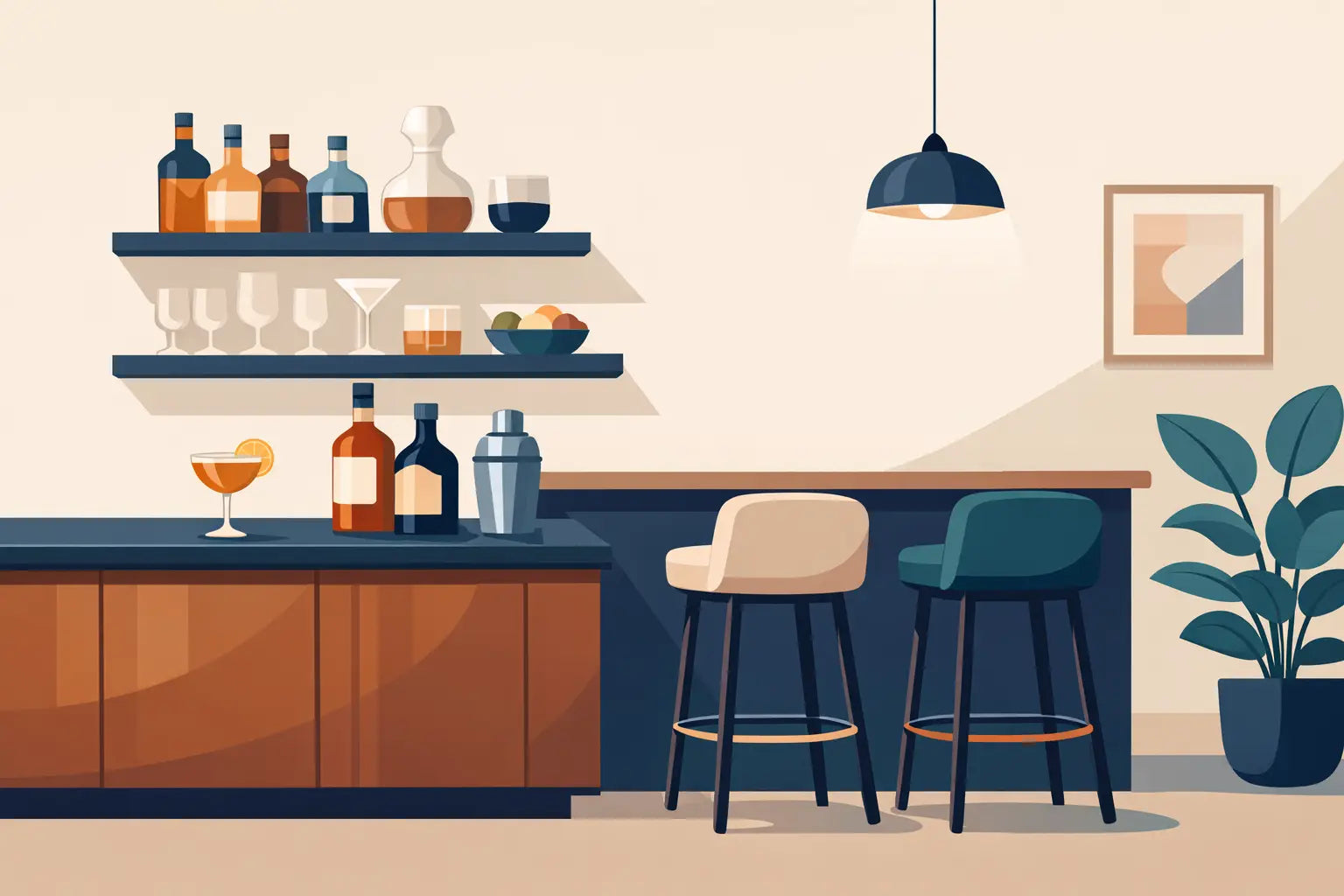
How to Build a Home Bar That Looks Refined
A good home bar changes the way a room works. It gives evening drinks a sense of occasion, makes hosting feel more composed, and turns a loose collection of bottles into something intentional. If you're figuring out how to build home bar spaces that feel polished rather than improvised, the difference usually comes down to planning, proportion, and presentation.
The best setups are not always the biggest. A compact apartment bar cart can feel more luxurious than an oversized cabinet if every piece earns its place. What matters is that the bar suits your space, supports the way you actually entertain, and looks cohesive when it's not in use.
How to build a home bar with the right foundation
Start with location before you think about bottles or accessories. A home bar should live where people naturally gather, but it should not interrupt the flow of the room. In a dining area, it can act as a serving station. In a living room, it often works best against a side wall or in an underused corner. In an open-plan space, it can help define a zone without feeling heavy.
Scale matters more than people expect. If you're working with a small footprint, a bar cart, console, or slim cabinet usually feels smarter than a deep piece of furniture that crowds the room. If you have more square footage, a built-in or substantial credenza can create a stronger architectural statement. Neither is inherently better. It depends on whether your priority is flexibility, storage, or visual impact.
Think about sightlines too. Your home bar will often be visible even when no one is using it, so the setup should contribute to the room's overall composition. Clean silhouettes, balanced spacing, and a restrained color palette tend to age better than trend-heavy styling.
Choose a bar format that matches your life
A dedicated home bar sounds appealing, but not everyone needs one. If you host a few times a month and prefer a tidy footprint, a cart is usually enough. It's mobile, lighter visually, and easier to edit. If you collect spirits, serve different styles of drinks, or want hidden storage for tools and extra stock, a cabinet or sideboard gives you more control.
Built-ins make sense when entertaining is central to your home or when you're renovating anyway. They offer the most tailored result, but they also commit you to one location and one design direction. A freestanding setup leaves room to evolve. That flexibility can be valuable, especially if your taste is still sharpening.
There is also the question of openness. An exposed bar looks beautiful when carefully styled, but it asks for discipline. Closed storage is less theatrical, yet easier to maintain. Many of the most successful home bars blend both - display the pieces with real presence, and conceal the practical overflow.
Start with glassware, not just bottles
One of the fastest ways to make a home bar feel elevated is to build it around drinkware instead of treating glassware as an afterthought. Bottles bring color and character, but the glasses define the ritual. They are what guests hold, what catches the light, and what makes a simple pour feel considered.
A strong core collection usually includes rocks glasses, stemmed cocktail or coupe glasses, wine glasses, and a few tall beverage glasses. If you love sparkling wine or spritzes, add flutes or all-purpose stemware with enough elegance to bridge occasions. The goal is not excess. It is versatility with a clear point of view.
This is where consistency helps. A cohesive set creates visual rhythm and makes the bar look curated, even when the inventory is modest. Lead-free crystal or well-made glass with a modern silhouette brings both clarity and weight. In a home setting, that balance matters. Pieces should feel special in the hand, but still durable enough for regular use.
What to stock in a home bar
A beautiful bar with nothing useful in it is just furniture. Stocking it well means being honest about what you drink. If you mainly serve martinis and Negronis, buy for that. If you lean toward wine, spritzes, and nonalcoholic aperitifs, your setup should reflect it. Building around fantasy habits usually leads to clutter.
Most home bars only need a thoughtful edit of essentials: a clear spirit or two, a dark spirit, vermouth, one bitter component, sparkling wine or club soda, and a few mixers that you genuinely use. Fresh citrus matters more than an oversized bottle collection. So does ice. A proper ice tray or mold can improve drinks more than one extra liqueur gathering dust on the shelf.
Keep duplication under control. Multiple bottles in the same category often make a bar look busier without making it better. If display matters to you, fewer bottles with stronger shapes and labels usually create a cleaner composition.
The tools that make service feel effortless
You do not need a commercial station at home, but a few well-chosen tools make a visible difference. A shaker, jigger, strainer, bar spoon, sharp paring knife, bottle opener, and ice bucket cover most needs. Add a small cutting board and cocktail picks if you use garnishes often.
Materials deserve attention here too. Tools sit out in the open, so they should complement the rest of the setup. Brushed stainless steel, matte black, or polished metal can all work, but mixing too many finishes tends to dilute the look. Pick one direction and repeat it across the details.
Storage should be intuitive. The items you reach for most should stay accessible, while backup tools and less-used accessories can live in drawers or lower shelves. When the bar is organized around use, service feels calmer and hosting becomes easier.
How to style a home bar without making it look busy
Styling is where many bars either come together or start to feel overworked. The instinct is often to fill every surface, but restraint reads as more expensive. Leave negative space. Let the glassware breathe. Group objects by height and material so the arrangement feels intentional instead of crowded.
A tray can anchor spirits and keep the composition from drifting. A small lamp adds warmth and makes glass sparkle at night. A bowl for citrus, a discreet coaster stack, or one sculptural object can give the setup personality without tipping into clutter. If you add art or a mirror above the bar, use it to reinforce the room's style rather than competing with it.
Color is worth editing. Amber spirits, clear crystal, polished metal, and a dark wood or stone surface already create plenty of contrast. If everything is shouting at once - bold labels, bright accessories, patterned wallpaper, colorful glassware - the space can lose its sense of refinement.
Small-space ideas for how to build home bar setups
If you live in an apartment or smaller home, the smartest bar is often one that works double duty. A narrow console can serve as an entry piece by day and a drinks station at night. A dining room sideboard can hold barware in one section and table linens in another. Even a single shelf above a cabinet can create enough vertical presence to make a compact setup feel complete.
In smaller rooms, editing becomes the luxury. Keep only the bottles and glasses you use regularly on display. Store the rest elsewhere. Uniform hangers, neat shelves, and matching glassware make a limited footprint feel composed rather than cramped.
Lighting also helps. A bar placed in a dim corner can disappear in the wrong way. Soft directional light gives it purpose and elevates the mood without asking for more square footage.
Build for entertaining, then for everyday rituals
The most successful home bars do both. They serve guests well, but they also support the quieter rituals that happen between gatherings - an after-dinner pour, a Friday spritz, a well-made espresso martini in a glass that feels worthy of the effort. That is often the real measure of whether a bar works.
If you want the setup to feel elevated over time, invest first in the elements that shape experience every day: quality glassware, a few reliable tools, and furniture with presence. Angeleno Drinkware approaches tabletop objects this way - not as filler, but as part of the atmosphere. The right vessel changes how a drink is served, seen, and remembered.
Build slowly if you need to. A refined home bar rarely appears all at once. It develops through choices that are edited, useful, and visually aligned. When each piece contributes to the ritual, the whole space starts to feel less like storage and more like hospitality at home.
The bar you keep should invite people in, but it should also please you when the room is quiet and the glass catches the light.