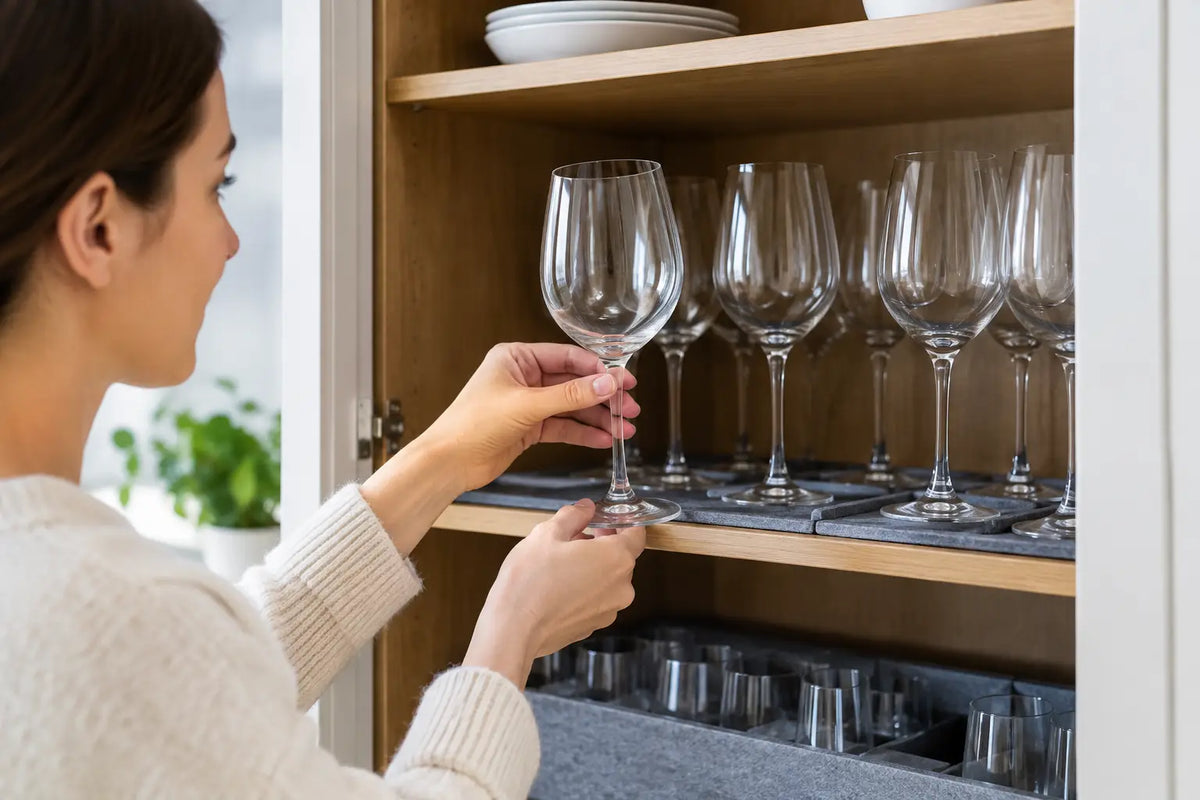
How to Store Wine Glasses Safely at Home
A beautifully set table begins long before the bottle is opened. Knowing how to store wine glasses safely protects the clarity, balance, and refined silhouette that make each pour feel considered. Whether you keep a small set of stems in an apartment kitchen or manage a fuller service collection for frequent entertaining, the goal is the same: glasses that are easy to reach, impeccably clean, and ready to perform.
The best storage choice is rarely about a single rule. It depends on the shape of the bowl, the height of the stem, the finish of your shelving, and how often the glasses move from cabinet to table. A little planning turns glass storage from an afterthought into part of the ritual.
How to Store Wine Glasses Safely in a Cabinet
For most homes, an enclosed cabinet is the most practical setting for wine glasses. It limits dust, protects against kitchen grease, and offers a calmer visual backdrop than an open shelf. Before loading the cabinet, measure its usable height and depth. A tall Bordeaux glass and a compact stemless pour may belong in different zones, even if they are part of the same collection.
Give every glass enough room to be removed without brushing its neighbor. Tight rows may look efficient, but they create the small, repeated collisions that lead to rim chips and scratched bowls. A finger-width of clearance between glasses is a useful baseline, with more breathing room around oversized bowls or handmade-looking silhouettes.
Keep the heaviest, most frequently used pieces at an easy-to-reach height. This reduces the chance of stretching over other glassware or lifting a delicate stem down from above shoulder level. Reserve the highest shelves for occasional celebration stems, seasonal pieces, or backup inventory that does not need daily access.
Rim up or rim down?
This question gets more attention than it deserves because both positions can work when the shelf is clean and the glasses are handled thoughtfully. Storing glasses upright, on their foot, puts no direct pressure on the rim and is often the preferred choice for fine, delicate crystal. It also allows air to circulate more freely inside the bowl after washing.
Storing glasses upside down can help keep dust out of the bowl, especially in an open display cabinet. The trade-off is that the rim rests against the shelf, where trapped moisture, grit, or a rough surface can leave marks over time. If you prefer rim-down storage, use a very clean, dry, smooth shelf liner that will not shed fibers or transfer color.
For premium lead-free crystal and finely finished wine glasses, upright storage is generally the more protective default. It lets the bowl and rim remain uncompressed while preserving the crisp visual clarity that makes a well-designed glass feel special in the hand.
Choose liners with restraint
Shelf liners can be helpful, but they should support the glass rather than create a new problem. Avoid thick, heavily textured liners that make the glass foot unstable, along with rubbery materials that can leave residue in warm cabinets. A thin, nonabrasive liner is enough to soften contact with a hard shelf.
Do not use stacks of napkins, dish towels, or decorative fabric beneath everyday glassware. These materials bunch under the foot, collect dust, and make it easier for a glass to tip when you slide another piece forward. Clean, level surfaces are more elegant and more dependable.
Avoid Stacking Wine Glasses Whenever Possible
Wine glasses are designed to create space around a drink, not to nest tightly together. Stacking stemmed wine glasses is an easy way to stress the bowl, catch one rim inside another, or create a difficult-to-separate pair after a busy dinner. Even stemless glasses should only be stacked when their form is specifically designed for it.
If cabinet space is limited, reduce the number of glasses stored in one location rather than forcing a crowded arrangement. Keep everyday all-purpose wine glasses within reach, then place specialty shapes in a secondary cabinet or a protected storage box. A smaller, thoughtfully edited set often serves a home better than a packed shelf full of pieces that feel risky to use.
For restaurants, wine bars, and event spaces, this principle matters even more. Speed of service can tempt staff to stack and rush, but replacement costs, inconsistent presentation, and avoidable breakage quickly outweigh the short-term convenience. Design a storage system that makes the safe choice the easy choice.
Use Stemware Racks for the Right Setting
Under-cabinet stemware racks offer a polished solution when cabinet shelving is scarce. They display the bowl while suspending the glass by its foot, creating a clean, hospitality-inspired look. They work especially well for collections with uniform stem lengths and foot diameters.
The limitation is exposure. In a busy kitchen, hanging glasses can collect dust and cooking residue, and they may swing if the cabinet is bumped. Position racks away from the stove, dishwasher steam, and high-traffic corners. Leave enough space between each glass so bowls do not touch when a neighboring piece is removed.
A rack is best for glasses used regularly and washed often. It is less suited to heirloom stemware, unusually fragile pieces, or long-term storage. In those cases, a quiet cabinet with careful spacing remains the more protective choice.
Prepare Glasses Before Putting Them Away
Storage begins at the sink. A glass returned to the cabinet with lingering moisture can develop water spots, musty odors, or a cloudy film that dulls the next pour. Let glasses air-dry fully on a clean, padded surface before placing them away. If you hand-dry, hold the bowl rather than twisting the bowl and foot in opposite directions, which can put unnecessary tension on the stem.
Before storing, take a quick look at the rim and bowl under good light. Lipstick traces, fingerprints, and mineral spots are easier to address now than just before guests arrive. A lint-free polishing cloth is useful for restoring a clear, presentation-ready finish, particularly before a dinner party or a more formal service.
Avoid storing wine glasses near strongly scented items such as cleaning products, candles, or spices. While glass itself is nonporous, an enclosed cabinet can hold onto ambient odors, and the experience of wine is deeply connected to aroma. Your glassware should feel neutral and pristine when it reaches the table.
Create a Storage Rhythm That Fits Your Home
The safest storage system is one everyone in the household can follow. If guests or family members cannot tell where a glass belongs, the cabinet will gradually become crowded and improvised. Group glasses by purpose and silhouette: everyday wine glasses together, champagne stems together, and specialty pieces in their own clearly defined space.
Consider how you entertain. A home that hosts intimate weeknight dinners may benefit from keeping four to six versatile glasses front and center. A frequent host may prefer to store complete sets together so the table can be set without searching across multiple cabinets. In a hospitality setting, par levels should account for service volume, washing turnaround, and safe replacement stock rather than simply filling every available shelf.
It also helps to revisit the cabinet every few months. Wipe shelves, inspect for small chips, and remove pieces that no longer suit your routines. This simple reset keeps the collection feeling curated instead of accumulated.
When long-term storage is necessary
For glasses used only on special occasions, wrap each piece individually in acid-free tissue or soft, unprinted packing paper. Place wrapped glasses upright in a sturdy, divided box, with no direct glass-to-glass contact. Mark the outside clearly so the box is not mistaken for something that can be stacked beneath heavier kitchen items.
Avoid newspaper, which can transfer ink, and avoid sealing glasses in damp or unventilated containers. Store the box in a dry, temperature-stable interior closet rather than a garage, attic, or basement where heat, cold, and humidity fluctuate.
Well-stored wine glasses do more than avoid breakage. They preserve the visual calm of your kitchen, make hosting feel effortless, and ensure that every bottle is served in a vessel worthy of the moment. Give your stems a little room, keep their surfaces clean, and let the cabinet become part of the curated experience.