How to Set a Drink Station That Feels Considered
A drink station earns its place long before the first toast. It gives guests permission to help themselves, keeps the host out of the kitchen, and turns a sideboard, bar cart, or section of the counter into a composed part of the room. Knowing how to set a drink station is less about displaying every bottle you own and more about creating a clear, beautiful rhythm: pour, garnish, serve, enjoy.
The most successful setups feel edited rather than overproduced. They offer enough choice to feel generous, yet every glass, vessel, and ingredient has a reason to be there. Whether you are setting up for a leisurely brunch, a candlelit dinner, or a busy café service, the same principle applies: thoughtful presentation makes the ritual feel more considered.
Start With the Occasion and the Pour
Before arranging a single glass, decide what the station is meant to serve. A coffee station for a weekend gathering needs a different footprint than a cocktail station for ten guests. The menu determines the glassware, ice, garnishes, tools, and surface area you will need.
For a cocktail-focused evening, offer one signature drink alongside a simple spirit-and-mixer option or a nonalcoholic alternative. This prevents the station from becoming a crowded collection of half-used bottles. A French 75-style welcome drink, for example, calls for champagne glasses, a small ice bucket, citrus, and a concise selection of spirits. A casual spritz setup may need generous beverage glasses, chilled wine, sparkling water, and fresh orange slices.
For coffee or tea, think in layers of ritual. Cups and saucers, a carafe or coffee maker, milk, sweeteners, spoons, and napkins should all be easy to reach without interrupting the flow. Porcelain espresso cups create a polished sense of occasion for a post-dinner coffee service, while larger cappuccino cups invite guests to settle in over a slower pour.
The goal is not to recreate a full bar or café. It is to make one particular experience feel complete.
Choose a Surface With Enough Breathing Room
A drink station works best when it has visual boundaries. A credenza, console, bar cart, kitchen island, or small dining table can all work beautifully, provided the surface is stable and not already competing with food service. Leave room for guests to set down a drink while they make another decision.
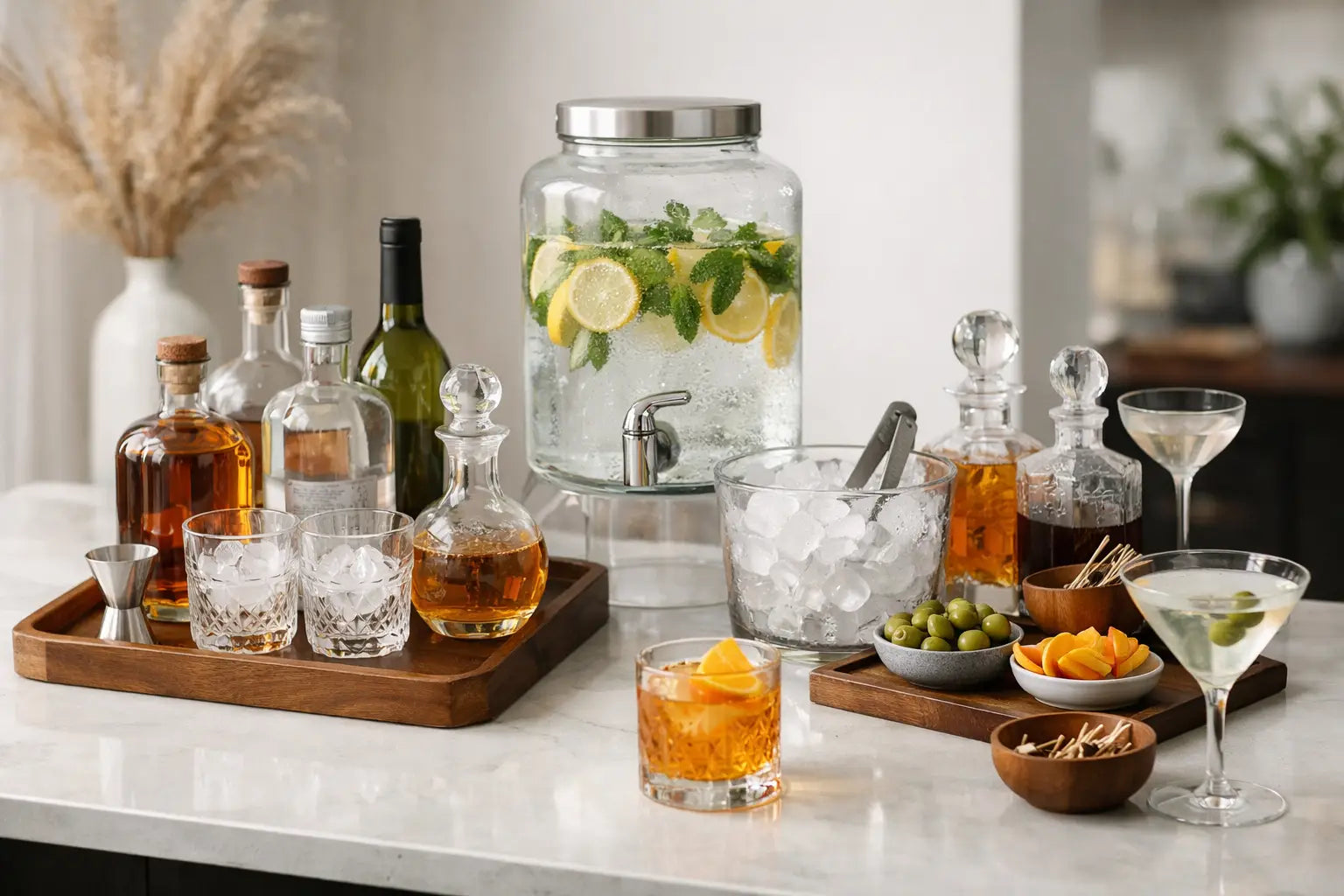
If space is limited, build vertically. A tray can visually contain bottles and smaller tools, while a raised stand or cake pedestal gives glassware a little height. This approach keeps the arrangement intentional without making it feel packed. In a compact apartment, one elegant tray with a carafe, two mixers, and a row of glasses often has more impact than an overloaded bar cart.
For larger gatherings, consider creating two distinct stations. Place drinks away from the main food table so guests naturally move through the room rather than forming one bottleneck. A separate water and sparkling water station is particularly useful. It is a small hospitality gesture that keeps the primary bar from doing too much.
Build the Station in Zones
The easiest way to understand how to set a drink station is to arrange it in the order a guest will use it. Start with the vessel, move to the drink, then finish with the details. This sequence makes service intuitive and keeps the setting looking composed even after a few rounds.
Glassware Comes First
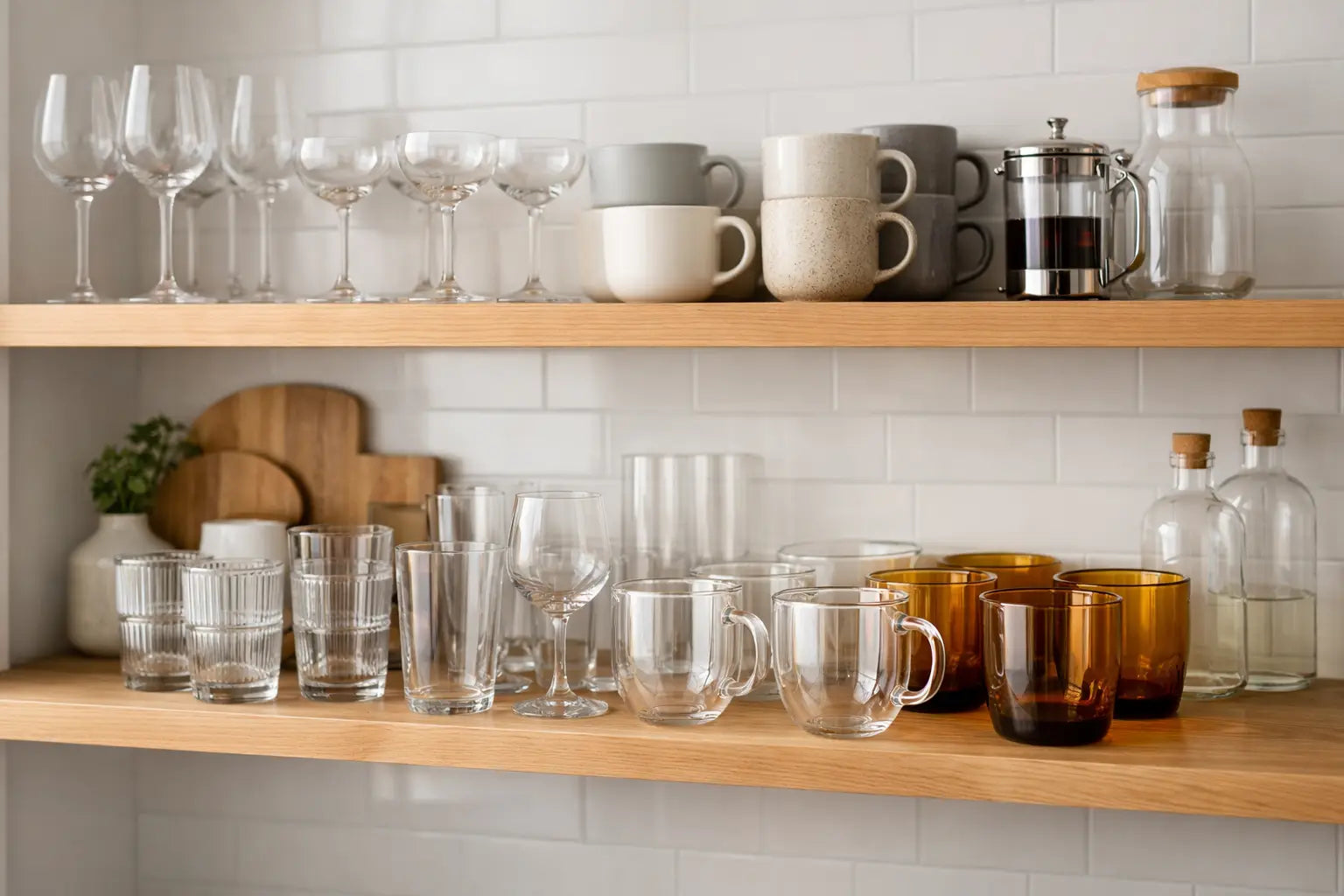
Place clean, dry glassware at the beginning of the station or just behind the main beverage. Group identical pieces together, with enough space between them for guests to pick one up comfortably. Avoid stacking delicate stemware unless it is specifically designed for stacking.
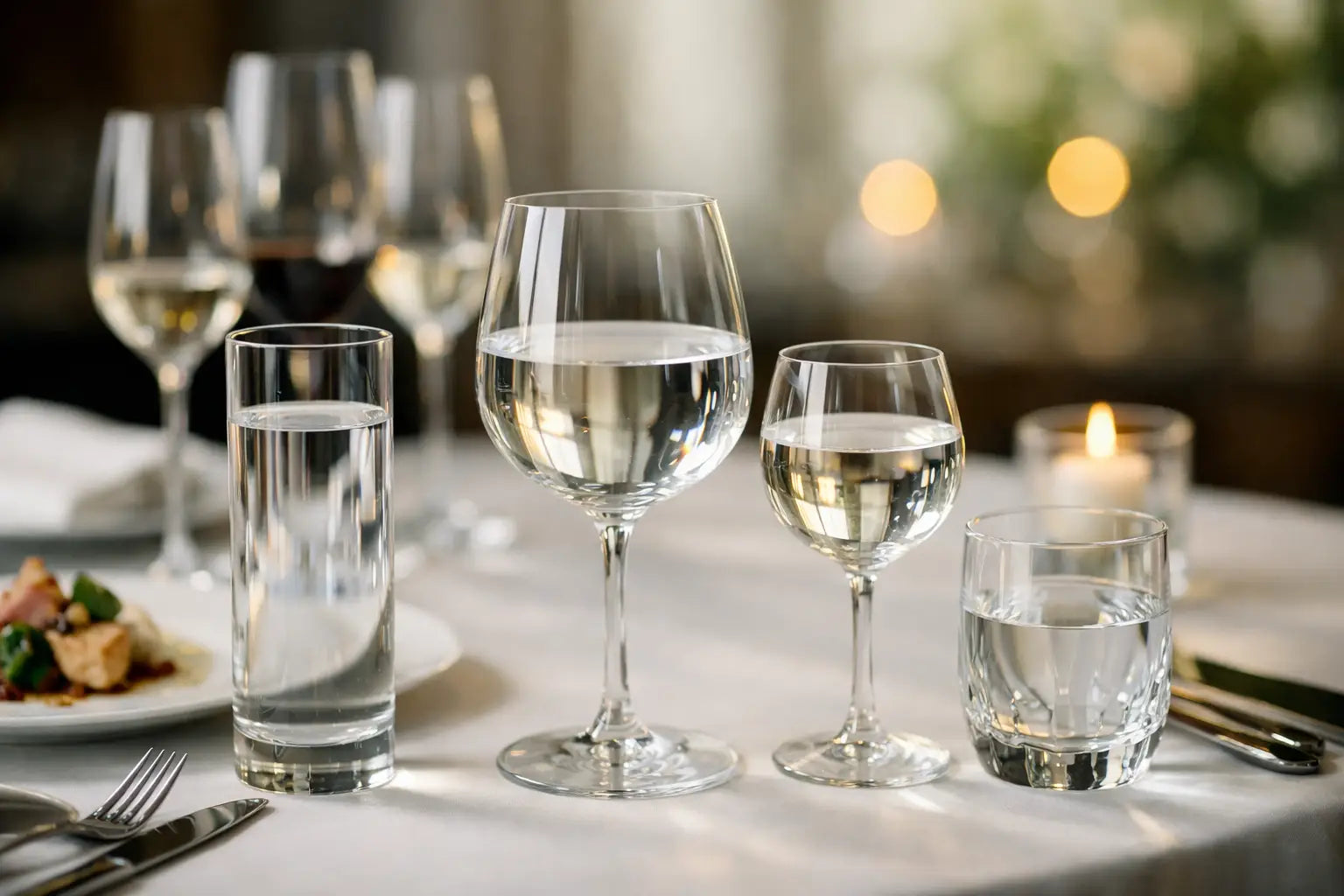
Choose glassware that supports the drink rather than treating every pour as interchangeable. A well-proportioned wine glass gives a simple bottle more presence. A finely shaped cocktail glass brings clarity to the color and garnish of a martini or coupe drink. Tall beverage glasses make sparkling water, iced tea, and citrus-forward cocktails look deliberately refreshing.
A cohesive collection is more powerful than a mixed assortment. The clean silhouette and lead-free crystal clarity of Angeleno Drinkware's Figueroa collection, for instance, can carry a station from aperitif hour through dessert without creating visual noise. You do not need every glass style on display. Set out the pieces appropriate to the menu and keep backups nearby.
Place Bottles, Carafes, and Mixers at the Center
The beverage itself should be the visual anchor. Arrange wine bottles, a cocktail pitcher, a carafe, or coffee service where guests can identify it immediately. Labels may face outward, but do not force every bottle into a perfectly aligned row. A slight variation in height feels more relaxed and less like retail shelving.
Keep chilled elements close to the pour. Wine and sparkling water belong in an ice bucket or nearby cooler, while cocktail ice should sit in an insulated bucket with tongs or a scoop. If you are serving a batch cocktail, a clear pitcher or dispenser helps guests see what is on offer and lets the drink become part of the presentation.
Use small tent cards only when the menu needs explanation. They are helpful for a signature cocktail, a house-made syrup, or a nonalcoholic option, but unnecessary for familiar bottles. In a home setting, a handwritten card can feel warm and personal. In a hospitality setting, keep wording concise, legible, and consistent with the rest of the table presentation.
Finish With Garnishes and Service Tools
Garnishes should look fresh, not decorative for decoration's sake. Choose one or two that genuinely suit the drinks: lemon twists for sparkling wine, olives for martinis, mint for a zero-proof cooler, or cinnamon for a seasonal coffee service. Present them in small bowls with cocktail picks, tongs, or a spoon so guests are not reaching into shared ingredients.
Then add the practical finishing pieces: cocktail napkins, coasters, bottle openers, a wine key, stirrers, and a small dish for used picks or citrus peels. These are the details that protect your furniture and keep the station tidy as the evening progresses.
Use Color, Texture, and Light With Restraint
A refined drink station does not need a theme. It needs a point of view. Start with the palette already present in the room, then introduce one considered accent. Clear crystal and white porcelain offer a calm foundation, while linen napkins, a brushed metal tray, or a dark stone coaster can add depth without stealing focus.
Fresh elements make the arrangement feel alive. A small vase of sculptural branches, a bowl of whole citrus, or a low arrangement of herbs adds color and fragrance. Keep florals low enough that they do not block conversation or interfere with serving. If the setting is in the evening, a small lamp or votive candles nearby can give glassware a soft glow. Keep open flame well away from napkins, alcohol, and guest traffic.
There is a trade-off between abundance and ease. A generously layered station photographs beautifully, but it may be difficult for guests to use. Prioritize clear surfaces and accessible tools, then add only the finishing details that improve the experience.
Plan for Refill, Cleanup, and Real Use
The station should remain functional after the first ten minutes. Keep extra glasses, napkins, ice, and mixers within reach but out of the main display. A lower shelf on a cart, a nearby cabinet, or a discreet tray in the kitchen can hold replenishment supplies.
For a party, plan roughly two to three glasses per guest if you are not washing during the event, with more for a cocktail-heavy evening. If you have a smaller glassware collection, offer a small number of drink options and encourage guests to keep track of their vessel with charms or a subtle marker. This can be more elegant than filling the room with disposable cups.
Think about the end of the night, too. Place a small bus tray or empty section at one end of the station for used glassware. In restaurants and cafés, this operational detail is essential. At home, it quietly prevents the coffee table and windowsill from becoming accidental drop zones.
Adapt the Setup to the Mood
A morning station should feel open and restorative: filtered coffee, warm cups, sparkling water, a small pastry plate, and soft natural light. An evening cocktail station can be moodier, with chilled bottles, precise glassware, a low lamp, and a focused garnish. For celebrations, lean into a sense of occasion with champagne glasses ready to pour, but preserve enough empty space for the moment to unfold.
The most memorable drink stations do not ask guests to admire them from across the room. They invite participation. Set out the vessel that feels good in the hand, make the next step obvious, and leave a little room for the ritual to become their own.