Fine Dining Water Glasses That Set the Table
A water glass is often the first vessel a guest reaches for and the one that remains on the table from the opening course through dessert. That makes fine dining water glasses more than a supporting detail. Their scale, clarity, weight, and silhouette quietly shape the entire experience of a place setting.
For a restaurant, the right glass reinforces the character of the room before the first plate arrives. At home, it gives a dinner party the composed feeling of a table that has been considered from every angle. The best choices do not compete with the food, wine, or conversation. They create a polished frame around all three.
Why Fine Dining Water Glasses Matter
Water service is constant, which gives the water glass unusual visual influence. A beautiful wine glass may be removed between courses, but a water glass stays present. It catches candlelight, reflects the color of linen, and sets a visual rhythm beside stemware, flatware, and dinnerware.
Its tactile role matters just as much. Guests lift a water glass without ceremony, often several times during a meal. A vessel that feels balanced in the hand and comfortable at the rim makes that repeated gesture feel natural. One that is too heavy, too delicate, or awkwardly wide can interrupt an otherwise refined experience.
This is where design and function meet. Fine dining does not require a fussy table. It calls for pieces with intention: a silhouette that feels distinctive, material clarity that flatters the beverage, and proportions that make room for service rather than crowding it.
Choosing the Right Shape for the Table
There is no single ideal water glass shape. The best option depends on the style of service, the size of the table, and the wider collection around it.
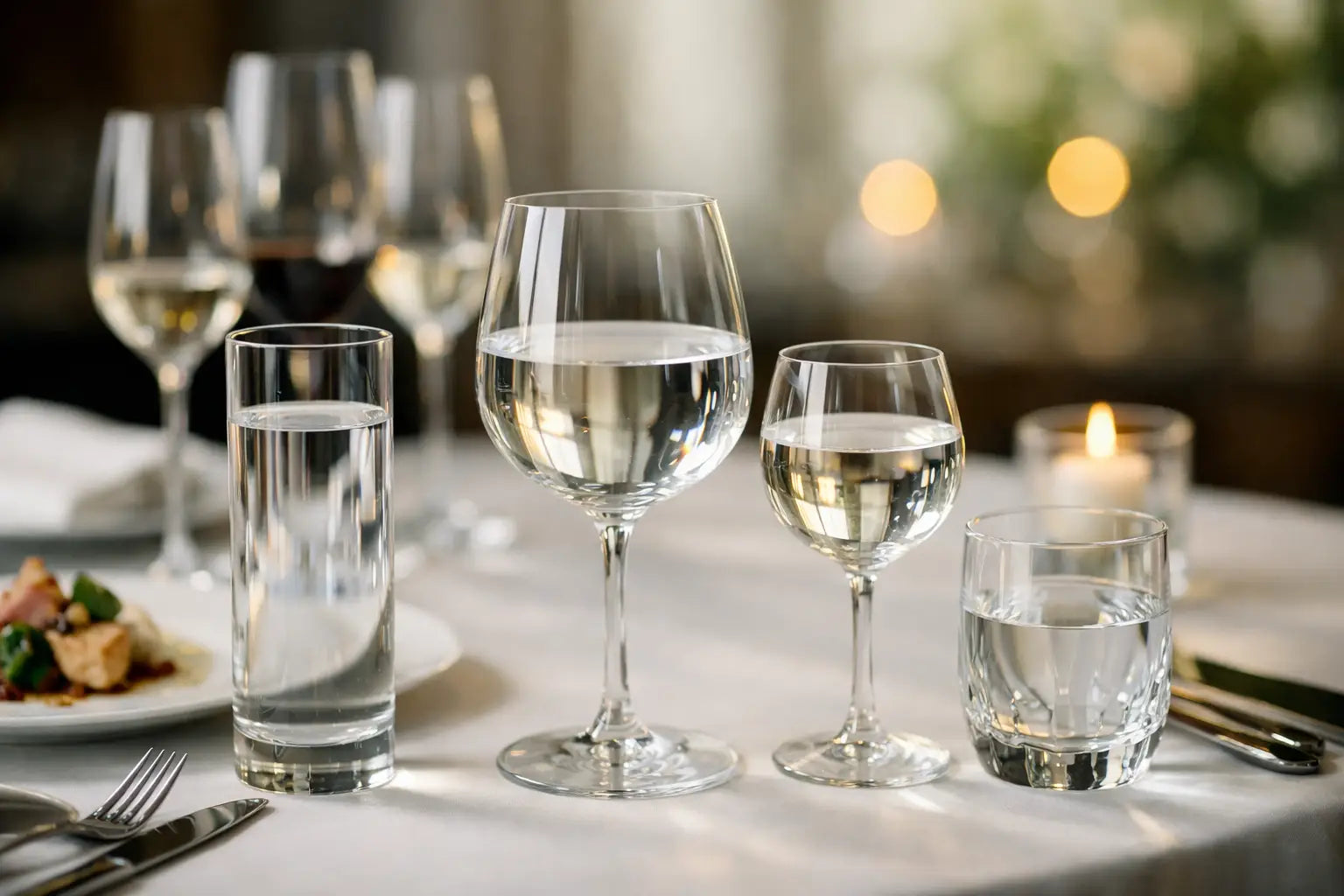
A tall, straight-sided glass reads as crisp and architectural. It is especially effective in contemporary dining rooms, where clean lines and restrained place settings create the atmosphere. This profile offers a generous capacity without taking up excessive visual space, though very narrow glasses can be less practical when guests are offered ice or citrus.
A rounded tumbler brings softness to the table. Its curved form can feel inviting and relaxed while still looking elevated in clear, finely made glass. This style works beautifully when the menu and setting lean warm, organic, or coastal. The trade-off is that a wide bowl can occupy more room on compact tables, particularly when wine glasses and multiple courses are involved.
Faceted or gently textured water glasses introduce dimension without requiring additional decoration. They can give a monochromatic setting depth, catching light in a way that feels considered rather than ornate. For restaurants, texture also helps distinguish water service at a glance. Use it with restraint, however. Highly detailed glass can clash with patterned china, ornate flatware, or a busy tabletop.
Stemmed water glasses create a more formal profile, separating the guest's hand from the bowl and lending height to the place setting. They suit ceremonial dinners and traditional fine dining, but they are not automatically the more luxurious choice. A beautifully proportioned tumbler can look every bit as sophisticated, with a more current and relaxed sensibility.
Capacity Should Support Service, Not Dominate It
For most fine dining settings, a water glass in the 12- to 16-ounce range offers a strong balance. It holds enough water to feel generous, accommodates ice when appropriate, and avoids constant refills without appearing oversized.
Larger glasses can be useful for daytime service, outdoor dining, or menus where hydration is a visible part of the experience. Yet an oversized vessel can overwhelm a carefully composed table, particularly beside delicate champagne flutes or narrow wine stems. Smaller glasses create a more formal look but demand more attentive refilling. The right choice depends on the pace and personality of the service.
Material, Clarity, and the Feel of Quality
Clear glass remains the enduring choice for water because it keeps the table visually open and lets the beverage look fresh. Fine clarity communicates care, especially under warm restaurant lighting or at a candlelit dinner. It also allows the silhouette itself to do the work.
Lead-free crystal offers a particularly luminous appearance and a pleasingly fine rim. It can bring a sense of refined indulgence to a setting without making water service feel precious. For hospitality use, modern lead-free crystal is a compelling option when it balances brilliance with the durability required for repeated washing and handling.
Soda-lime glass can also perform beautifully when the design is strong and the construction has substance. The distinction is not simply crystal versus glass. Consider the thickness of the rim, the weight at the base, the consistency of the finish, and how the vessel feels after dozens of uses. A well-designed glass should feel intentional in the hand, not fragile for the sake of looking delicate.
Color deserves a place in the conversation, too. A smoke, amber, or soft green water glass can bring atmosphere to a table and create a memorable signature for a dining room. But colored glass is best treated as a design decision, not a default. It may obscure the brightness of water and can limit versatility across seasons, menus, and event styles. Clear glass is the most adaptable foundation; color is the expressive accent.
Fine Dining Water Glasses and Table Proportion
A water glass should relate gracefully to everything around it. In a classic place setting, it typically sits above the knife, positioned near the wine glass. The goal is not rigid symmetry but an easy reach and a composed visual line.
Height is one of the most overlooked details. If the water glass towers over every other vessel, it can make wine service appear secondary. If it is too short, it may disappear behind plates and centerpieces. Look for a silhouette that contributes presence without becoming the focal point.
Spacing is equally important. On a generous table, a slightly wider glass can feel luxurious and abundant. On a two-top or a home dining table with limited depth, a slimmer profile prevents the setting from feeling compressed. This is why a glass that photographs beautifully in isolation may not be the right choice in service. Always consider it alongside the actual plate, wine stem, napkin, and flatware it will accompany.
Build a Cohesive Glassware Story
The most compelling tables do not rely on perfectly matched pieces so much as they rely on visual harmony. A water tumbler with modern geometry can sit comfortably beside elegant wine stems if the materials share clarity and the shapes feel complementary. Likewise, a rounded water glass can soften angular porcelain and linear flatware.
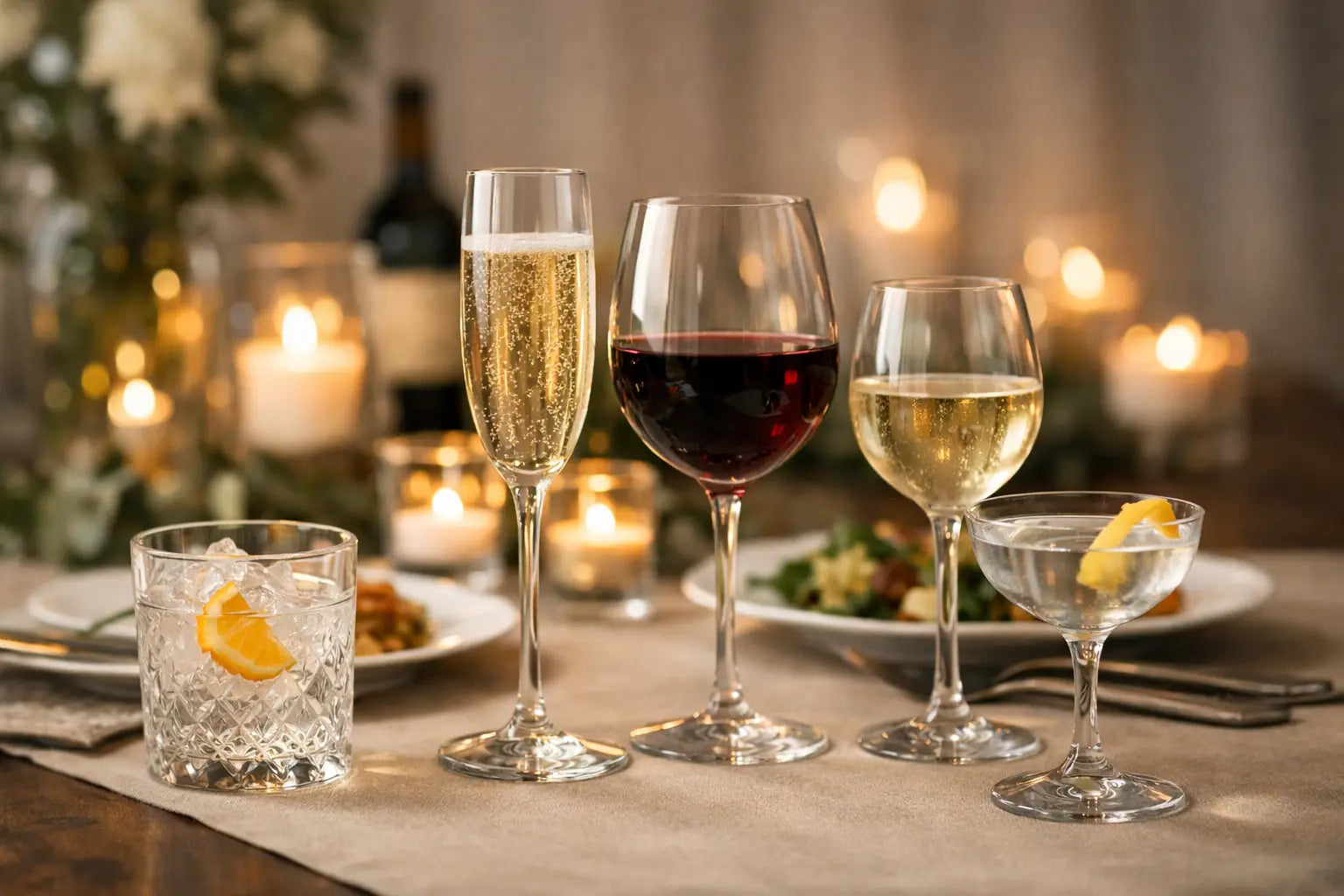
Collection-based glassware makes this easier. When beverage glasses share a common design language, the table feels curated even when different vessels serve water, wine, cocktails, or sparkling wine. Angeleno Drinkware approaches glassware as part of this broader visual composition: each piece should work beautifully alone and even better in company.
For home entertaining, start with water glasses that you will reach for beyond formal dinners. They should feel appropriate beside a weeknight pasta bowl, then rise naturally to a holiday table with linen napkins and candlelight. For restaurants, select a shape that supports the operational reality of the room: storage, dishwashing, replacement, and the pace of service all deserve the same consideration as appearance.
Care That Preserves the Finish
Even exceptional glassware loses its polish when it is clouded, chipped, or marked by hard-water residue. Use a dishwasher cycle appropriate for fine glassware, avoid crowding glasses together, and allow them to cool before handling. In high-volume hospitality settings, staff training matters as much as the glass itself. A consistent approach to racking, polishing, and storage protects both the investment and the guest experience.
For hand polishing, use a clean, lint-free cloth and handle the glass by the bowl or base rather than twisting it aggressively. This is particularly relevant for stemmed pieces, where torque can create unnecessary stress. Store tumblers upright whenever possible so rims remain protected and ready for service.
The goal is not perfection for its own sake. It is maintaining the quiet clarity that lets the glass feel fresh every time it arrives at the table.
A well-chosen water glass gives even the simplest pour a sense of occasion. Choose one with presence, balance, and a shape you want to see at every seat, and the table will feel considered long before the meal begins.