Wine Glasses for Modern Table Settings
A table can be beautifully plated, layered with linen, and lit just right, yet still feel unfinished if the glassware is off. Wine glasses for modern table settings do more than hold a pour - they shape the rhythm of the table, sharpen the visual lines, and signal whether the overall look feels considered or crowded.
That matters at home and in hospitality. A contemporary table is rarely about excess. It is about restraint, proportion, and a few strong pieces working together. The right wine glass brings elegance without visual noise, which is exactly why glassware often becomes the quiet detail that makes the whole setting feel complete.
What modern table settings actually ask of a wine glass
Modern tables tend to favor clean silhouettes, negative space, and cohesion across materials. That does not mean every table should look stark or minimalist. It means each object should earn its place. Wine glasses, in that context, need to feel intentional from every angle.
The first consideration is silhouette. Bowls with excessive ornament, overly thick stems, or fussy detailing can interrupt a streamlined tablescape. A more contemporary profile usually leans toward balanced geometry - a bowl that feels generous but not oversized, a stem that looks refined in the hand, and a rim that keeps the overall shape visually light.
Scale matters just as much as style. Modern table settings often use lower centerpieces, smaller floral moments, and tighter place settings. A very large Bordeaux glass may be beautiful on its own, but at a compact dining table it can dominate the entire composition. In restaurants, oversized stems can also complicate pacing and service. The better choice is often a glass that offers enough bowl volume for aroma while preserving breathing room around the plate.
Material quality is another dividing line. Lead-free crystal and high-clarity glass tend to suit modern tables because they catch light cleanly and look crisp against ceramics, stoneware, matte flatware, or polished cutlery. When the material has brilliance without heaviness, the table feels elevated rather than overworked.
Choosing wine glasses for modern table settings by silhouette
If you are selecting wine glasses for modern table settings, think in terms of shape language rather than old rules alone. The classic distinctions between red, white, and sparkling still matter, but visual harmony matters too.
Stemmed glasses for a refined architectural look
A stemmed wine glass remains the strongest choice for most modern tables, especially when the goal is a polished, hospitality-minded presentation. The stem creates lift and separation, which helps the bowl read as a design object rather than just another vessel on the table.
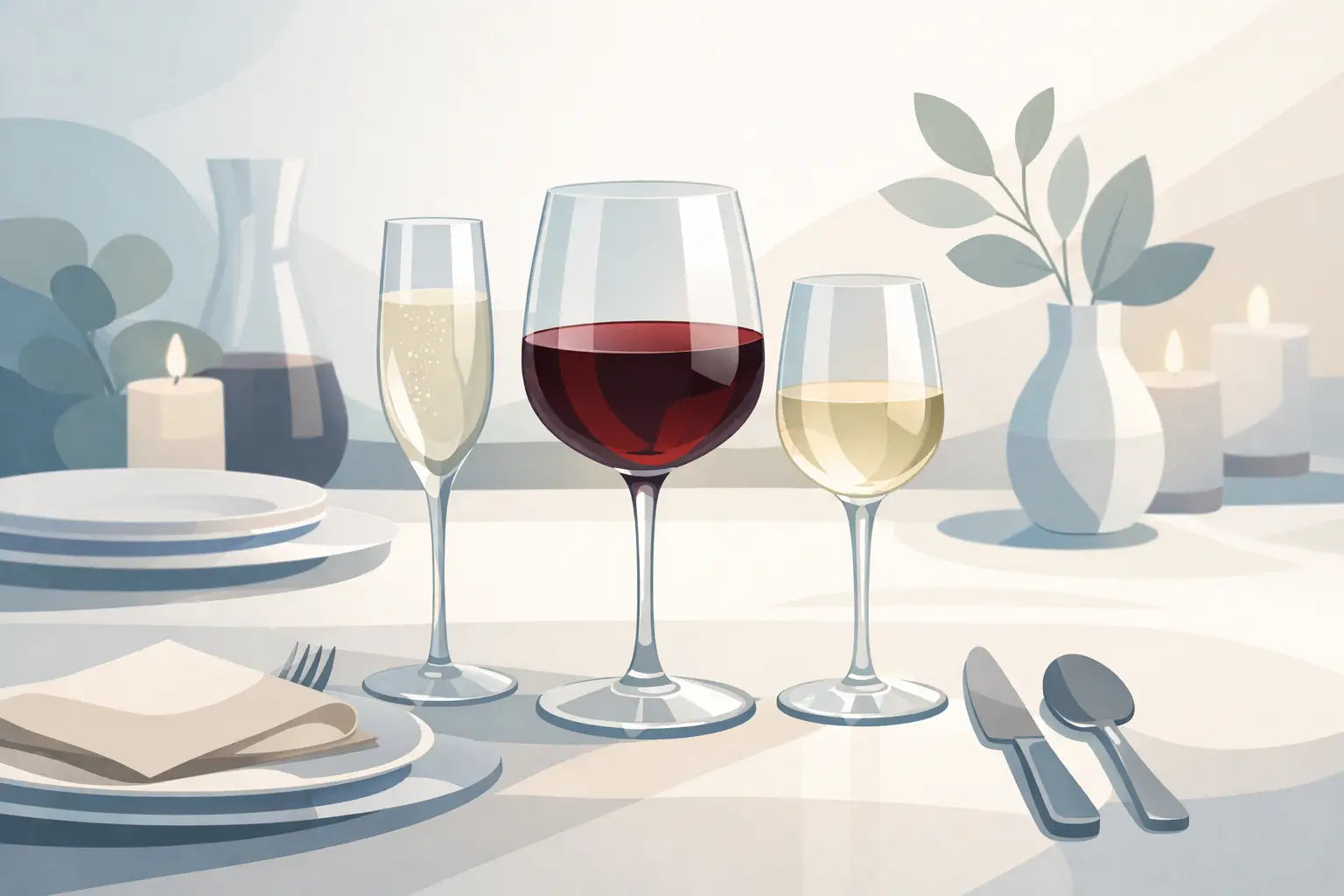
For red wine, look for a bowl with a subtle curve and enough width to open the wine without feeling exaggerated. For white wine, a slightly narrower profile often looks especially clean in contemporary settings. It brings structure to the place setting and keeps the line of the table feeling precise.
There is also a practical advantage. Stemmed glasses are easier to handle without warming the wine too quickly, and they maintain a more formal visual cadence across multi-course dinners or celebratory hosting.
Stemless glasses when the setting is intentionally relaxed
Stemless wine glasses can work in modern table settings, but they work best when the table is styled with a more casual point of view. Think outdoor dining, apartment entertaining, or a table that blends wine service with an everyday, less ceremonial atmosphere.
The trade-off is visual weight. Stemless glasses sit lower and can make the table feel denser, especially if water glasses, candles, and shared dishes are already competing for space. They are practical, easier to store, and often less fragile, but they rarely deliver the same vertical elegance as a well-proportioned stem.
If you choose stemless, keep the rest of the table restrained. Fewer layers, simpler plates, and a cleaner centerpiece help the glassware feel current instead of crowded.
How finish, clarity, and rim detail change the table
On a modern table, small details read loudly. Thick rolled rims, cloudy glass, or heavy seams can dull the effect of even the best table styling. By contrast, a fine rim and clear bowl create a lighter, more precise impression.
This is one reason premium glassware feels different before anyone takes a sip. It reflects ambient light more beautifully, supports the color of the wine, and contributes to a more refined sensory experience. That effect is subtle, but it is cumulative. Guests notice when a table feels polished, even if they cannot immediately name why.
Color is another area where restraint usually wins. Clear glass is the most versatile choice for modern table settings because it pairs effortlessly with changing linens, ceramics, and seasonal menus. Smoked or tinted glass can be striking, but it is more specific. It can also compete with the wine itself, particularly if the rest of the table already has strong tonal contrast.
Pairing wine glasses with modern table elements
A strong table is about relationships between objects. Wine glasses should not be chosen in isolation from plates, flatware, linens, and serving pieces.
If your dinnerware has a matte finish or sculptural edge, clear crystal-style wine glasses provide contrast and keep the setting from feeling flat. If your plates are already glossy and highly detailed, a simpler wine glass can create needed balance. Black flatware, brushed stainless, and warm neutrals all tend to work well with clean-lined glassware because they let the transparency of the glass act as a visual counterpoint.
For home entertaining, this often means choosing one versatile wine glass collection that can move across several moods - casual dinners, holiday meals, and more dressed-up evenings. For hospitality settings, it usually means standardizing around a profile that complements the brand's service style while holding up to repeated use.
That is where collection-based design becomes especially useful. A cohesive family of wine, champagne, and beverage glasses creates a more intentional tabletop than a mix of unrelated shapes. Angeleno Drinkware approaches glassware this way because the strongest tables are built through consistency, not clutter.
Wine glasses for modern table settings in smaller spaces
Not every modern table is expansive. Many are apartment tables, breakfast nooks, narrow restaurant two-tops, or multi-use dining areas where scale is everything.
In smaller spaces, the best wine glass is often one size down from what you first imagine. A medium-capacity bowl with a refined stem typically feels more elegant than an oversized statement piece. It keeps sightlines open, allows room for shared dishes, and makes the table feel edited.
This is also a smart choice for hosts who want versatility. One thoughtfully chosen all-purpose wine glass can handle reds, whites, and sparkling-adjacent pours more gracefully than a crowded cabinet full of specialty pieces that rarely make it to the table.
Balancing style and durability
There is always a tension between a delicate-looking glass and one that performs well in real life. For homeowners, that may mean choosing glasses that feel elevated enough for entertaining but durable enough to use on an ordinary weeknight. For restaurants and event spaces, the equation includes storage, polishing, turnover, and breakage rates.
A modern table should not require preciousness to look beautiful. Lead-free crystal offers a strong middle ground because it can deliver brilliance and finesse while remaining more practical for regular use. The key is not simply choosing the thinnest glass possible. It is choosing a glass with visual lightness and dependable construction.
That distinction matters. A glass that looks fragile but chips easily will not age well in either a home collection or a hospitality program. Better to choose a silhouette with enduring appeal and enough resilience to stay in rotation.
When to break the rules
Modern does not mean strict. If your table has vintage silver, textured linen, or handmade ceramics, a contemporary wine glass can still anchor the setting beautifully. In fact, that contrast often gives the table more depth.
The only real mistake is choosing glassware that ignores the mood of the table. If everything else is tailored and understated, ornate goblets may feel disconnected. If the table is intentionally layered and expressive, an ultra-minimal glass can sometimes feel too spare. Good styling is less about rules than about visual conversation.
That is why the best wine glasses for modern table settings are rarely the loudest ones. They are the glasses that support the food, flatter the pour, and bring clarity to the overall composition. They look as good empty as they do filled. They hold their own in a candlelit dinner, a rooftop gathering, or a quietly elegant weekday meal.
Choose glassware that makes the table feel sharper, lighter, and more resolved. When the silhouette is right, the whole setting settles into place.