Best Glasses for Dinner Parties, Chosen Well
A dinner table can be beautifully set and still feel unfinished when the glassware is an afterthought. The best glasses for dinner parties do more than hold a pour: they catch candlelight, clarify the character of a wine, and give every place setting a sense of occasion. The goal is not to crowd the table with a different vessel for every possible drink. It is to choose a considered set of silhouettes that feels generous, cohesive, and easy to use.
What Makes the Best Glasses for Dinner Parties?
For home entertaining, the right glassware balances visual presence with real hospitality. A glass should feel good in the hand, be stable enough for a lively conversation, and look as compelling filled with sparkling water as it does with a carefully chosen vintage. It also needs to work within the scale of your table. Tall stems can look striking, but on a small round table they may compete with a low floral arrangement, shared platters, and the natural movement of dinner.
Material is the starting point. Lead-free crystal brings brightness, clarity, and a finer rim than many everyday glasses, giving wine and cocktails a more polished presentation without making the table feel overly formal. It is especially appealing when you want that restaurant-caliber finish while still serving a relaxed meal at home. Well-made soda-lime glass can be an excellent choice for larger gatherings or more casual settings, where durability and an easygoing look matter most.
Then there is shape. Modern, clean-lined glassware can make an eclectic menu feel intentional. More traditional bowls and stems introduce romance and ceremony. Neither is inherently better. The best choice reflects the mood you want guests to feel the moment they sit down.
Start With Three Essential Glass Types
A thoughtfully edited dinner-party collection begins with wine, water, and a versatile cocktail or beverage glass. This trio covers the way most people actually entertain, from a pasta dinner with friends to a more composed holiday table.
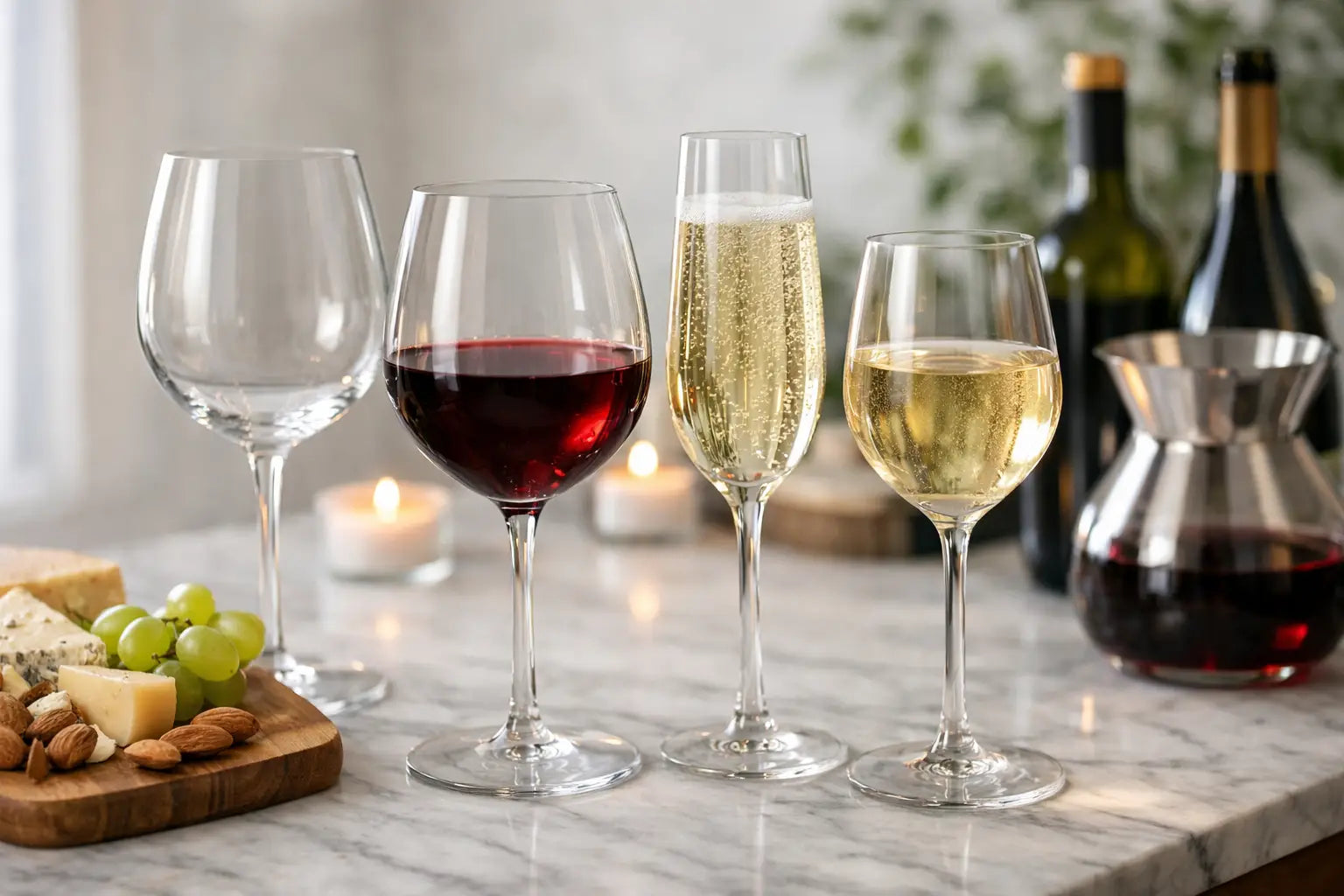
A versatile wine glass
If you are buying one wine shape, choose a medium-to-large stemmed glass with a gently rounded bowl and a subtly tapered opening. This is the most accommodating option for red, white, rosé, and even chilled lighter reds. A wide enough bowl gives aroma room to develop, while a narrower rim directs it toward the nose rather than letting it disappear across the table.
This all-purpose approach is more practical than purchasing separate glassware for every grape variety. Dedicated Bordeaux, Burgundy, and white-wine glasses have a place for serious collectors and tightly planned pairings, but they can make a dinner table feel crowded and create more work after the last guest leaves. One elegant universal wine glass lets the food, conversation, and pour take center stage.
A water glass with enough presence
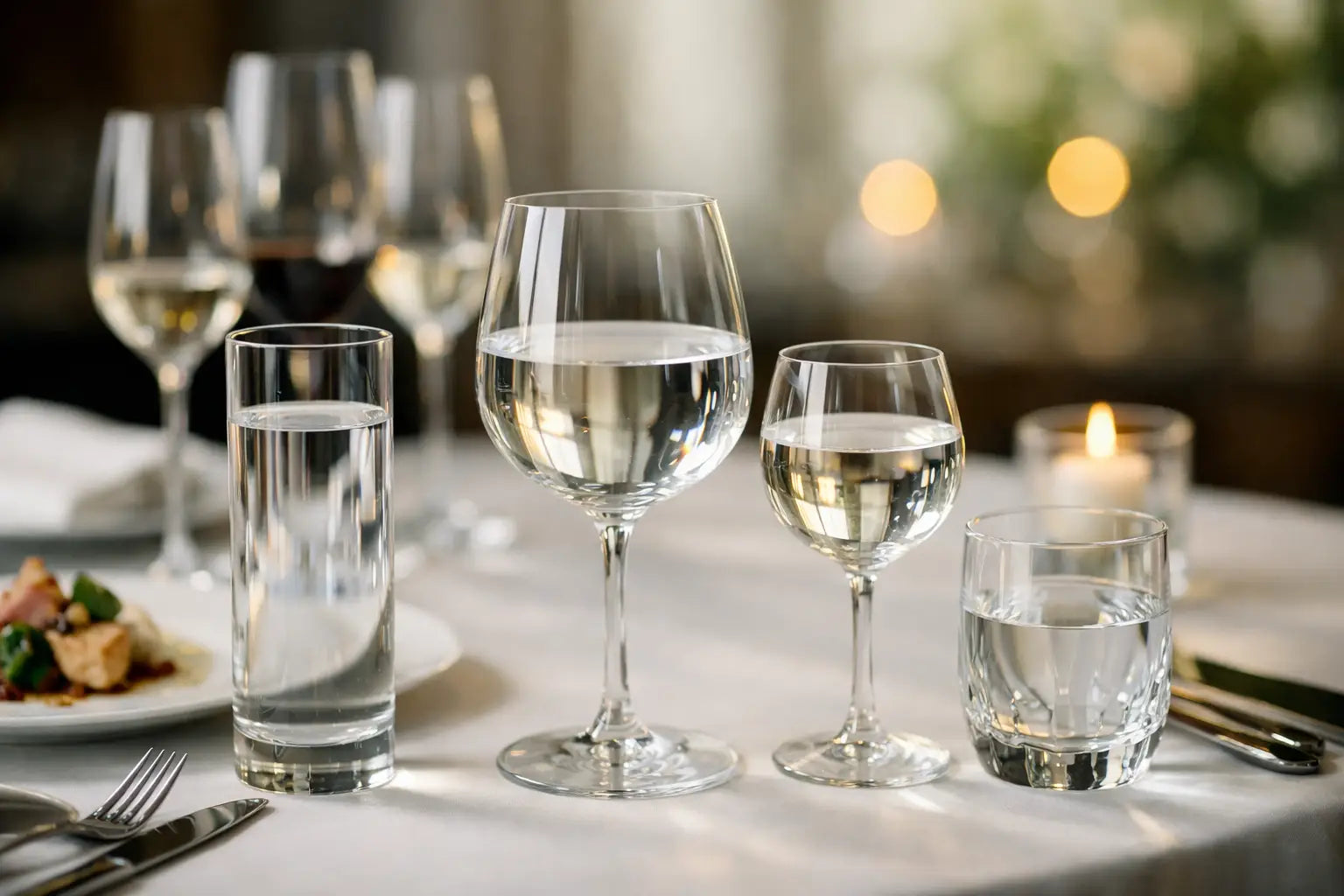
Water glasses are not supporting players. They are usually the first vessels guests reach for, and because they stay on the table all evening, their silhouette anchors the setting. Choose a glass that feels substantial but not heavy, with a profile that complements your wine stem rather than mimicking it.
A low tumbler offers a grounded, contemporary counterpoint to stemware. A taller beverage glass can create more verticality and is useful when you serve still and sparkling water side by side. Clear glass remains the most flexible choice for layered tables, but a restrained tint can be beautiful for a dinner built around one strong color story. If you use colored water glasses, keep the wine glasses clear so guests can appreciate the wine's color.
A cocktail glass that earns its place
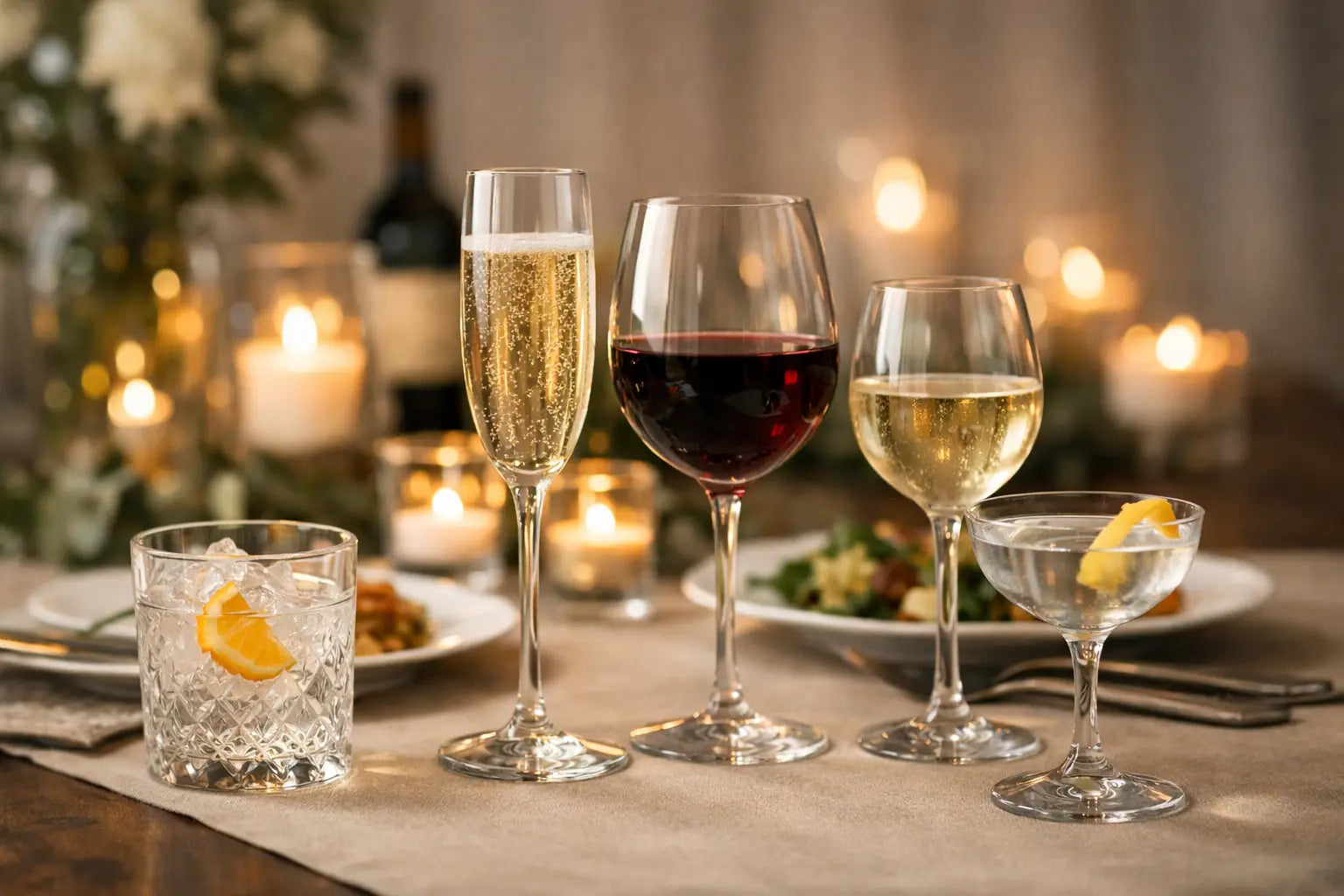
A dedicated coupe, martini glass, or rocks glass can shift an ordinary gathering into a curated experience before dinner begins. The right choice depends on what you serve. Coupes flatter sparkling aperitifs and shaken cocktails, while a low, broad rocks glass suits an old fashioned, negroni, or spirit-forward nightcap.
For hosts who prefer fewer pieces, select a refined beverage glass that can move from a pre-dinner spritz to iced tea or a zero-proof drink. Versatility matters, but do not force one glass to do every job. A water tumbler may hold a cocktail perfectly well, yet a distinct cocktail silhouette signals that the evening has been considered from the first pour.
Choose a Cohesive Look, Not a Perfect Match
Matching every glass is the safest route, but it is not the only sophisticated one. A table can feel layered and intentional when the pieces share an underlying design language: similar clarity, a related weight, or a common detail such as a rounded base or fine rim. What matters is visual rhythm.
For a modern table, pair sculptural wine stems with low, clean water tumblers. The contrast between height and grounded geometry creates a polished composition without feeling stiff. For a softer, more romantic setting, choose rounded bowls and subtly textured water glasses, then repeat the curve in a candleholder or serving bowl.
If you are mixing collections, limit the palette. Clear crystal, clear glass, and white porcelain make a particularly strong foundation because food and flowers provide the color. This is where a collection-based approach is useful. Pieces designed to live together remove the guesswork while still allowing a table to feel personal. Angeleno Drinkware's Figueroa collection, for example, offers lead-free crystal silhouettes with a cohesive, contemporary sensibility across wine, champagne, cocktail, and beverage service.
Consider the Menu and the Pace of the Evening
The best glassware changes with the meal. A long, seated dinner with wine pairings calls for stemware that feels elegant through several courses. A family-style meal with abundant platters benefits from shorter, sturdier water glasses that are less likely to be knocked as dishes move around the table. For a rooftop dinner or a gathering where guests will drift between kitchen and patio, a slightly more durable glass may be wiser than an ultrafine stem.
Temperature matters, too. White wine and sparkling wine are best in smaller pours so they stay cool. Red wine benefits from a bowl with enough room for a gentle swirl. If you are serving a batch cocktail, consider whether guests will be seated or standing. A stemmed coupe is graceful at the table; a substantial tumbler is often the better choice for mingling.
Do not forget guests who are not drinking alcohol. Serving sparkling water with citrus, a botanical soda, or a thoughtfully built zero-proof cocktail in the same quality glassware is a small gesture with outsized impact. It makes everyone part of the ritual rather than offering a lesser alternative.
The Details Guests Notice Without Naming
Fine glassware is felt as much as it is seen. A balanced stem, a comfortable rim, and a base that sits securely on linen or wood all affect the experience. Look for glasses that are light enough to feel refined but not so delicate that guests become self-conscious using them. The ideal dinner-party glass invites a second pour, not nervous handling.
Capacity deserves the same attention. Oversized wine glasses can be dramatic, but they are not always practical for a compact table or a dinner with multiple beverages at each setting. A medium bowl often looks more composed and helps prevent generous pours from becoming warm before the entrée arrives. For water, a glass that holds a useful amount without requiring constant refills keeps service relaxed.
Care is another quiet consideration. If you entertain often, choose pieces you will genuinely reach for, not glasses reserved for a cabinet. Dishwasher-safe options are useful for weekday hosting, though handwashing can preserve clarity and protect delicate rims over time. When storage is tight, a small number of versatile, beautiful glasses will serve you better than a crowded assortment of single-purpose pieces.
Set the Table With Room to Breathe
Place the water glass above the knife, with the wine glass just to its right or slightly behind it. If a second wine glass is needed, arrange it in a gentle diagonal rather than a rigid line. The arrangement should feel natural to reach for, not like a display case.
Restraint is the most luxurious finishing touch. Let the glassware have air around it, especially if the table includes taper candles, flowers, or shared serving pieces. A few well-chosen vessels create a more memorable scene than a crowded collection of specialty glasses.
Choose glassware that supports the way you want the evening to unfold: easy enough for guests to relax, refined enough that every toast feels a little more memorable.