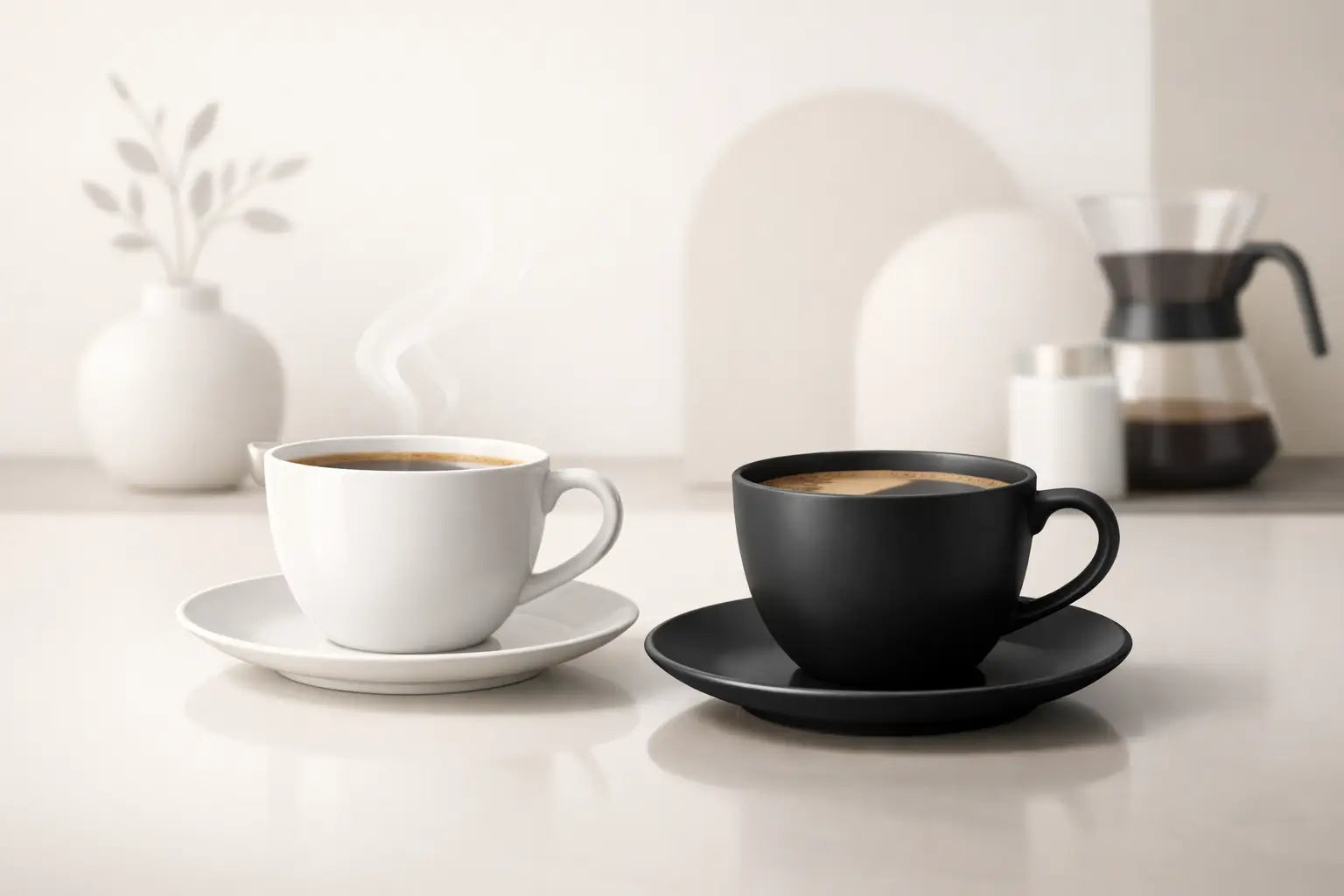
Why Minimalist Coffee Cups Feel More Luxurious
A coffee cup can change the entire mood of the pour before the first sip even lands. Minimalist coffee cups do that with restraint rather than decoration - clean silhouettes, considered proportions, and a sense of calm that makes the ritual feel sharper, quieter, and far more intentional.
For design-minded homes and hospitality spaces, that restraint is not a lack of personality. It is the point. A well-made minimalist cup does not compete with the coffee, the table setting, or the room. It supports all three, which is exactly why it reads as elevated.
What minimalist coffee cups actually get right
Minimalism in drinkware is often misunderstood as plainness. In reality, the best pieces are highly edited. Every curve, wall thickness, handle shape, and finish has to earn its place because there is nowhere to hide poor design.
That is why minimalist coffee cups often feel more premium than heavily decorated alternatives. The eye notices proportion first. A cup with a balanced rim, a clean foot, and a handle that feels integrated rather than attached has a quiet confidence. It looks composed on an open shelf, on a breakfast tray, or beside a plated pastry in a café setting.
This matters at home, where many people are trying to make everyday routines feel more considered. It matters just as much in commercial environments. In a coffee bar or restaurant, the cup becomes part of the presentation language. It signals whether a brand understands detail.
The design language of minimalist coffee cups
Minimalist coffee cups tend to share a few visual traits, but the good ones never feel generic. Their appeal comes from precision.
Clean lines and modern geometry
A straight-sided porcelain cup has a different energy than a rounded cappuccino bowl, even when both are minimal. One feels architectural. The other feels softer and more relaxed. Neither is better in every setting. It depends on the kind of experience you want to create.
In more contemporary interiors, sharper lines can feel aligned with stone countertops, matte finishes, and structured tableware. In warmer spaces, subtle curves soften the look without abandoning the minimalist sensibility.
A restrained color palette
White, off-white, soft sand, charcoal, and black remain popular for a reason. These shades let crema, foam, and the color of the coffee stand out. They also layer easily into existing tabletop collections.
That said, pure white is not always the most forgiving choice in high-volume hospitality environments. It shows wear and staining more quickly if the glaze quality is poor. Warmer neutrals can be slightly more practical while still preserving a refined look.
Handles, rims, and balance
The smallest details often separate a cup that photographs well from one that performs well. A handle can look beautifully spare and still be awkward in the hand. A delicate rim can elevate the drinking experience but feel risky in a busy café.
Minimalism works best when comfort has been designed into the silhouette. The cup should feel balanced when full, natural to lift, and pleasant against the lips. If it only succeeds visually, it has missed half the assignment.
Why minimalist cups work so well in the home
At home, minimalist drinkware has an unusual advantage. It can make a kitchen or coffee corner feel more organized even when nothing else changes. Because the forms are visually calm, they reduce clutter and make the setting read as curated rather than crowded.
This is especially valuable in smaller spaces. Apartment kitchens, open shelving, and compact breakfast nooks benefit from objects that look intentional from every angle. A set of mismatched novelty mugs can feel casual and personal, but it rarely creates a cohesive visual impression. Minimalist coffee cups bring consistency without making the space feel staged.
They also age well aesthetically. Trend-driven graphics and overly specific finishes can date quickly. A simple porcelain espresso cup or cappuccino cup with strong proportions tends to hold its appeal through changing interiors and seasonal table styling.
Why cafés and restaurants keep returning to minimalist coffee cups
In hospitality, presentation needs to feel effortless even when it is highly managed. Minimalist coffee cups help create that effect. They frame the beverage cleanly, support latte art, and photograph beautifully under natural and ambient light.
For cafés, this matters both in person and on screen. Guests notice the visual harmony of a cup, saucer, spoon, and tabletop, even if they do not describe it in design terms. They simply register the experience as polished. That perception can shape whether the service feels premium.
For restaurants and hotels, minimalist coffee service has another advantage. It integrates across dayparts. The same collection can move from morning espresso to after-dinner coffee without looking out of place. That consistency helps operators create a stronger brand presentation while simplifying purchasing.
Of course, there are trade-offs. Extremely delicate cups may impress on the table but create replacement headaches in high-turn service. Very matte finishes can look sophisticated while being less forgiving with utensil marks. Commercial buyers usually need a balance of elegance and durability, not one at the expense of the other.
Material matters more than most people think
Minimalist design puts material quality under a spotlight. When the shape is simple, the finish has to do more work.
Porcelain remains a favorite for good reason. It offers a refined surface, a crisp visual profile, and a satisfying sense of density without unnecessary heaviness. It also suits both home and professional settings because it can feel formal without becoming precious.
Ceramic more broadly offers range. Depending on the clay body and glaze, it can read sleek and modern or softly organic. For brands and buyers who want minimalism with a bit more texture, ceramic can strike the right note.
Glass cups can also fit the minimalist category, especially in double-walled or ultra-clean silhouettes. They create a lighter visual footprint and showcase the coffee itself, which is appealing for layered drinks. The trade-off is temperature feel and, in some cases, a less grounded hand feel than porcelain.
How to choose minimalist coffee cups that still feel personal
The best minimalist cup is not the one with the fewest details. It is the one that fits the ritual.
If your coffee moment is fast and functional, a stackable cup with a compact profile may make sense. If it is slower and more sensory, a slightly broader form with a matching saucer can create a more complete experience. Espresso service calls for precision and heat retention. Cappuccino service asks for enough bowl shape to support texture and foam. An all-purpose mug might handle daily convenience, but dedicated forms usually look and perform better.
Scale matters too. Oversized cups can dilute the elegance of a minimalist design because the proportions become harder to control. Smaller, well-balanced vessels often feel more refined. That is one reason espresso and cappuccino cups are such strong expressions of minimalist tabletop design.
For buyers building a cohesive setting, collections matter. Cups that are designed as part of a larger story - saucers, side plates, glassware, and complementary serving pieces - create a more resolved visual environment. That is where a design-led brand such as Angeleno Drinkware can bring real value, because the cup is not treated as an isolated object but as part of the entire presentation.
Minimalist coffee cups and the psychology of ritual
There is a reason these cups resonate beyond aesthetics. They reduce visual noise. In a routine that many people rely on to begin the day or reset between meetings, that clarity has real emotional appeal.
A minimalist cup can make the ritual feel slower, even when the schedule is not. It directs attention to heat, aroma, crema, texture, and pace. The experience becomes less about grabbing caffeine and more about taking a deliberate pause.
That same principle applies in hospitality. Guests respond to environments that feel composed. A refined cup on a saucer, presented with care, signals that the coffee course is worth noticing. It turns service into part of the brand memory.
Minimalist design is often described as timeless, but that only holds true when quality is present. A poorly made cup with a trendy neutral glaze is not timeless. It is just quiet. The pieces that endure are the ones that combine disciplined design with genuine usability.
If you are choosing coffee cups for your home, café, or dining room, it helps to think beyond what looks clean on a shelf. Look for the cup that makes the ritual feel better in the hand, stronger on the table, and more considered in the room. That is where minimalism stops being a style choice and starts becoming part of the experience.