
Restaurant Glassware Branding Examples That Work
A guest may forget the exact shade of a banquette or the playlist that accompanied dinner. They are less likely to forget the coupe that made a martini feel cinematic, the weight of a water glass in hand, or the espresso cup that completed a considered meal. The best restaurant glassware branding examples understand this: drinkware is not a finishing touch. It is a highly visible part of the brand experience.
For restaurants, cafés, bars, and hotels, every vessel carries a message before a drink is tasted. Its silhouette signals formality or ease. Its clarity, rim, scale, and finish shape how a cocktail photographs and how a guest perceives value. Branding can be literal, through a printed mark or etched monogram, but the strongest programs often begin with a more refined question: what should this service feel like?
Why Glassware Has Outsized Branding Power
Glassware moves through nearly every moment of hospitality. It arrives at the table, appears in guest photos, catches candlelight, and sits directly in a guest's hands. Unlike a menu cover or a wall graphic, it participates in the ritual. That makes it one of the most persuasive ways to make a restaurant's visual identity tangible.
A cohesive glassware program also brings order to a broad beverage menu. A tall, finely proportioned highball can make a light aperitif feel clean and modern. A stemmed cocktail glass introduces ceremony. A generous wine bowl suggests generosity and attention to aroma. When those choices share a visual language, the table feels curated rather than assembled.
The practical benefit matters, too. A memorable vessel can distinguish familiar drinks from those served across town. The trade-off is that highly unusual shapes may be harder to replace, stack, wash, or source consistently. The goal is not novelty for its own sake. It is a design decision that supports service as well as recognition.
Restaurant Glassware Branding Examples to Study
1. The signature silhouette bar
Consider a cocktail bar with a restrained, architectural interior: dark wood, brushed metal, focused lighting, and a short list of exacting drinks. Rather than placing its logo on every glass, the bar uses one recurring visual gesture - a softly faceted base across its rocks glasses, highballs, and stemware.
The result is recognizable without feeling promotional. The form becomes the signature. A guest may not know the collection name, but they recognize the look when a drink appears in a photo or returns to the table for a second round. This approach works particularly well for venues that want a premium, editorial presence and prefer branding that feels embedded in the experience.
The consideration is replacement planning. A proprietary-looking silhouette should still be obtainable in volume, and the team needs enough back stock to preserve the presentation as service grows.
2. The discreetly marked neighborhood restaurant
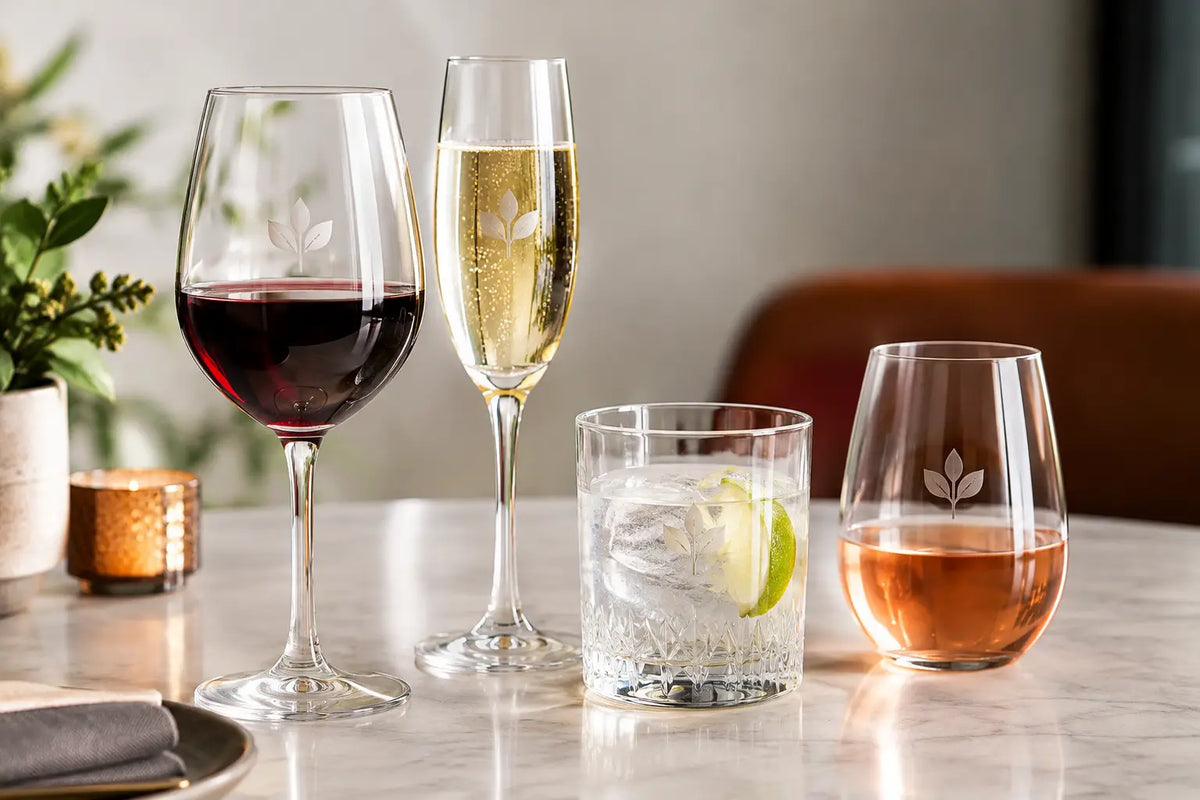
A polished neighborhood restaurant may take the opposite route: classic, clear glassware with a small etched logo placed low on the vessel. The mark is subtle enough that it does not interrupt the color of a spritz or the clarity of a chilled white wine, yet it reinforces the name with every pour.
This is one of the most versatile restaurant glassware branding examples because it can work across water, beer, cocktails, and take-home merchandise. A simple wordmark is usually more enduring than a campaign graphic, especially when the restaurant's identity is built around hospitality rather than spectacle.
Placement is decisive. A logo near the rim can distract from a drink and feel awkward against the face when guests sip. A small mark near the base or on the underside of a sturdy tumbler tends to feel more considered. Test samples under real dining-room light before committing. Frosted etching, metallic decals, and printed color all read differently once condensation, dishwashing, and low light enter the equation.
3. The restaurant that lets the drink lead
For a seafood restaurant or rooftop dining room, the strongest branding may be the absence of overt branding. Here, the program is defined by luminous clarity, elegant stems, and a palette of drinks designed to catch the light. A crisp martini, a pale rosé, sparkling water, and a citrus-forward zero-proof cocktail all become part of a single visual story.
This approach works when the setting itself carries a strong identity. The restaurant does not need to stamp its name on every glass because the combination of atmosphere, menu, and silhouette is already distinctive. Lead-free crystal is especially compelling in this setting because its brightness and clarity give beverages a more polished visual presence without making service feel overly precious.
There is a financial nuance. Premium clear glassware is not branded in the conventional sense, so its value depends on disciplined selection. If the team mixes too many unrelated shapes, the intended effect disappears. Fewer, better forms usually create more impact than a crowded assortment.
4. The café with a complete coffee ritual
Coffee service offers a different kind of branding opportunity. A café's identity is often felt in the quiet details: the curve of a cappuccino cup, the proportion of its saucer, the way the handle rests in the hand, and the contrast between porcelain and a dark roast.
A design-led café might use clean white porcelain with a subtle maker's mark on the cup base, then repeat its visual language through the geometry of water glasses and pastry plates. The branding is not limited to the logo. It is communicated through proportion, material, and consistency from the first espresso to the final iced beverage.
This example is particularly useful for all-day concepts. Coffee is often the guest's first and most frequent interaction with a vessel, so it should feel as intentional as evening cocktail service. Matching espresso and cappuccino cups with saucers create a composed tabletop while offering practical protection against heat and spills.
5. The hotel restaurant with day-to-night continuity
Hotels need glassware to work harder. Breakfast, pool service, lunch, private events, dinner, and late-night cocktails may all move through the same operation. A successful hotel program uses a consistent design vocabulary while adjusting for the realities of each occasion.
For example, the breakfast room may rely on durable, elegantly weighted juice and water glasses. The evening restaurant introduces refined wine stems and a statement cocktail vessel with the same clean profile. Outdoor areas use elevated alternatives that meet safety requirements without looking disposable. The throughline is visual, not necessarily identical product by product.
This is where collection-based buying becomes valuable. Choosing families of drinkware with related proportions helps the property preserve brand continuity across venues. A line such as Angeleno Drinkware's Figueroa collection can provide that visual connection across cocktail, wine, champagne, and beverage service while allowing each pour to have its own appropriate vessel.
Build the Program Around the Guest Journey
The most successful branded glassware programs start with service mapping, not a logo file. Follow the guest from arrival through dessert. What do they hold first? Where does the table need visual restraint? Which drinks drive photographs, celebratory occasions, or repeat orders? The answers reveal where a distinctive vessel will matter most.
A bar known for martinis may invest in one exceptional stemmed glass and keep beer service simple. A high-volume brunch restaurant may prioritize attractive, durable tumblers that move easily through constant washing. A fine-dining room may place more emphasis on wine bowls and after-dinner coffee. There is no universal ideal because the ideal depends on the menu, pace, price point, and back-of-house capacity.
It also helps to separate hero pieces from workhorses. Hero pieces create a signature moment, such as a coupe for the house cocktail or a porcelain cappuccino cup that frames latte art beautifully. Workhorses handle water, soft drinks, and high-volume pours. Both should belong to the same world, but they do not need the same level of drama.
Details That Protect the Premium Effect
Before placing a larger order, run a real-world service test. Have bartenders build drinks in the glasses. Ask servers to carry full trays. Put samples through repeated dishwashing cycles and inspect for clouding, chipped rims, faded decoration, and awkward stacking. A glass that looks extraordinary in a studio but slows a busy Saturday service is not an elevated choice.
Scale deserves equal attention. Oversized vessels can make a proper portion look sparse. Very delicate stems can feel exquisite but may not suit a fast-turn dining room. A slightly heavier base can communicate quality and improve stability, while a thinner rim can make a cocktail or wine service feel more refined. These small physical decisions are what guests register as care.
Finally, keep the visual language disciplined. If the menu is spare and modern, choose drinkware with clear lines and controlled detail. If the room is warm and nostalgic, a gently rounded form may feel more natural. Branding feels convincing when the glass looks inevitable at the table, not added afterward.
A well-chosen glass does more than hold a beverage. It gives the guest a physical reminder that someone considered the moment from every angle - right down to the final sip.


