Lead-Free Crystal Versus Soda Lime Glass
A coupe can make a well-made cocktail feel slightly underdressed, or beautifully considered, before anyone takes a sip. That difference often begins with the glass itself. In the question of lead free crystal versus soda lime, the choice is not simply about choosing a more premium material. It is about how light moves through the bowl, how a glass feels in the hand, and how confidently it performs through real evenings of pouring, serving, clearing, and washing.
For a home bar designed with intention or a hospitality program where every place setting represents the brand, material matters. The right glass should bring polish to the table without becoming too precious for the ritual it is meant to elevate.
Lead-Free Crystal Versus Soda Lime: The Essential Difference
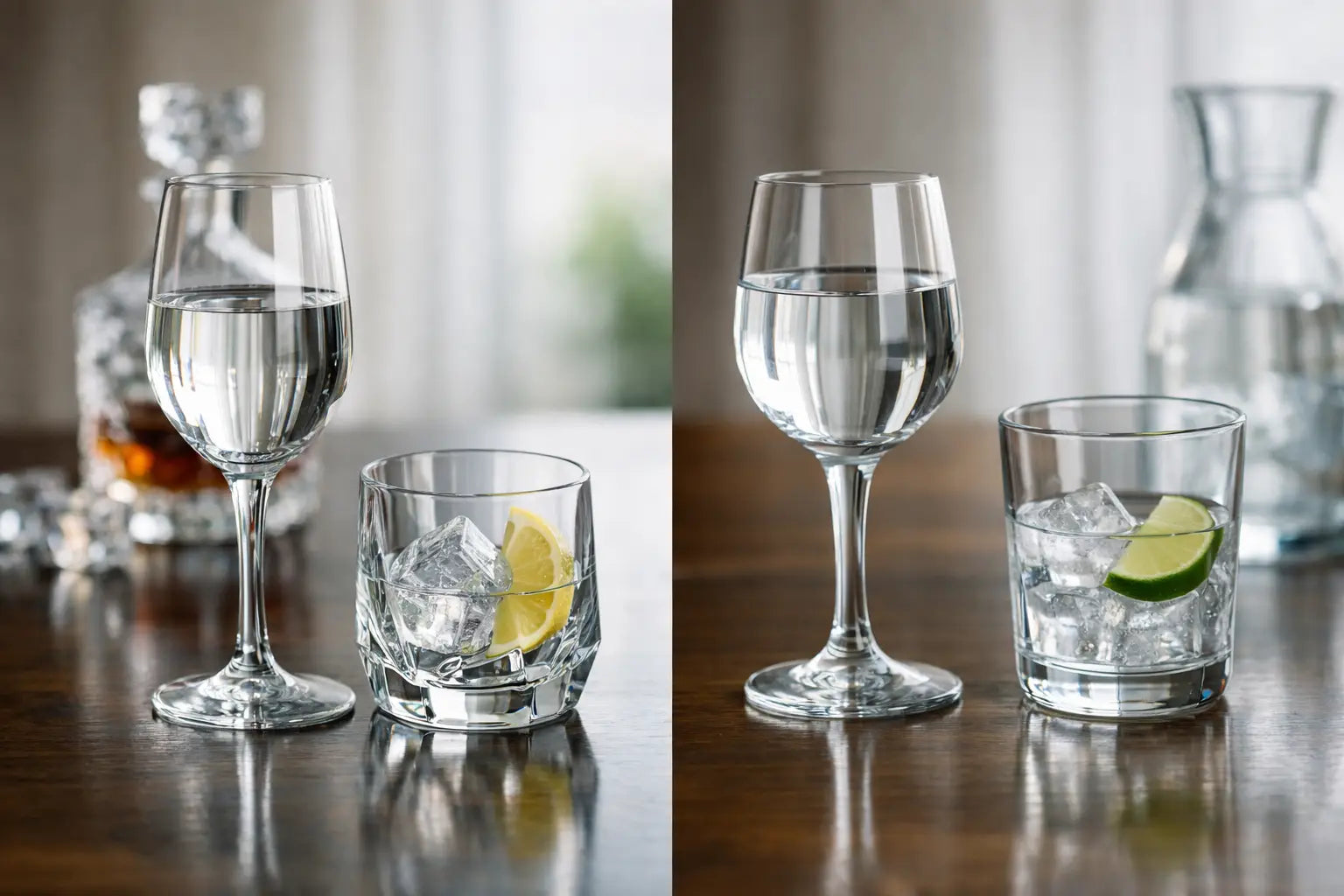
Soda lime glass is the familiar standard in everyday drinkware. Made primarily from silica, soda, and lime, it is widely used because it is accessible, dependable, and well suited to high-volume production. It can be clear and attractive, particularly in a thoughtful silhouette, but it typically has a thicker visual profile and a more straightforward finish than crystal-style glassware.
Lead-free crystal is also glass, but it is formulated and finished to create a more elevated result. Traditional crystal historically used lead oxide to increase brilliance and workability. Modern lead-free crystal achieves many of those desirable qualities without lead, often through alternative mineral additives and carefully controlled manufacturing. The exact formula varies by maker, so “lead-free crystal” is a category rather than one identical material across every collection.
What guests tend to notice is immediate: lead-free crystal often appears exceptionally clear, feels more refined at the rim, and brings a brighter, more luminous quality to wine, sparkling water, and cocktails. Soda lime glass is practical and familiar. Lead-free crystal is designed to make the serving moment feel composed.
Clarity Is More Than a Visual Detail
Light is part of the experience of a drink. It catches the pale gold of a Champagne pour, the clean edges of an espresso tonic, and the deep color of a stirred Negroni. Lead-free crystal is prized for its high clarity and brilliance, giving drinks a more dimensional, polished presentation.
That does not mean soda lime glass cannot look beautiful. A well-designed soda lime tumbler can bring warmth, color, and pleasing weight to a casual table. It is especially effective when the desired mood is relaxed, tactile, and unfussy. But when the goal is a crisp, almost weightless visual effect, lead-free crystal usually has the advantage.
For restaurants and bars, this difference can be particularly meaningful under ambient lighting. A clear, finely finished glass catches candlelight and bar light in a way that quietly supports the atmosphere. At home, it can make a weekday glass of wine feel closer to a considered occasion.
The role of the rim and silhouette
Material and shape work together. Lead-free crystal is often formed with a thinner rim, which can create a more elegant connection between the drink and the palate. A thin rim is not automatically better for every beverage, but it is a hallmark many people associate with fine stemware and refined cocktail glassware.
The Figueroa collection from Angeleno Drinkware is designed around this balance: modern geometry with the clarity and table presence that make a drink feel intentionally served. The glass should complement the pour, not visually compete with it.
Weight, Balance, and the Feeling in Hand
A glass is a physical object before it becomes a design object. Its balance affects how a guest raises a toast, how a bartender works through service, and how natural it feels to linger over a drink.
Soda lime glass often carries more thickness and a more substantial feel. That can be appealing for water glasses, casual beer service, and outdoor-adjacent entertaining where a grounded, durable impression is welcome. Some people simply prefer the reassuring heft of a classic tumbler.
Lead-free crystal can be lighter and more precise in the hand, especially in stemware. The sensation is often one of controlled delicacy rather than fragility. A thoughtfully balanced wine glass feels graceful when held by the stem and stable when set down. A cocktail glass should feel elegant without making the guest nervous about using it.
There is no universal winner here. If your table calls for sculptural weight and easygoing resilience, soda lime may be the right visual language. If you want a cleaner profile, fine rims, and a more elevated pour, lead-free crystal will usually better match the setting.
Durability Depends on More Than the Material
The assumption that crystal is always delicate and soda lime is always durable is too simple. Durability depends on glass composition, wall thickness, shaping, edge finishing, and how the item is used and cared for.
Soda lime glass has earned its reputation as an everyday staple because it is widely available, economical to replace, and generally suited to casual use. However, it is not immune to chips, cracks, or thermal shock. A thick soda lime glass may feel sturdy, but a sudden temperature change can still cause damage.
Lead-free crystal is often engineered for greater everyday practicality than people expect. Many contemporary pieces are dishwasher-safe, though care instructions should always guide the decision. A dishwasher-safe designation does not mean every washing method is equally gentle: crowded racks, harsh detergents, and repeated contact with other glassware can dull any fine piece over time.
For hospitality teams, the best choice is the one that fits the operation. Consider rack compatibility, storage space, replacement planning, service volume, and the visual standard expected by guests. A lively neighborhood restaurant may favor durable soda lime tumblers for water service while reserving lead-free crystal for wine, signature cocktails, or elevated event settings. A boutique hotel or fine dining room may decide that crystal’s presentation value belongs at every cover.
Sound, Temperature, and Other Small Signals
People often describe crystal as having a distinctive ring when tapped. While lead-free crystal can produce a pleasing resonance, sound varies considerably by shape, thickness, and formulation. It should not be the deciding test of quality.
Temperature is more relevant. Thin, fine glassware can make chilled drinks feel especially elegant, while a heavier tumbler can offer a satisfying sense of insulation and permanence. Neither material replaces good service practices. A properly chilled coupe, a room-temperature red wine glass, and a warm porcelain espresso cup each support the beverage in different ways.
The most meaningful signals are usually quieter: a glass that does not cloud the color of the drink, a rim that feels comfortable, a base that sits with confidence, and a silhouette that belongs to the rest of the table.
Which Material Fits Your Table?
Choose soda lime glass when practicality, accessible replacement cost, and a casual substantial feel are the priority. It is an excellent choice for everyday water service, relaxed outdoor meals, and environments where glassware sees frequent, high-volume handling.
Choose lead-free crystal when the drinkware is expected to carry more of the visual experience. It is especially well suited to wine, Champagne, cocktails, and elevated beverage service where clarity, proportion, and a refined hand feel are part of the occasion. It also makes a strong choice for gifting because it reads as considered without relying on ornament.
The best tables often use both. A substantial soda lime water glass can sit beautifully beside lead-free crystal stemware. What matters is that the materials share a point of view: coordinated proportions, a deliberate color story, and silhouettes that feel collected rather than accidental.
Care That Preserves the Finish
Whether you choose lead-free crystal or soda lime, good care protects the experience you invested in. Avoid dramatic temperature changes, do not stack pieces unless they are designed to stack, and give fine rims room in the dishwasher. For handwashing, use warm water, mild soap, and a soft cloth. Drying promptly helps prevent water spots, especially in areas with hard water.
For stemware, hold the bowl and base rather than twisting the stem during drying. For tumblers, keep metal utensils and abrasive scrubbers away from the interior. These are small habits, but they preserve clarity and keep glassware looking composed long after the first toast.
A memorable drink does not require a special occasion. It may be a Friday aperitif at the kitchen counter, sparkling water poured for a guest, or a restaurant’s first impression arriving at the table. Choose glassware that gives that simple moment the presence it deserves.