Hospitality Glassware Ordering Guide for Service
A guest notices glassware before the first sip. The weight of a water glass, the clarity of a wine bowl, and the silhouette of a coupe all signal how much care has gone into the experience. This hospitality glassware ordering guide helps restaurants, bars, cafés, and hotels make choices that support service pace while giving every table a more considered point of view.
The goal is not to buy the largest possible assortment. It is to build a focused collection that looks intentional, performs under pressure, and makes reordering straightforward as the business evolves.
Start With the Drinks You Actually Serve
Glassware should follow the menu, not a catalog page. Begin by reviewing what moves through your service on a typical week, then separate those drinks by how they are presented. A high-volume neighborhood café may need durable water tumblers, iced beverage glasses, and porcelain espresso cups more urgently than an extensive stemware program. A cocktail-led restaurant may find that a refined rocks glass, highball, coupe, and wine glass cover most of its needs with greater visual consistency than a cabinet full of novelty shapes.
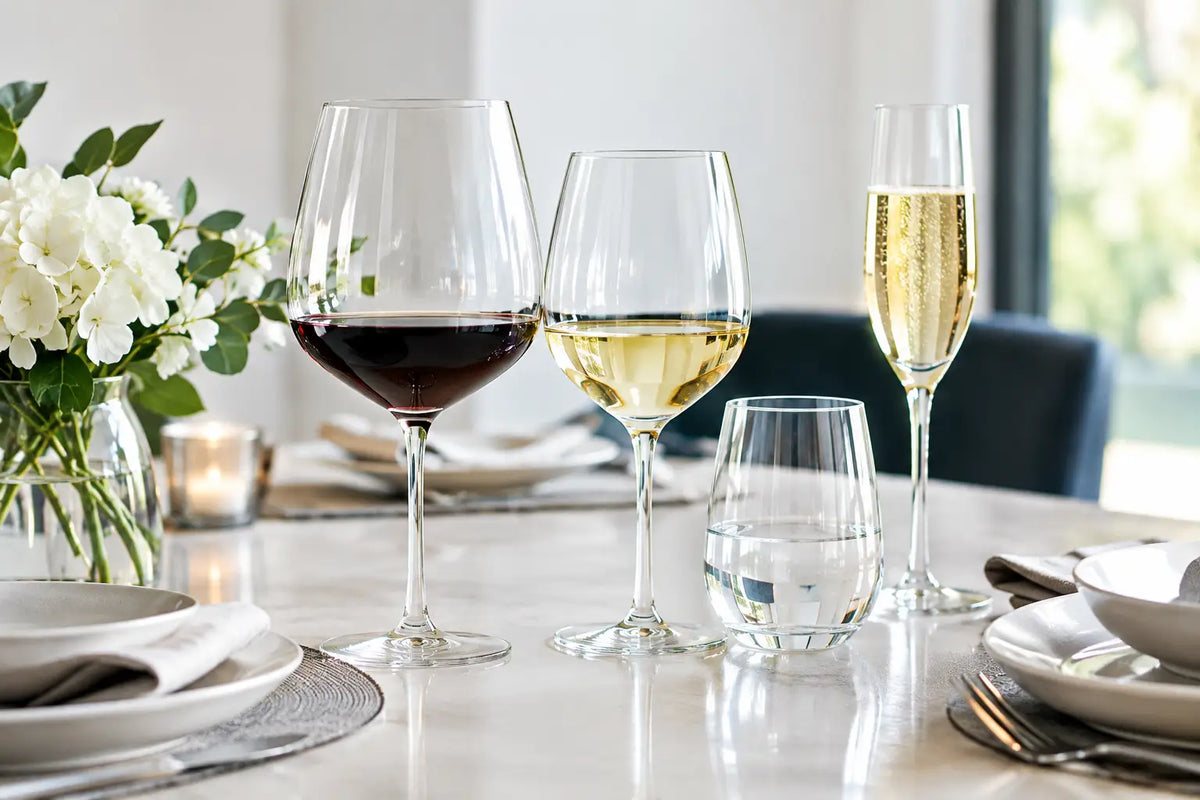
Consider the garnish, ice format, pour size, and table setting for each signature drink. A short cocktail served over a large cube needs enough bowl width for the ice and enough visual weight to feel deliberate. A sparkling pour benefits from a tall, elegant profile that preserves its celebratory character. Wine service calls for a bowl that gives aroma room to develop without feeling oversized or difficult to manage on a crowded table.
The same principle applies to coffee. An espresso cup that feels balanced in the hand and sits on a matching saucer turns a quick after-dinner order into a more polished ritual. For cafés, cohesive porcelain service can create an immediate sense of place, even when the menu is concise.
Choose a Cohesive Point of View
A hospitality program looks more premium when its pieces relate to one another. This does not require every glass to be identical. It means the collection shares a visual language, whether that is clean modern geometry, softly rounded forms, or a confident mix of crystal clarity and warm porcelain.
A restrained assortment also makes the table easier to style. Clear glassware has a natural versatility across dayparts and seasonal menus, while a distinctive silhouette can still make a drink feel proprietary. The strongest choices are memorable without competing with the food, the cocktail color, or the room itself.
For operators furnishing a new concept, selecting from a collection rather than sourcing individual pieces one by one can reduce decision fatigue and create a more resolved result. Angeleno Drinkware’s Figueroa glassware and Wilshire coffee service, for example, are designed with this kind of coordinated tabletop presence in mind.
Balance Material, Durability, and Perceived Value
There is no single best glass material for every venue. The right choice depends on the service model, washing conditions, price point, and guest expectation. Lead-free crystal offers exceptional clarity and a lighter, more refined feel, making it a compelling choice for cocktails, wine, and elevated beverage programs. It can communicate a meaningful difference at the table, particularly in intimate dining rooms, boutique hotels, and design-led bars.
That refinement comes with a practical consideration: any premium glassware needs thoughtful handling, appropriate racking, and staff training. A busy all-day operation with limited dish capacity may prioritize slightly heavier pieces with forgiving proportions. A reservation-only cocktail bar may reasonably accept more careful handling in exchange for a more expressive presentation.
Do not treat durability as thickness alone. The most useful hospitality pieces have a stable base, comfortable rim, sensible proportions, and a shape that can be loaded and unloaded without constant friction. Ask how the glass stacks, where it will be stored, and whether its profile works with your dishwasher racks. A beautiful vessel that creates bottlenecks behind the bar is not serving the guest experience.
Set Par Levels Before You Place the Order
The most expensive ordering mistake is often not choosing the wrong style. It is ordering too few pieces to support washing, peak service, breakage, and private events. Your par level is the number of each item needed to keep service moving without asking the dish team to rescue the floor every hour.
Start with the maximum number of covers or seats you expect to serve during your busiest shift. Then consider turnover, how long a drink stays on the table, and the time required for warewashing. Water glasses and high-use beverage tumblers generally need deeper inventory than specialized Champagne glasses that appear only for certain orders.
A practical baseline is to order enough for the busiest service period, plus working backup for washing and a reserve for breakage. Many operators use a multiple of two to three times peak use for high-velocity pieces, then adjust after observing real service patterns. The right number may be lower for a small tasting menu restaurant and higher for a brunch-focused café where water, iced coffee, and juices move continuously.
Keep a modest unopened reserve when possible. Replacements from the same collection preserve visual continuity, while one-off substitutions can make a well-designed table look accidental. If you expect seasonal patio service, banquet demand, or holiday volume, account for that before the rush begins.
Standardize Where It Helps, Specialize Where It Matters
Every additional glass shape adds purchasing complexity, storage demands, training time, and the risk of grabbing the wrong vessel during service. Standardization is especially valuable for water, beer, soft drinks, and flexible cocktail formats. One well-proportioned tumbler may serve still water at lunch, a spritz at dinner, and a zero-proof drink at brunch.
Specialization earns its place when it changes the experience. A coupe can give a shaken cocktail a more ceremonial arrival. A proper wine glass can improve aroma and elevate the perceived value of a thoughtful pour. An espresso cup and saucer frame the final course with more intention than a generic mug ever could.
Look for pieces that work hard without looking generic. This is where design-forward glassware offers a real operational advantage: a concise set of forms can make multiple drinks feel distinct while keeping your back bar disciplined.
Plan for the Back of House, Not Just the Dining Room
Ordering decisions should include the people who polish, rack, carry, and replace the glassware. Before committing, test samples in the actual conditions of service. Have bartenders build drinks in them. Ask servers to carry them on a full tray. Run them through the dishwasher and inspect the result under dining room light.
Pay attention to fingerprints, water spotting, rim chips, and how easily each piece nests or jams in racks. Some shapes photograph beautifully but are awkward to polish at volume. Others have narrow openings that make handwashing difficult. These details are not glamorous, but they directly affect labor and presentation.
Training should be equally specific. Show staff which glass belongs to each drink, how to hold stemware, and where to place a finished beverage on the table. Consistency is part of luxury. Guests may not identify the glass by name, but they recognize when the whole moment feels composed.
Build an Ordering Rhythm, Not a Last-Minute Fix
Glassware purchasing works best as an ongoing program. Track breakage by category, note which pieces are routinely unavailable during peak periods, and record guest or staff feedback. A recurring review, even a brief monthly one, can reveal whether a certain format is underperforming or whether a flexible tumbler deserves a larger par.
When you reorder, protect the original design intent. A low-cost replacement may solve an immediate shortage, but mismatched rims, different clarity, and unrelated shapes can dilute the visual identity you worked to establish. If budget is tight, prioritize the pieces that guests touch most often and that appear across the widest range of orders.
The best hospitality glassware does more than hold a drink. It gives the beverage proportion, gives the table rhythm, and gives the guest one more reason to remember how considered the experience felt.