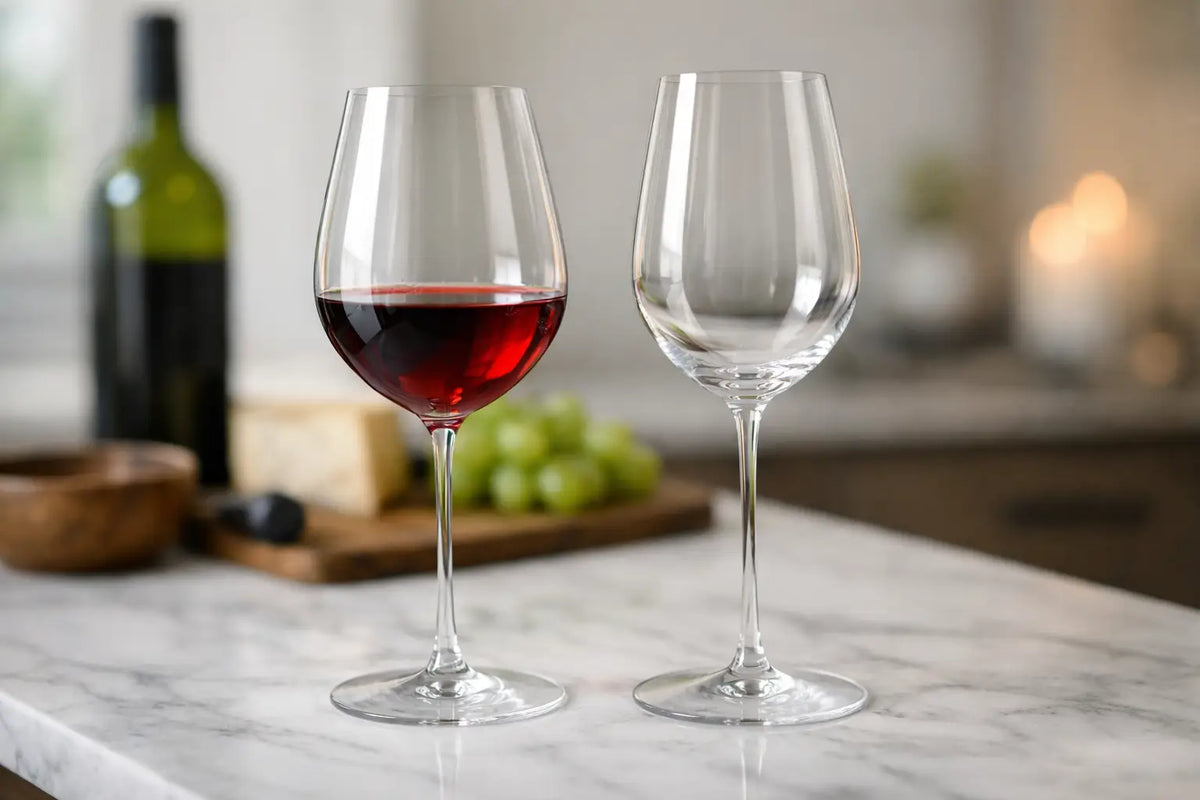
A Guide to Ultra Thin Wine Glasses at Home
A well-poured wine can feel unexpectedly ordinary in a heavy, thick-rimmed glass. The same bottle becomes more expressive when the bowl is light in the hand, the rim nearly disappears at the sip, and the silhouette gives the table a sense of intention. This guide to ultra thin wine glasses explains what makes that difference, how to choose the right shape, and when delicacy is worth the extra care.
What ultra-thin wine glasses change
Ultra-thin wine glasses are defined less by a single measurement than by a feeling: a refined rim, a light bowl, and a balanced stem that makes the vessel feel almost weightless without feeling insubstantial. Most premium examples are made from fine crystal or lead-free crystal rather than standard soda-lime glass. That material can be formed more precisely, creating a thinner wall while maintaining clarity and resilience.
The most immediate benefit is tactile. A thin rim places less material between the wine and your palate, so the first sip feels cleaner and more direct. It is a subtle shift, but one that changes the ritual. The glass becomes less noticeable, allowing the temperature, texture, and aromatic detail of the wine to take the foreground.
Presentation matters, too. Fine glassware catches candlelight, reflects a polished tabletop, and gives even a relaxed weeknight pour a considered look. For a dinner party, it signals care without asking for a formal occasion. In a restaurant or tasting room, that same visual lightness can sharpen the perceived quality of the entire service.
Still, ultra-thin does not automatically mean better for every setting. A busy outdoor gathering, a crowded kitchen, or a high-turnover bar may call for a slightly sturdier profile. The best glass is one you will enjoy using, not one that remains untouched in a cabinet.
The glass shape should follow the wine
A beautiful universal wine glass is often the most useful place to begin. Its gently rounded bowl gives red, white, and rosé enough surface area for aroma, while a modestly tapered opening gathers those aromas before each sip. If you keep a streamlined collection, this shape creates a cohesive table and avoids dedicating storage to a separate glass for every grape.
For reds: room for aroma, not an oversized pour
Fuller reds benefit from a wider bowl. Pinot Noir, Nebbiolo, and other aromatic reds often shine in a broad, rounded profile that encourages the wine to open as it meets air. Cabernet Sauvignon, Syrah, and Bordeaux-style blends also appreciate bowl volume, though the glass does not need to be exaggeratedly large to be effective.
The common mistake is filling a large red wine glass too high. The bowl is designed to hold aroma above the wine, not to invite a generous fill line. Pour roughly five to six ounces, leaving ample space to swirl with ease. The visual effect is more elegant, and the wine has the room it needs to evolve.
For whites and rosés: precision and freshness
White wine glasses tend to have a smaller bowl and a narrower opening. This helps preserve the chilled temperature of Sauvignon Blanc, Pinot Grigio, Chardonnay, and dry rosé while directing their more delicate aromatics toward the nose. A stem is especially valuable here because it keeps warm hands away from the bowl.
A slightly fuller white wine bowl works beautifully for richer Chardonnay or textured skin-contact whites. For crisp, mineral-driven wines, a more streamlined silhouette maintains a sense of lift. There is no need to turn this into a rigid rule. A versatile thin-stemmed white wine glass can serve most bottles exceptionally well.
For sparkling wine: choose aroma over tradition when it suits the moment
Flutes remain an elegant choice for Champagne and sparkling wine, especially when a tall, celebratory line is part of the occasion. Their narrow form protects the visual stream of bubbles. Yet a tulip-shaped sparkling glass offers a more generous aromatic experience, making it a compelling option for vintage Champagne, sparkling rosé, or any bottle you plan to taste slowly.
The key is a narrow enough opening to maintain effervescence, paired with enough bowl width for the wine to reveal more than texture alone. For a celebratory toast, a flute feels right. For a meal, a tulip bowl can make the pour feel more complete.
Material: why lead-free crystal earns its place
Fine lead-free crystal offers the clarity and slender profile many people associate with luxury glassware, without the use of lead. It brings brilliance to the table, allowing pale whites, ruby reds, and golden sparkling wines to show their color with exceptional definition. It can also be shaped into a more refined rim than many everyday glasses.
That said, material language can be confusing. “Crystal” is not always a guarantee of ultra-thin construction, and a very thin glass is not necessarily handmade. What matters is how the glass feels in the hand, the consistency of its finish, and whether its proportions support the way you serve wine.
Look closely at the transition from bowl to stem. A graceful, balanced connection makes a glass feel composed rather than fragile. Also consider the base. It should be broad enough to feel stable on a dining table, bar, or tray, even if the overall silhouette is airy.
Collections such as Angeleno Drinkware’s Figueroa line show why a coordinated approach works so well. When wine, cocktail, and champagne glassware share a considered visual language, the table feels curated rather than assembled over time.
How to choose ultra-thin wine glasses for your space
Start with your actual entertaining habits. If you host intimate dinners, enjoy thoughtful bottle selection, or want one beautiful glass for your nightly pour, prioritize a versatile bowl and an elegant all-purpose size. A set of four or six gives you enough flexibility for dinner while keeping the cabinet edited and cohesive.
If you regularly host larger gatherings, consider building from a universal wine glass before adding specialized red, white, or sparkling shapes. It is the most practical route to a polished table, and guests rarely need a grape-specific vessel to enjoy a good bottle.
For hospitality buyers, the decision includes operational reality. Fine-rimmed glassware raises the visual standard of service, but staff training, storage, rack compatibility, and replacement planning matter. A glass that is slightly more substantial may be the wiser investment for fast-paced programs, while a remarkably thin stemware collection can be reserved for premium pours, private dining, or chef-led tasting experiences.
Scale is another detail that changes the final look. In a compact apartment, a medium-sized universal glass feels proportional and stores more easily. On a generous dining table, larger bowls create a more dramatic setting. Neither choice is inherently more refined. Good design looks right in its setting.
Caring for fine-rimmed glassware
The thinner the rim, the more thoughtful the handling should be. Many modern lead-free crystal glasses are dishwasher-safe, but “safe” and “ideal” are not always the same thing. Repeated dishwasher cycles can expose delicate glassware to mineral film, crowded racks, and accidental contact with heavier pieces.
For glasses used frequently, hand washing with warm water, a small amount of mild detergent, and a soft sponge is the most protective routine. Hold the bowl in one hand and support the base or stem with the other. Avoid twisting the bowl and stem in opposite directions, which places unnecessary stress on the narrowest point of the glass.
Rinse thoroughly so no detergent fragrance interferes with the wine. To dry, use a clean, lint-free towel and polish gently rather than forcing the cloth into the bowl. If you do use a dishwasher, space each glass securely, avoid high-heat drying when possible, and never place fine stems beside heavy cookware.
Storage deserves the same attention. Keep glasses upright on a stable shelf, with enough clearance that they do not touch when removed. Storing them rim-down can trap moisture and place pressure on the most delicate edge. A little breathing room preserves both clarity and calm in the cabinet.
The case for using the good glasses now
Ultra-thin wine glasses are not only for milestone bottles. They make a chilled glass of Grüner Veltliner after work, a simple pasta dinner with Chianti, or a weekend sparkling pour feel more intentional. That is their real value: not ceremony for its own sake, but a better relationship with the moments you already make time to enjoy.
Choose a shape that fits your table, a material that fits your routine, and a level of delicacy you can live with comfortably. Then pour the wine before the occasion has a chance to pass.