Do Thin Wine Glasses Break More Easily at Home?
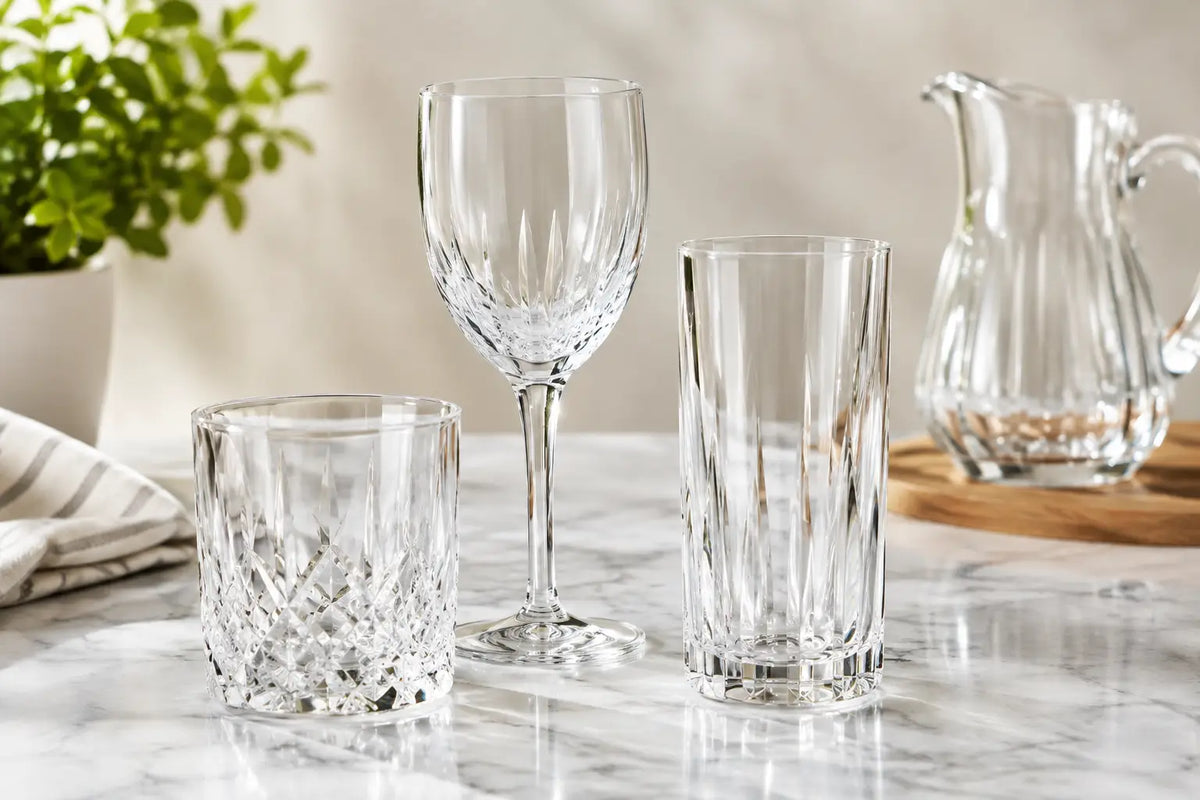
A finely drawn rim changes the first sip. It lets wine meet the palate with less visual and physical interruption, giving a pour a lighter, more considered feel. But do thin wine glasses break more easily? Not necessarily. A delicate-looking glass can be thoughtfully engineered for regular use, while a thicker, heavier glass can still fail under the wrong kind of stress.
The more useful question is not whether a wine glass looks thin. It is how it was made, what it is made from, and how it fits into your serving and care routine. For a dinner table that feels refined without becoming precious, those details matter.
Do thin wine glasses break more easily?
Thin wine glasses can be more vulnerable to impact than casual, thick-rimmed tumblers, especially when they are knocked against a stone countertop, crowded into a dishwasher, or stacked in a cabinet. Yet wall thickness alone does not tell the full story.
A well-made thin glass is designed to balance delicacy at the rim with strength throughout the bowl and stem. Its shape distributes pressure intentionally, and its material may offer greater resilience than ordinary soda-lime glass. In other words, a graceful silhouette is not automatically a fragile one.
The rim is naturally one of the most exposed areas. It is also the feature that creates much of the appeal. A thin rim feels polished, keeps the visual line clean, and allows the character of the wine to take center stage rather than the vessel. That is a trade-off worth understanding, not a reason to avoid elegant stemware altogether.
Material makes the difference
The material behind a wine glass has a direct effect on its clarity, weight, and durability. Most everyday glassware is made from soda-lime glass, a practical material that is affordable and familiar but often requires more thickness to achieve strength.
Lead-free crystal is a different proposition. It is prized for its bright clarity, fine edges, and light-catching presence, while modern formulations can also offer notable durability. The result is a glass that can feel refined in the hand without carrying the bulky profile often associated with more utilitarian drinkware.
This does not mean lead-free crystal is unbreakable. No true glassware is. It does mean that a thin-walled crystal glass may be a stronger choice than a visibly thicker but less carefully made alternative. Quality comes from the entire construction: the composition, the forming process, the transitions from bowl to stem, and the finishing of the rim.
A thin rim is not the same as a thin glass
People often judge a glass by the point they touch first. If the rim is delicate, they assume the entire piece is delicate. In reality, a glass may have a fine rim and a more substantial bowl or foot designed to support daily handling.
Look at the profile as a whole. A stable foot, a well-proportioned stem, and a bowl that does not feel top-heavy all contribute to a more confident experience at the table. The best stemware feels almost weightless when lifted, but never uncertain.
Shape influences strength and stability
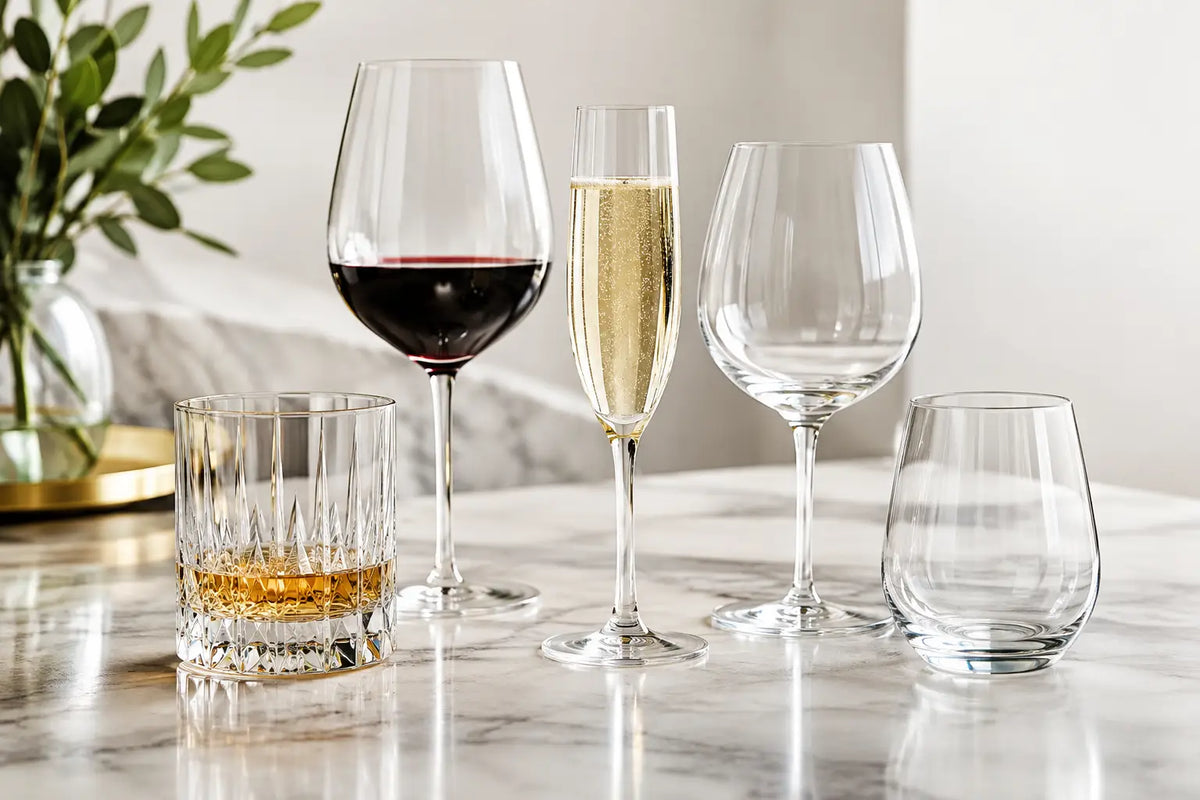
A tall, narrow flute, a wide Burgundy bowl, and a compact universal wine glass each encounter stress differently. A broad bowl can be more exposed in a crowded sink, while a tall stem can be vulnerable when gripped too tightly or caught on a dish towel.
For frequent entertaining, a versatile, balanced silhouette is often the most practical choice. It offers enough visual drama for a beautifully set table while remaining adaptable for white, red, rosé, and sparkling wine. A cohesive collection also makes storage and replacement simpler, particularly for hospitality settings where consistency is part of the guest experience.
What usually causes wine glasses to break
Most broken wine glasses do not fail because they were inherently too thin. They break because of sudden impact, pressure at an awkward angle, or thermal shock.
Thermal shock occurs when glass experiences a sharp temperature change. Pouring very hot water into a cool glass, washing a chilled glass under hot tap water, or moving stemware directly from a cold environment into intense heat can create stress that leads to cracks or breakage. Wine glasses are made for wine service, not for dramatic swings in temperature.
Impact is more obvious but just as common. A rim touching another rim in the sink, a stem hitting the edge of a faucet, or a bowl meeting a granite counter can be enough. Small chips should be taken seriously. A chipped rim is uncomfortable to drink from, difficult to clean properly, and more susceptible to further damage.
The dishwasher can also be a variable. Some premium glasses are dishwasher safe, but safety depends on the cycle, detergent, rack spacing, water temperature, and whether glasses are allowed to touch. A dishwasher is not automatically the enemy of fine stemware. An overcrowded rack is.
How to care for thin wine glasses with confidence
Elegant glassware should be used, not hidden away for one annual celebration. A few careful habits make a meaningful difference without turning service into a chore.
When hand-washing, hold the bowl rather than twisting the bowl and foot in opposite directions. That twisting motion concentrates force at the stem, where breakage is most likely. Use warm, not scorching, water and a soft cloth or nonabrasive sponge.
If using a dishwasher, place each glass securely on the top rack with room around the bowl and stem. Avoid cycles that run excessively hot, and skip harsh detergents that can leave a cloudy film over time. Once the cycle ends, let the glassware cool before handling it.
Drying deserves the same restraint. Rather than forcing a towel into the bowl and rotating it aggressively, cradle the bowl with one hand and polish gently with a lint-free cloth. This preserves the clarity of the glass and reduces pressure on the stem.
Storage should feel intentional, too. Keep wine glasses upright on a clean, stable shelf whenever possible. Storing them rim-down may seem protective, but it can trap moisture and place continual pressure on the most delicate edge. Leave enough space between pieces so that reaching for one glass does not create a chain reaction in the cabinet.
Choosing glassware for real life, not just the shelf
For a home bar or dining room, choose wine glasses according to how you actually host. If your gatherings are relaxed, frequent, and lively, prioritize a durable lead-free crystal design with a stable base and dishwasher-friendly care instructions. If you reserve a special shape for a formal tasting or vintage bottle, give it its own storage space and wash it by hand.
Restaurants, wine bars, and hospitality teams should make a similarly practical assessment. A beautiful glass elevates the pour, photographs well, and signals care before a guest takes the first sip. But it must also work through repeated clearing, washing, polishing, and resetting. A collection with a consistent silhouette and reliable construction brings visual polish to service without asking staff to treat every piece like a museum object.
Angeleno Drinkware approaches that balance through modern, lead-free crystal silhouettes designed to bring clarity, proportion, and everyday occasion to the table. The aim is not fragility for its own sake. It is a more refined drinking ritual that still belongs in real homes and active hospitality spaces.
When should you replace a thin wine glass?
Replace a glass when it has a chip, a crack, or a rough rim. Even a small flaw can compromise the structure and affect the experience of drinking from it. Cloudiness, meanwhile, is not always permanent damage. Mineral buildup or detergent residue can often be lifted with gentle cleaning, though persistent etching is usually irreversible.
A broken glass or two over many years of entertaining is not evidence that fine stemware was the wrong choice. It is part of using beautiful objects well. The better measure is whether the glasses continue to make an ordinary pour feel composed, generous, and worth lingering over.
Choose the glass that invites you to set the table a little more thoughtfully, then give it the care a well-made object deserves.