Porcelain Versus Glass Espresso Cups: Which Wins?
The espresso may last only a few measured sips, but the cup shapes every one of them. The choice between porcelain versus glass espresso cups affects how the coffee holds heat, how its crema appears, how comfortable it feels in hand, and how intentional the service looks on the table. Neither material is automatically superior. The better choice depends on whether you value classic café ritual, visual drama, insulation, or a balance of all three.
Why the espresso cup matters more than its size suggests
Espresso is highly concentrated and served at a precise moment. A well-pulled shot arrives with aromatic oils, a warm body, and a layer of crema that begins changing the instant it meets the air. The cup is not merely a container for that work. Its material, wall thickness, shape, and temperature influence the pace at which the coffee cools and the way the drink is perceived.
For most espresso service, a cup in the two- to three-ounce range gives the shot enough room without making it look lost. A curved interior helps preserve crema and guides the aroma upward. From there, porcelain and glass offer distinctly different experiences. Porcelain leans into tradition and thermal comfort. Glass makes the espresso itself part of the presentation.
Porcelain versus glass espresso cups: the essential difference
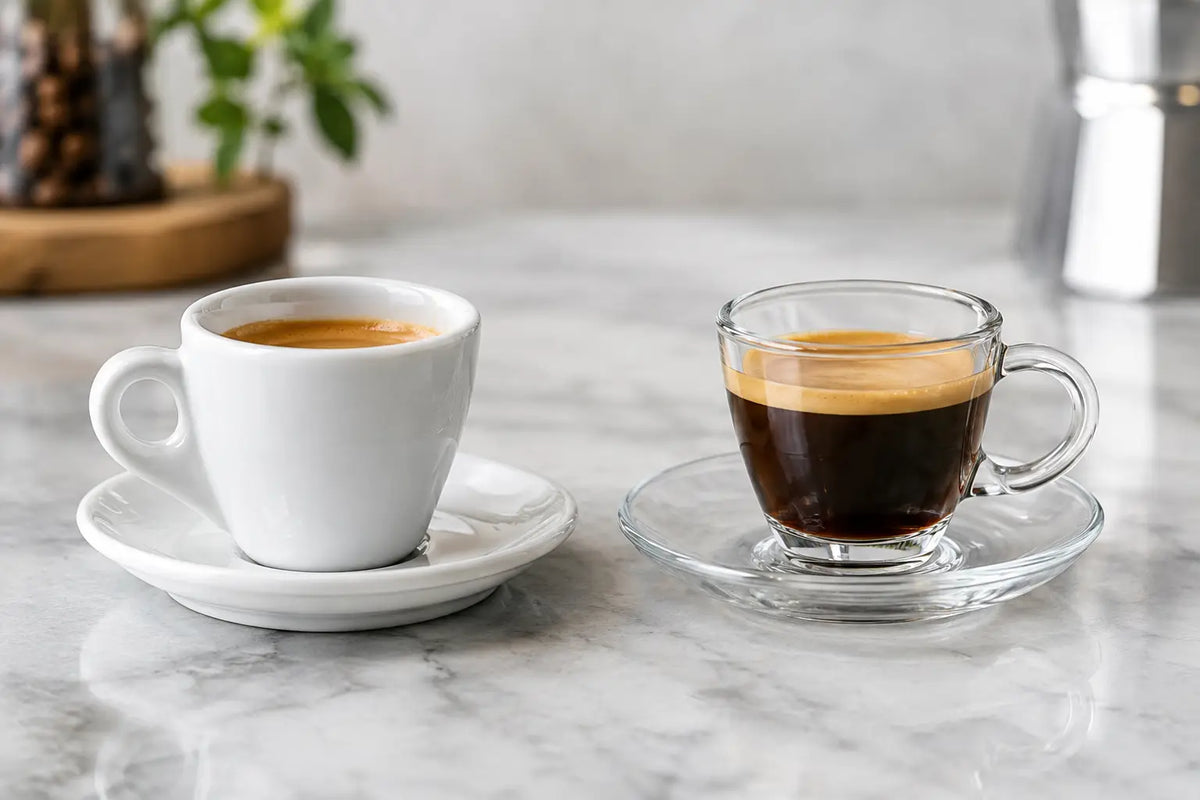
Porcelain is the familiar choice for a reason. It has a soft visual weight, a smooth glazed surface, and the kind of quiet permanence associated with a proper coffee bar or restaurant table. A white porcelain cup also creates a clean frame for espresso, making the caramel color of the crema and the depth of the coffee easy to read.
Glass, by contrast, puts the shot on display. The layers of crema, liquid coffee, and light passing through the vessel become part of the ritual. In a design-forward kitchen, a glass espresso cup can feel architectural and modern, especially when paired with an equally considered saucer or serving tray.
The real distinction is not simply traditional versus contemporary. It is about what you want the cup to do. Porcelain subtly supports the coffee experience. Glass makes that experience visible.
Heat retention and temperature control
For straight espresso, heat management is usually the deciding factor. Porcelain has more thermal mass than glass, which means it can retain heat well once warmed. A preheated porcelain cup helps prevent a fresh shot from losing temperature too quickly on contact, then keeps it enjoyable through a slower, more deliberate sip.
That preheating step matters. If a thick porcelain cup is cold, it can initially draw warmth from the espresso. In a café, cups are often stored on the machine’s warming tray for exactly this reason. At home, a quick rinse with hot water before pulling the shot achieves a similar result.
Standard single-wall glass generally cools faster than porcelain and can feel hot to hold. That does not make it unsuitable for espresso, particularly if you enjoy your shot promptly. It simply favors immediacy over lingering. Double-wall glass changes the equation by adding insulation: it can keep the exterior more comfortable while slowing heat loss. The trade-off is that double-wall glass often has a lighter, more floating appearance, which may or may not suit the grounded look of a formal coffee setting.
Crema, color, and visual presentation
No cup material can create better crema. That comes from fresh coffee, appropriate grind, stable water temperature, pressure, and a well-calibrated extraction. Yet the vessel absolutely changes how crema is seen.
In porcelain, especially a white cup, crema reads as a warm, polished halo around the espresso. The contrast lets a barista or host assess the shot quickly: its color, thickness, and how evenly it settles. This practical advantage is one reason white porcelain remains a standard in specialty coffee service.
Glass offers a different kind of pleasure. It reveals the shot from the side, turning the espresso’s mahogany body and tawny crema into a small visual composition. For guests, this can feel more theatrical. For a coffee ritual built around detail, a clear cup makes the process feel less hidden and more tactile.
There is one practical consideration: glass more readily shows fingerprints, water spots, and residue. Porcelain is generally more forgiving between settings, particularly in high-volume hospitality environments where every table must look composed with minimal fuss.
The feeling in hand
A porcelain espresso cup has reassuring substance. Its rounded rim and gentle weight invite a slower hold, while a handle keeps fingers away from the hottest part of the vessel. This is the classic experience for a traditional espresso, macchiato, or short cappuccino service.
Glass tends to feel lighter and visually airier. A small, clear cup can make espresso feel contemporary rather than ceremonial. Depending on its construction, however, it may offer less insulation at the point of contact. Handleless glass cups are particularly elegant, but they are best for quick service or double-wall construction.
This is where personal preference becomes decisive. Some people want the substantial, familiar comfort of porcelain. Others want the clean geometry and sensory lightness of glass. A cup should feel natural in the hand, not merely look good on a shelf.
When porcelain is the better choice
Porcelain is the stronger all-around choice when espresso is part of a daily ritual and temperature stability matters. It is particularly well suited to anyone who enjoys taking a few minutes with a shot instead of drinking it in one quick motion. It also suits traditional Italian-inspired service, where a cup and saucer create a finished setting for espresso, sparkling water, and perhaps a small sweet.
For cafés and restaurants, porcelain brings consistency. Matching cups and saucers make a table feel composed, reinforce the visual language of the room, and stack efficiently for service. A well-made porcelain piece is also designed for repeat use, making it a practical investment where presentation needs to hold up across hundreds of pours.
The Wilshire porcelain espresso cups from Angeleno Drinkware reflect that balance: clean proportions, polished table presence, and the everyday performance expected from a dedicated coffee service piece. Porcelain is not an old-fashioned choice. In the right silhouette, it is a modern expression of restraint.
When glass earns its place
Glass espresso cups shine when presentation is the priority and the coffee is meant to be enjoyed right away. They are especially compelling for an after-dinner espresso, a tasting flight, or a home coffee station where the machine, beans, and tools are part of the visual landscape.
They also work beautifully with layered drinks. A macchiato, cortado, or espresso topped with a finishing touch of foam gains visual dimension in clear glass. For hospitality settings with a modern, minimal, or Mediterranean-inspired design language, glass can create a lighter table profile than traditional white ceramics.
Choose durable, heat-safe glass rather than a delicate drinking glass repurposed for coffee. If you prefer a leisurely pace, consider double-wall construction or warm the cup first. Glass rewards attention, but it asks for more of it.
Design the service, not just the cup
The most refined coffee moments consider the whole composition. A porcelain cup gains presence when paired with a matching saucer, a polished spoon, and a clean linen napkin. Glass benefits from a tray, coaster, or textured plate that gives its transparency a visual anchor. In either material, proportions matter: an oversized vessel can make a well-pulled espresso look underwhelming, while a cup that is too narrow may crowd the crema and aroma.
Think about the drinks you make most often, too. If your routine centers on straight espresso and cappuccino, porcelain offers a cohesive foundation. If you regularly serve affogatos, cortados, or tasting pours where layers and color are part of the appeal, adding glass brings welcome contrast to the collection.
There is no need to choose one material forever. Many well-designed coffee services use porcelain for the daily first shot and glass for guests, warmer weather, or occasions that call for a more expressive presentation.
The right espresso cup should make a small pause feel considered. Whether you choose porcelain’s quiet warmth or glass’s clear modernity, select a piece that invites you to slow down long enough to notice the coffee you worked to make.