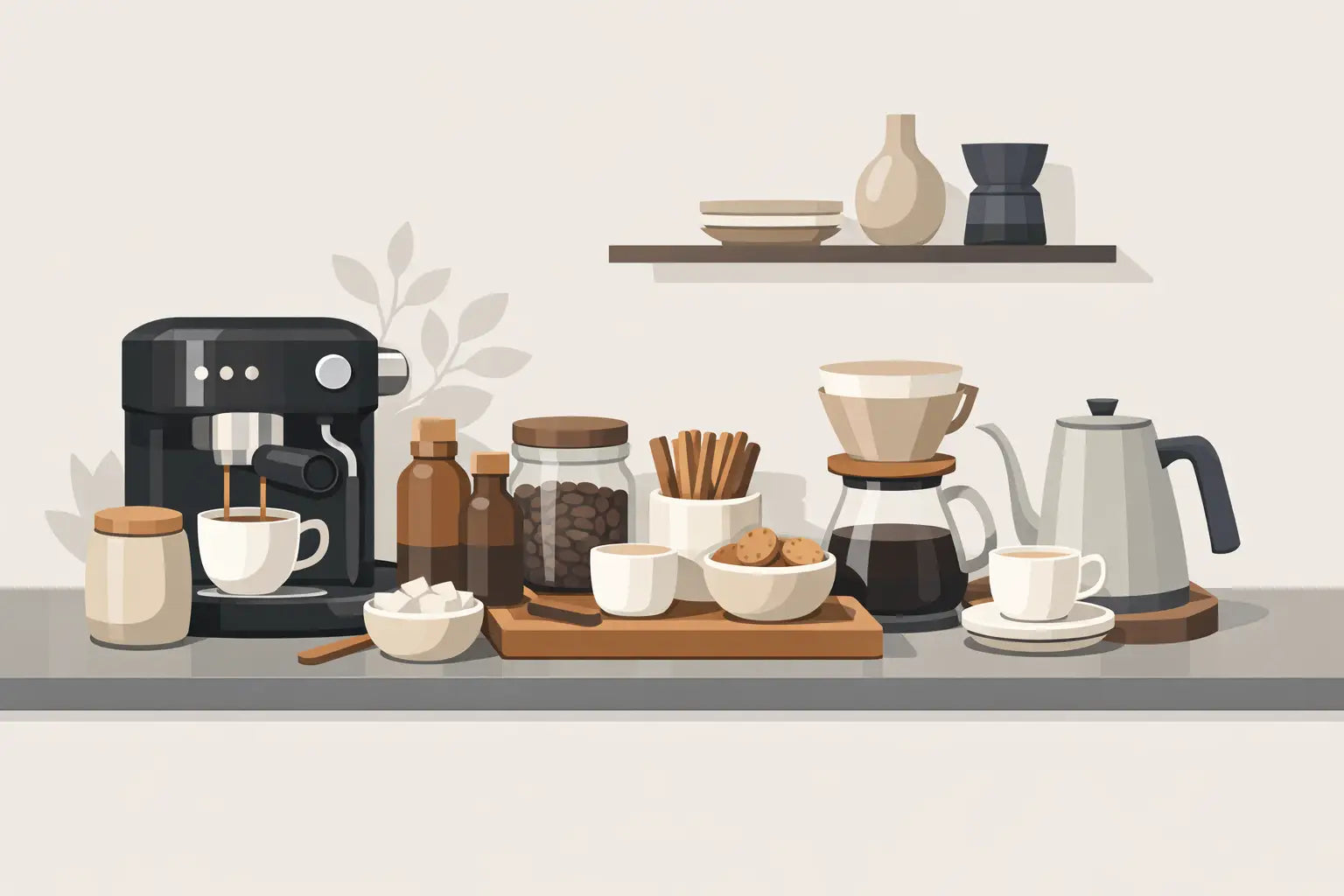
How to Layer an Elegant Coffee Station
A beautiful coffee station is rarely about the machine alone. The difference between a countertop setup that feels cluttered and one that feels considered usually comes down to layering - how materials, heights, vessels, and functional details work together to create a ritual that looks as good as it performs. If you're wondering how to layer an elegant coffee station, the answer starts with restraint, then builds through texture, proportion, and pieces that belong together.
The most compelling coffee stations feel curated rather than crowded. They support the practical rhythm of making coffee, but they also add atmosphere to the room. Whether you're styling a compact apartment counter, a dedicated bar niche, or a hospitality-facing service area, the goal is the same: create a setup that reads polished at first glance and effortless in daily use.
Start with the visual anchor
Every elegant coffee station needs a strong foundation. In most spaces, that anchor is either the coffee machine or the tray that organizes everything around it. If your machine has a sculptural silhouette, let it lead. If it is more utilitarian, use a substantial tray, board, or stone surface to define the station and give the arrangement a deliberate frame.
This first layer matters because it separates the coffee area from the rest of the countertop. Without that boundary, even premium pieces can start to look scattered. A tray in wood, marble, brushed metal, or a matte lacquer finish adds structure immediately. It also introduces a material contrast that softens the mechanical look of appliances.
Scale is important here. A tray that is too small feels crowded, while one that is too large can make the station look sparse and disconnected. You want enough room for the machine, the cups, and one or two supporting accessories, with a little breathing space left around them.
How to layer an elegant coffee station with height and balance
Once the base is established, the next step is creating variation in height. Elegant styling almost always relies on a composition that moves the eye. If every item sits at the same level, the setup feels flat. A station becomes more refined when taller, mid-height, and lower-profile elements are placed in conversation with one another.
The machine is often the tallest piece. Around it, consider the middle layer: a stack of porcelain cups and saucers, a sugar jar with a lid, or a slim carafe. Then bring in the lowest layer, perhaps a small bowl of wrapped sweeteners, a neatly folded linen napkin, or a spoon rest. These shifts in elevation create visual rhythm without requiring many objects.
Balance matters more than symmetry. Perfectly matching objects on both sides can feel stiff, especially in a home setting. A better approach is to offset weight visually. If the machine sits on one side, the other side can carry a grouped arrangement of cups, a canister, and a small decorative detail. The station should feel settled, not staged.
Choose drinkware that creates cohesion
Coffee stations look elevated when the drinkware feels intentional. This is where many setups lose their refinement. A beautiful espresso machine paired with mismatched mugs, promotional tumblers, and random spoons sends a mixed message.
Instead, choose cups and serving pieces that share a common language. That could mean porcelain with clean lines, glassware with modern geometry, or a limited palette of cream, charcoal, smoke, or soft stone. Cohesion does not require everything to match exactly, but it should feel collected within the same design point of view.
For espresso-based setups, cups with matching saucers create instant structure. They add a hospitality cue that makes the station feel complete, and they also solve a practical issue by containing drips and spoons neatly. For slower morning service, clear glass coffee cups or refined ceramic mugs can bring warmth and transparency to the arrangement.
This is often the layer that gives the station its personality. A well-proportioned cup is not just a vessel. It shapes the ritual, influences presentation, and turns a simple pour into something more composed. Angeleno Drinkware approaches coffee service with exactly that mindset - pieces that perform well but also elevate the visual experience around them.
Bring in texture, but keep the palette disciplined
An elegant coffee station should not feel sterile. It needs texture. The trick is introducing tactile contrast without turning the area into a collection of unrelated finishes.
A smooth porcelain cup next to a ribbed glass sugar jar, a matte machine on a polished stone tray, or brushed metal spoons resting on a linen napkin - these combinations create depth. Texture gives the eye somewhere to land and makes the station feel layered in a more architectural way.
Color should stay relatively focused. Neutrals tend to age better and photograph more beautifully, especially in open kitchens where the station becomes part of the wider room. White, black, taupe, warm wood, smoke gray, and soft brass all work well. If you want a richer moment, choose one accent color and repeat it with intention rather than adding several. Deep green, espresso brown, or muted terracotta can feel especially sophisticated.
There is a trade-off here. A very restrained palette looks luxurious, but it can read cold if every element is hard-surfaced. That is why one soft material - usually linen, a woven coaster, or even a paper-wrapped pastry in the morning - can make the entire station feel more inviting.
Prioritize function so the styling lasts
A coffee station only feels elegant if it stays that way after a busy morning. Styling that interferes with use does not hold up. The best setups are built around movement: reaching for beans, filling water, grabbing a cup, setting down a spoon.
Keep your most-used items within easy reach. Cups should sit near the machine, not across the counter. Spoons, sugar, and stir sticks should be corralled rather than loose. If you use syrups, select one or two you actually enjoy instead of displaying a full café lineup. Editing is part of the luxury.
Storage can still be attractive. A lidded canister for beans, a low-profile container for pods, or a compact vessel for sweeteners keeps visual noise down. If your station serves guests often, consider how the setup reads from their point of view. The area should invite use without needing explanation.
For commercial environments, durability carries more weight. In a café, hotel, or restaurant setting, an elegant coffee station has to withstand repetition. That usually means choosing stackable cups, saucers with stable proportions, and materials that maintain their finish through regular service. The visual layer still matters, but daily performance has to lead.
Add one human detail
The final layer is often the smallest, but it changes the mood completely. A tiny vase with a single stem, a slim candle used only outside active service hours, or a neatly folded towel can make the station feel lived-in and finished.
This is not the place for clutter. One detail is enough. The point is to soften the arrangement and make it feel like part of a home or thoughtfully designed hospitality space rather than a utility corner. In cooler months, that detail might be a small jar of cinnamon sticks. In summer, it could be a simple glass of fresh mint. The station should reflect the season lightly, not theme itself aggressively.
If space is limited, skip decorative filler and let beautiful functional objects do the work. A well-designed milk pitcher, a sculptural spoon, or a stack of cups with elegant proportions can provide all the visual interest you need.
How to layer an elegant coffee station in small spaces
Small spaces actually benefit the most from layering because they require discipline. In a narrow kitchen or apartment counter setup, focus on a compact footprint and stronger editing. Choose one tray, one machine, one cup style, and only the accessories that support your actual coffee routine.
Verticality helps. Use stacked saucers, a taller canister, or a raised shelf if the station needs more storage without spreading outward. Glass and light-toned ceramics can also keep the area from feeling visually heavy.
What you should avoid is miniaturizing everything. Tiny trays and undersized accessories can make the station look tentative. Even a small setup needs one confident anchor and a sense of proportion.
The most memorable coffee stations do not try to impress with volume. They feel composed because each object has a reason to be there, each finish contributes to the overall atmosphere, and the ritual itself has been given visual importance. That is really the art of layering: making utility feel intentional. Start with a strong base, build through height and texture, choose drinkware with presence, and leave enough room for the morning to unfold gracefully.