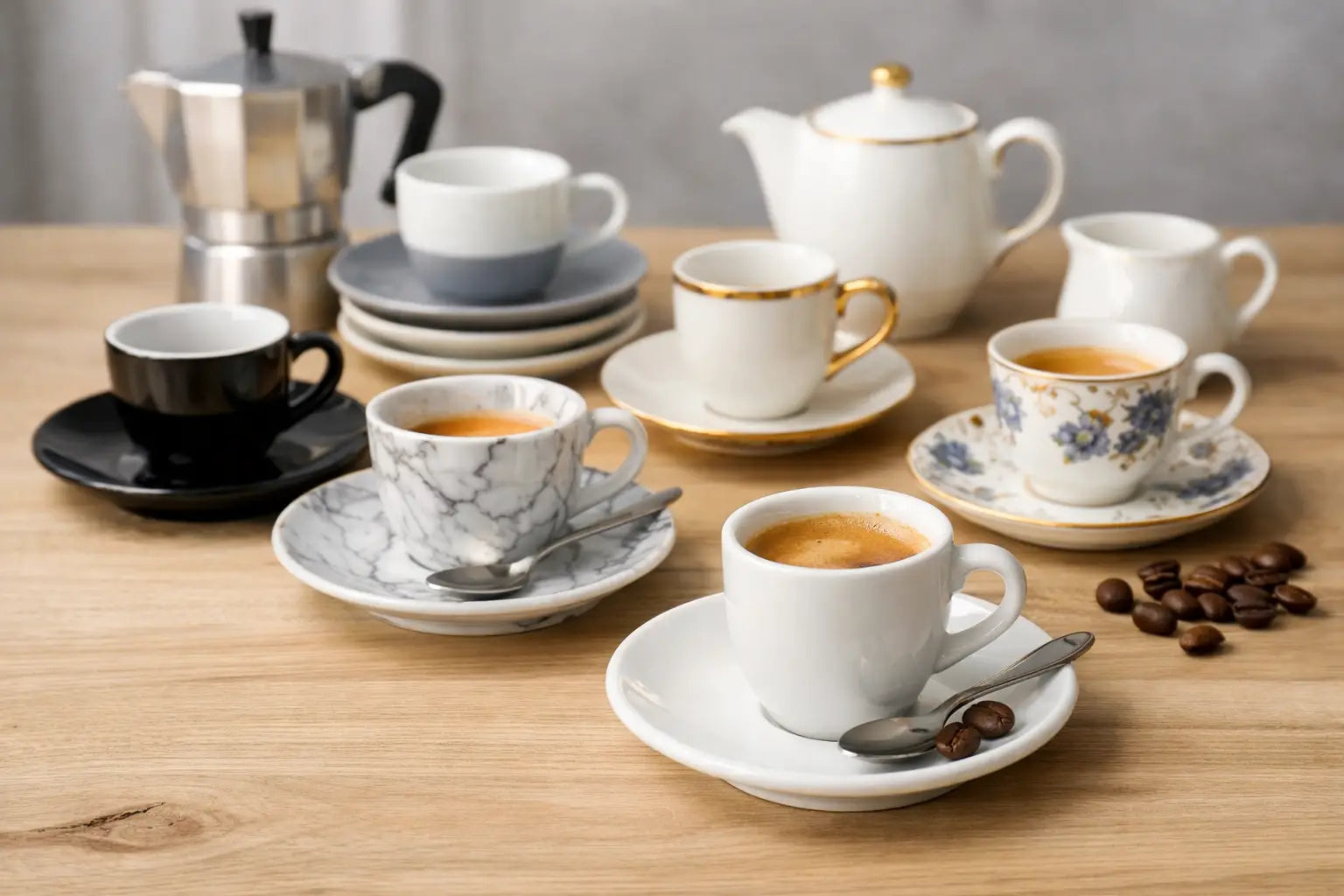
Espresso Cup Sizes Guide for Better Service
A demitasse that looks perfect on the shelf can still feel wrong in service. If the bowl is too wide, crema thins out fast. If the walls are too straight, the drink can read flat and underdressed on the table. A good espresso cup sizes guide is not really about ounces alone - it is about proportion, heat retention, visual balance, and how the drink is experienced from first pour to last sip.
For home coffee lovers, that means choosing cups that make a morning ritual feel more composed. For cafés and hospitality settings, it means serving drinks in vessels that support consistency, pacing, and presentation. Size affects all of it.
Why an espresso cup sizes guide matters
Espresso is a small-format drink with almost no room for error. A cup that is too large makes a single shot look lost. A cup that is too tight can crowd crema and make the drink harder to serve cleanly. The right size creates a sense of intention. It frames the espresso properly, keeps temperature more stable, and gives milk drinks enough space to land with the right proportions.
This is where cup design becomes part of the ritual. Capacity matters, but so do shape, wall thickness, lip feel, and the relationship between cup and saucer. In a refined coffee service, the vessel should never feel like an afterthought. It should support the drink and elevate the setting around it.
Standard espresso cup sizes
Most espresso cups fall into a fairly tight range, but the right choice depends on what you are serving. In practical terms, there are three core categories to know.
2 to 3 ounces for straight espresso
This is the classic demitasse range and the foundation of any espresso cup sizes guide. A 2 to 3 ounce cup is typically ideal for a single or double espresso because it leaves enough headroom above the liquid while keeping the drink visually centered. That extra space matters. It protects crema, makes the pour look more elegant, and gives the cup a more premium silhouette in service.
For most home setups, 2.5 ounces is a sweet spot. It is generous enough for a double shot without looking oversized. In cafés, this range also helps maintain consistency across standard espresso orders, especially when visual presentation is part of the brand experience.
3 to 4 ounces for macchiatos and small milk drinks
A traditional espresso macchiato does not need much more room than straight espresso, but a touch of foam changes the equation. Cups in the 3 to 4 ounce range allow enough space for espresso plus a small amount of milk or foam without making the drink feel diluted.
This size works well for operators who want versatility without carrying too many formats. It can handle espresso, macchiatos, and even a compact cortado in some programs, depending on recipe style. The trade-off is that a very small straight shot may appear slightly undersized in a 4 ounce cup, so presentation standards should guide the decision.
5 to 6 ounces for cappuccinos and cortados
Once milk becomes a more prominent part of the drink, cup size has to support both volume and texture. A 5 to 6 ounce cup is often ideal for traditional cappuccinos, Gibraltar-style drinks, or cortados with a more generous ratio. This range gives baristas enough room to pour comfortably while preserving a balanced profile.
For home entertaining, this size often feels especially useful because it bridges formality and flexibility. It is compact enough to look elegant, but substantial enough to support milk drinks that guests actually order and enjoy.
How cup shape changes the experience
Capacity gets most of the attention, but shape quietly does just as much work. A rounded interior helps preserve crema and supports a smoother pour. A slightly narrowed opening can hold heat a bit longer and concentrate aroma. Straight-walled cups can look modern and architectural, but they sometimes sacrifice a little softness in the drinking experience.
Porcelain remains a favorite for espresso service because it retains heat well and offers a clean, refined surface for coffee color and crema contrast. Thicker walls can be useful in hospitality settings where drinks may sit a moment before reaching the guest. Thinner profiles can feel more delicate and elevated in the hand, though they may cool faster.
There is no single perfect geometry for every service style. A design-forward café may prioritize silhouette and stackability. A home buyer may care more about tactile comfort and how the cup sits beside a pastry plate on a quiet weekend morning. The best choice is the one that supports both the drink and the setting.
Choosing the right size for home use
At home, cup buying tends to go one of two ways. Some people want a single versatile size that works for most espresso-based drinks. Others want a more composed collection with dedicated pieces for espresso and milk drinks.
If you mostly drink straight espresso, stay close to the classic 2 to 3 ounce demitasse. It will make your coffee look better immediately and feel more intentional. If your routine includes macchiatos, cortados, or compact cappuccinos, adding a second format in the 5 to 6 ounce range creates a more complete coffee service without overwhelming your cabinet space.
Design matters here more than many people expect. Espresso service is visual. The cup is often the first thing you notice before the first sip. A well-proportioned porcelain cup with a matching saucer adds structure to the ritual, especially when the palette and silhouette work with the rest of your kitchen or dining space. That is part of why collection-based coffee service feels so polished - it turns a functional choice into a curated one.
Choosing the right size for cafés and hospitality
For hospitality buyers, the espresso cup sizes guide is really about operational clarity. A cup should suit the recipe, hold up in repeated service, and reinforce the establishment's visual identity. If your menu leans traditional, tighter sizing helps drinks feel precise and premium. If your program is more contemporary and milk-forward, slightly roomier capacities may be more practical.
Durability matters, but so does the impression left at the table or bar. Guests notice when a cappuccino arrives in a cup that feels proportionate, substantial, and thoughtfully chosen. They also notice when an espresso lands in an oversized vessel that makes the drink feel diminished.
Many operators benefit from narrowing their range to two key sizes: a 2.5 to 3 ounce demitasse for espresso and macchiato service, and a 5 to 6 ounce cup for cappuccinos and small milk drinks. That keeps ordering manageable while preserving presentation standards. For brands that care about cohesion, matching saucers and consistent silhouettes can make the entire tabletop feel more resolved.
Common mistakes when selecting espresso cups
The most common mistake is buying by appearance alone. A cup can look beautiful online and still be awkward in service if the capacity is off. Another issue is confusing total cup capacity with ideal drink volume. A 3 ounce cup does not mean you should fill it to 3 ounces. Headspace is part of the presentation and part of the drink's functionality.
It is also easy to go too large in the name of versatility. Bigger cups seem flexible, but they often make espresso drinks look sparse and cool more quickly than expected. On the other hand, going too small can create messy pours and inconsistent milk texture, especially in busy café settings.
The better approach is to choose sizes based on your actual drink program. Buy for the beverages you serve most often, not every possible scenario.
Espresso cup sizes guide by drink type
If you want a simple rule of thumb, match the cup to the visual scale of the drink. Straight espresso usually performs best in 2 to 3 ounces. Macchiatos are comfortable in 3 to 4 ounces. Cortados and traditional cappuccinos typically suit 5 to 6 ounces. Once you move beyond that, you are usually entering general coffee cup territory rather than classic espresso service.
That distinction matters because espresso is as much about restraint as flavor. The right vessel preserves that sense of proportion.
A well-chosen espresso cup makes the drink feel complete before anyone takes a sip. It gives crema a proper stage, gives the hand something balanced to hold, and gives the table a more considered presence. When cup size, shape, and material are aligned, coffee service feels less improvised and more like a daily luxury worth repeating.